

Most homeowners treat exterior cleaning as something to get around to eventually, like a cosmetic touch-up that can wait another season. That framing is why home exterior cleaning matters more than most people realise. The buildup of mold, algae, dirt, and biological growth on your siding, roof, and masonry is not just unsightly. It is actively degrading your materials, lowering your property value, and setting up expensive repair bills. This article breaks down the real reasons why regular exterior cleaning is one of the most protective investments you can make as a homeowner or property manager in Southern Ontario.
Key takeaways
| Point | Details |
|---|---|
| Exterior cleaning prevents damage | Mold, algae, and moisture buildup actively degrade siding, paint, and roofing materials over time. |
| Cleaning directly impacts property value | A clean exterior can increase sale price by up to 10% and improve buyer confidence. |
| Soft washing protects delicate surfaces | Low-pressure soft washing with biodegradable solutions cleans without causing surface damage. |
| Annual spring cleaning is recommended | Scheduling exterior cleaning each spring removes pollen and contaminants before seasonal damage develops. |
| Prevention costs far less than repair | Routine cleaning avoids wood rot, mold remediation, and full siding or paint replacement. |
How contaminants damage your home’s exterior
When you see dark streaking on your siding or green patches spreading across your roof shingles, it is tempting to write it off as surface-level grime. The reality is more serious. Organic growth like mold and algae retains moisture directly against your home’s surfaces, and that persistent moisture is what accelerates paint failure, wood rot, and structural deterioration.
Mold and algae are not passive. They feed on the materials they colonise, including the limestone filler in asphalt shingles, the fibres in wood siding, and the binders in exterior paint. As they spread, they compromise the adhesion of paint coatings, which leads to peeling and flaking well ahead of schedule. Once paint adhesion fails, the underlying material is exposed to UV radiation, freeze-thaw cycles, and further moisture penetration.
Southern Ontario’s climate makes this worse. The region experiences significant humidity in summer and repeated freeze-thaw cycles through late autumn and winter. Moisture trapped by biological growth expands and contracts within surface pores, gradually cracking masonry, warping wood trim, and separating caulked joints. What starts as a cosmetic issue becomes a structural one faster than most homeowners expect.
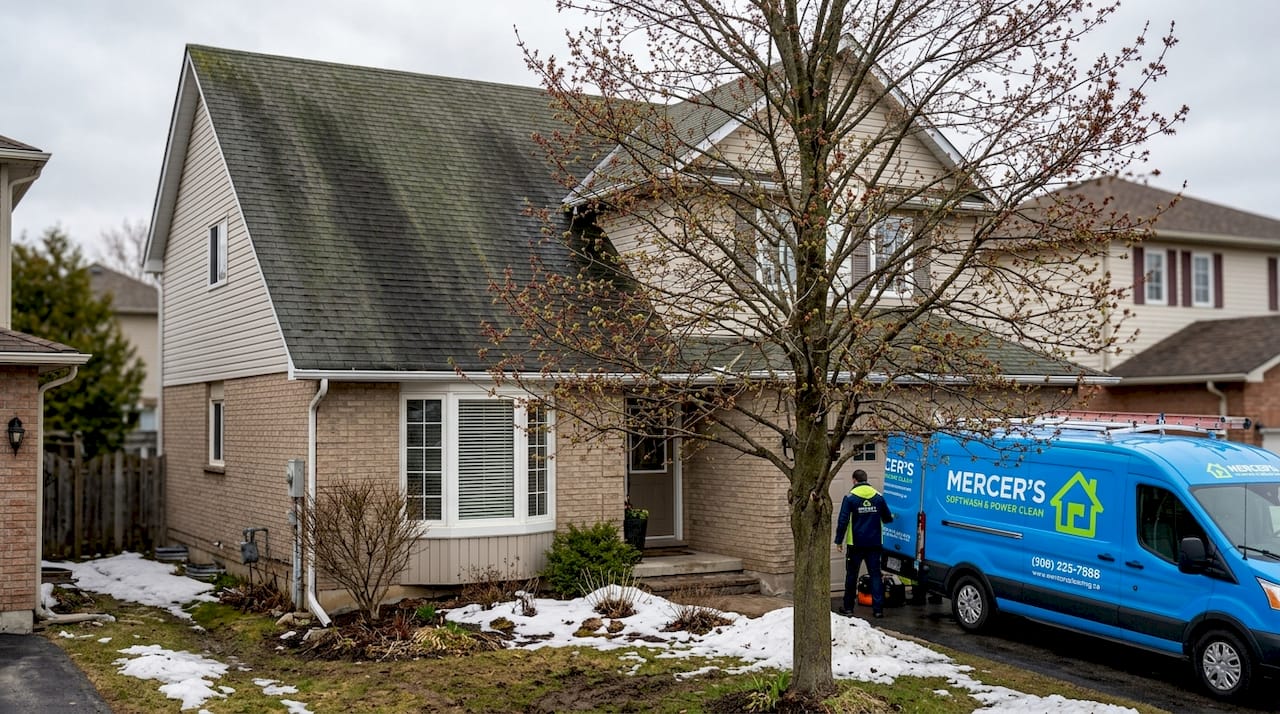
Pro Tip: Homeowners often misinterpret discolouration as harmless weathering, but active organic growth is usually the cause. If you see black, green, or grey streaking on any exterior surface, treat it as a maintenance issue, not just a visual one.
Beyond the structure itself, mold and algae spores become airborne and can enter your home through windows, vents, and doors. Regular exterior cleaning reduces the concentration of allergenic spores around your property, which matters particularly for households with respiratory sensitivities.
Exterior cleaning and your property value
The importance of exterior cleaning becomes very clear when you consider what buyers and appraisers see first. A clean, well-maintained exterior signals that the property has been looked after. Staining, streaking, and visible biological growth signal the opposite, and buyers factor that into their offers.
“A clean exterior signals responsible maintenance to buyers, improving market appeal and speeding sales.” (Why dirty exteriors hurt curb appeal)
The financial impact is measurable. Properties with clean, well-kept exteriors can command up to 10% higher sale prices and move more quickly in competitive markets. In Southern Ontario’s real estate environment, where buyers have options and competition is real, that difference is not trivial. On a $700,000 property, a 10% gap in perceived value represents $70,000.
Visible staining and biological growth also trigger buyer hesitation in a specific way. Buyers who notice exterior neglect begin to wonder what else has been deferred. They start asking questions about the roof, the foundation, and the mechanical systems. A dirty exterior does not just affect the price of the exterior. It casts doubt over the entire property.
For property managers, this matters beyond resale. Tenant retention and rental pricing are both influenced by how a property presents. A building with clean siding, clear gutters, and an unmarked façade commands higher rents and attracts tenants who take better care of the space. The cleaning impacts on home value extend to income-generating properties in exactly the same way they do to owner-occupied homes.
Soft washing vs. pressure washing: choosing the right method
Understanding how to clean your home exterior properly is just as important as understanding why you should. Not all surfaces respond well to the same cleaning approach, and using the wrong method can cause damage that costs more to fix than the original cleaning would have prevented.
| Method | Best for | Pressure level | Cleaning agent |
|---|---|---|---|
| Soft washing | Roofing, siding, painted wood, stucco | Low (under 500 PSI) | Sodium Hypochlorite and biodegradable surfactants |
| Pressure washing | Concrete, interlock, masonry, driveways | High (1500 to 4000 PSI) | Water with optional detergent |
Soft washing uses low pressure combined with biodegradable cleaning solutions, including Sodium Hypochlorite, to kill and remove organic growth at the source. Because the cleaning is done chemically rather than mechanically, there is no risk of blasting granules off shingles, forcing water behind siding, or etching painted surfaces. It is the correct approach for roofing, vinyl siding, wood trim, and stucco.
Pressure washing, by contrast, uses high-pressure water to physically remove dirt, grime, moss, and staining from hard surfaces. It is highly effective on concrete driveways, interlock, brick masonry, and pool decks, where the surface can withstand the force without damage.
Professional cleaners assess each surface individually before selecting a method and solution. That judgement is where experience matters most. Professional cleaning methods prioritise surface safety and environmental responsibility while maximising cleaning efficacy. A DIY approach with a rented pressure washer and no chemical knowledge often results in damaged surfaces, incomplete cleaning, or both.
Pro Tip: Never use high-pressure washing on asphalt shingles. The force strips protective granules, shortening the life of your roof significantly. Soft washing is the only appropriate method for roof cleaning, and it delivers better results against algae and moss.
Practical exterior maintenance tips for Southern Ontario
Knowing when and how often to clean your home’s exterior makes the difference between preventative maintenance and reactive repair. Southern Ontario’s climate creates specific conditions that homeowners and property managers need to account for.
-
Schedule a full exterior wash every spring. Annual spring cleaning removes pollen, winter grime, and any biological growth that established itself during the wet autumn months. It also lets you inspect surfaces for damage before the heat of summer sets in.
-
Inspect your roof and siding after every major storm. Wind-driven debris and heavy rain can deposit organic matter that accelerates biological growth. A quick visual inspection after a storm lets you catch problems before they compound.
-
Watch for these signs that cleaning is overdue: dark streaking on siding or roofing, green or black patches on masonry or wood, visible algae on the north-facing sides of your home, and paint that is beginning to peel or blister without obvious mechanical cause.
-
Clean gutters at minimum twice per year. Clogged gutters overflow and direct water against fascia boards and foundation walls. That sustained moisture contact is one of the most common causes of wood rot in Southern Ontario homes.
-
Consider your home’s exposure. Properties surrounded by mature trees or located near water accumulate organic debris and moisture faster. These homes may benefit from cleaning twice per year rather than once. Homes in open, sunny locations typically do well with an annual schedule.
-
Check your homeowners association requirements. Many HOA agreements in Southern Ontario include exterior maintenance standards. Routine cleaning keeps you compliant and avoids warnings or fines that can escalate into formal disputes.
Why spring cleaning matters for the exterior specifically comes down to timing. Cleaning in spring removes winter accumulation before the warm, humid months accelerate biological growth. It also prepares surfaces for the UV exposure of summer, when clean, intact paint and coatings protect materials most effectively.
The long-term cost of skipping exterior cleaning
The benefits of home cleaning become most obvious when you look at what neglect actually costs. Routine cleaning prevents the kind of structural damage that runs into thousands of dollars to repair. Wood rot in fascia boards, window frames, and siding requires replacement, not just cleaning. Mold remediation on exterior surfaces that have been left untreated for years involves both chemical treatment and, in severe cases, material removal.
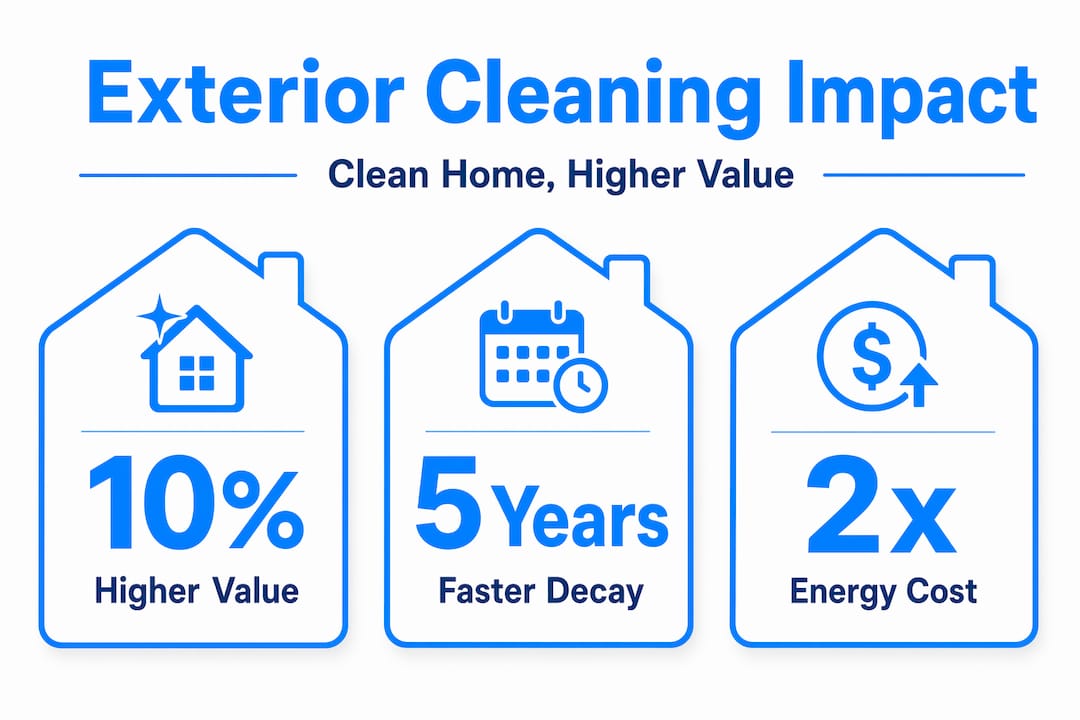
Consider a realistic scenario. A homeowner skips exterior cleaning for four or five years. Algae establishes itself on the north-facing siding and begins trapping moisture against the wood substrate. Paint adhesion fails. The wood beneath begins to soften. By the time the damage is visible enough to prompt action, the repair involves stripping and replacing sections of siding, treating for mold, and repainting the entire affected area. That repair can easily cost $5,000 to $15,000 or more, depending on the scope.
Contrast that with preventative cleaning costs that are a fraction of that figure annually. The math is straightforward. Cleaning also extends the lifespan of paint, wood, vinyl, and composite materials by preserving paint adhesion and preventing the premature peeling that forces early repainting cycles.
There is also an energy efficiency dimension that rarely gets discussed. Biological growth on exterior walls can affect the thermal performance of insulation beneath the surface by trapping moisture within wall cavities. Keeping exterior surfaces clean and dry supports the integrity of your home’s building envelope. Some insurers also consider documented maintenance records when evaluating claims related to moisture damage, making routine cleaning a factor in your coverage position.
My perspective on what homeowners consistently get wrong
I have seen a lot of properties across Southern Ontario, and the pattern I notice most often is this: homeowners wait until damage is visible before they act. By that point, the cleaning conversation has already become a repair conversation.
What I have learned is that the discolouration people ignore for years is rarely harmless. It is almost always active biological growth working on the material beneath. The homeowners who are most surprised by a repair quote are the ones who assumed the dark streaks on their siding were just dirt from rain. They were not. They were algae colonies that had been feeding on the surface for two or three seasons.
The other thing I have seen is that choosing the wrong cleaning method causes its own damage. I have assessed roofs where a previous DIY pressure washing stripped granules off half the shingles. The homeowner thought they were being proactive. Instead, they accelerated the roof’s deterioration by several years.
My honest advice is to treat exterior cleaning the way you treat a dental check-up. You do not wait until something hurts. You go on schedule, you catch problems early, and you avoid the expensive intervention that comes from letting things go too long. Investing in professional exterior cleaning once or twice a year is one of the most financially sound decisions a property owner can make.
— Felix
Professional exterior cleaning in Southern Ontario
If you are ready to move from understanding why home exterior cleaning matters to actually protecting your property, Mercerssoftwashpowerclean is the team to call. Serving homeowners and property managers across Southern Ontario, Mercer’s Softwash & Power Clean specialises in professional house washing, soft washing, and pressure washing tailored to the specific surface and condition of your property.
Their services include roof washing using safe, low-pressure soft washing techniques that remove algae, moss, and streaking without damaging shingles. They also offer gutter cleaning, deck and fence washing, interlock cleaning, window cleaning, and graffiti removal. Whether you manage a single-family home or a multi-unit residential property, Mercer’s brings the right method, the right solutions, and the attention to detail your property deserves. Reach out to schedule a consultation and get a clear picture of what your exterior needs.
FAQ
What does exterior cleaning actually prevent?
Regular exterior cleaning prevents wood rot, paint failure, mold growth, and structural moisture damage by removing biological contaminants that trap moisture against your home’s surfaces. It is preventative maintenance, not just cosmetic upkeep.
How often should I clean my home’s exterior?
Most Southern Ontario homes benefit from a full exterior wash once per year, ideally in spring. Homes surrounded by trees or near water may need cleaning twice per year due to faster organic buildup.
Does a clean exterior really affect my home’s sale price?
Yes. Properties with clean, well-maintained exteriors can command up to 10% higher sale prices and sell faster in competitive markets, because a clean exterior signals responsible ownership to buyers.
What is the difference between soft washing and pressure washing?
Soft washing uses low pressure and biodegradable chemical solutions to kill and remove organic growth from delicate surfaces like roofing and siding. Pressure washing uses high-pressure water to clean hard surfaces like concrete and interlock.
Is DIY pressure washing safe for all exterior surfaces?
No. High-pressure washing can damage asphalt shingles, painted wood, and vinyl siding. Roofing and painted surfaces require soft washing. Using the wrong method can cause damage that costs more to repair than professional cleaning would have cost.
Recommended
- How Often Should You Wash Your House Exterior In Port Hope? – Mercer’s Softwash & Power Clean Inc. | Pressure Washing Service
- Best House Exterior Power Washing Company Near Me In Port Hope: What To Look For – Mercer’s Softwash & Power Clean Inc. | Pressure Washing Service
- Roof Cleaning Vs Roof Replacement: Which Is Better? – Mercer’s Softwash & Power Clean Inc. | Pressure Washing Service
- Pressure Washing Oshawa Sevices, ON | Mercer’s Softwash


