

Most people assume window cleaning is straightforward. Grab a cloth, spray some glass cleaner, wipe it down. But understanding how window cleaning works reveals a far more methodical process than that. The right sequence, tools, and technique are what separate a streak-free result from a smeared, frustrating mess. Whether you are tackling your own windows or thinking about hiring a professional, knowing the full process helps you make better decisions about your home’s maintenance and appearance.
Key takeaways
| Point | Details |
|---|---|
| Sequence matters | Clean frames and hardware before glass to avoid re-soiling freshly cleaned surfaces. |
| Timing affects results | Avoid cleaning windows in direct sunlight, as it causes solutions to dry too fast and leave streaks. |
| Preparation saves time | Removing debris and moving furniture before a professional visit can shorten service time by up to 30 minutes. |
| Tracks need attention | Window tracks collect moisture and grime that lead to mould if not cleaned regularly with vinegar and baking soda. |
| Professionals use simple solutions | Water and mild soap are the standard, even for high-rise work. No special solvents are required. |
Window cleaning methods and tools
The window cleaning process starts with having the right equipment. For most homeowners, the core toolkit includes a squeegee, a scrubber or applicator sleeve, microfibre cloths, a bucket, and a mild cleaning solution. A few drops of dish soap in warm water is genuinely effective. You do not need commercial glass cleaners with strong fragrances or chemical additives.
The squeegee is the most important tool in the kit. A quality rubber blade pulls water cleanly off the glass without leaving residue. Microfibre cloths handle the edges and corners where a squeegee cannot reach. For interior surfaces, a dry microfibre cloth used after the squeegee picks up any remaining moisture and prevents water marks.
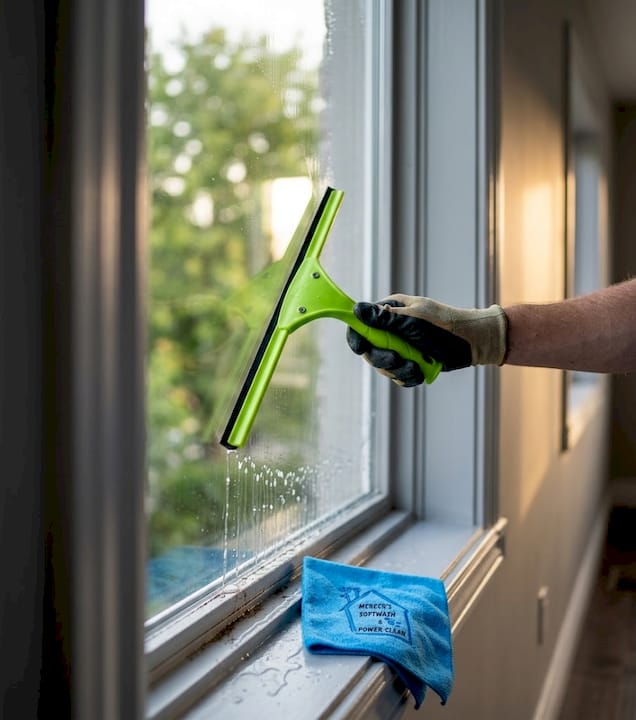
One factor that homeowners often overlook is the role of local water quality. Hard water with high mineral content leaves calcium and magnesium deposits on glass, which require extra scrubbing and can cause streaking even after a thorough clean. Water hardness above 121 mg/L means you may need to rinse with filtered or distilled water for the best finish.
Pro Tip: Clean your windows on a cloudy day or when the glass is in the shade. Direct sunlight causes the cleaning solution to evaporate before you can squeegee it off, which is the most common cause of streaks.
For exterior surfaces, a scrubber sleeve soaked in your cleaning solution loosens dirt, pollen, and grime before the squeegee pass. For spot-free window results, some professionals use purified water systems that leave no mineral residue at all.
The window cleaning workflow
A thorough window cleaning job follows a clear sequence. Skipping steps or doing them out of order is what leads to re-doing work and poor results.
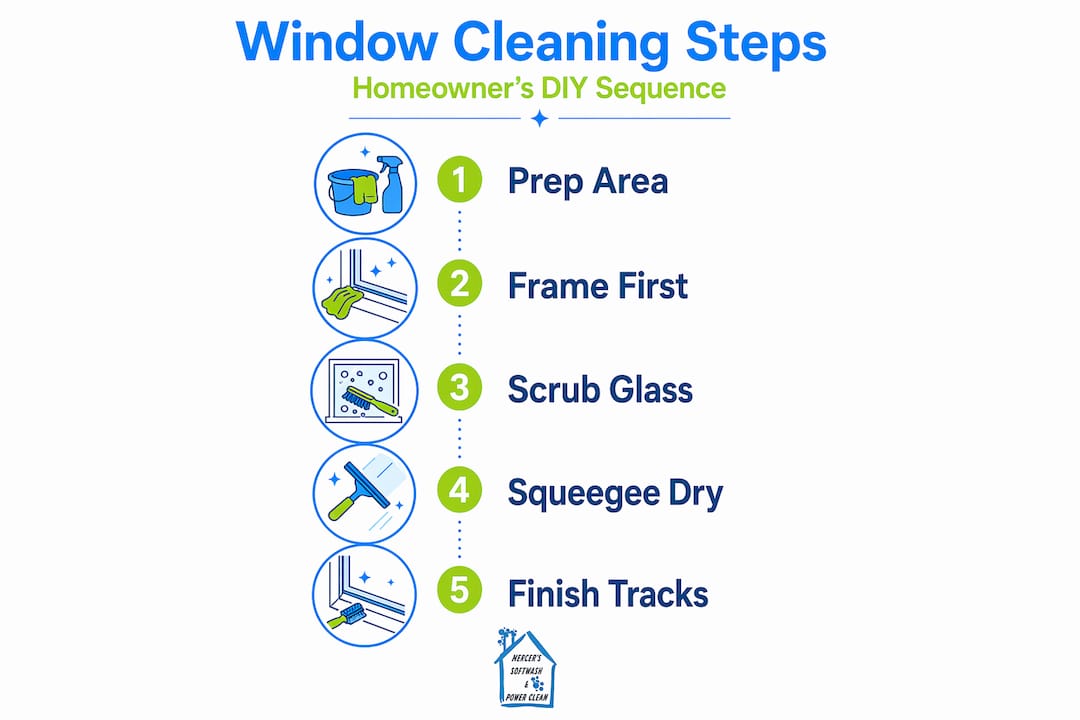
Preparation comes first. Before touching the glass, clear the area around each window. Move furniture away from interior sills, remove any items sitting on the ledge, and take down curtains or blinds if they obstruct access. Outside, brush away cobwebs, loose dirt, and debris from the frame and surrounding area.
Clean frames and hardware before glass. Cleaning frames and grids first with a mild detergent prevents dirty runoff from contaminating glass you have already cleaned. Use a damp cloth to wipe down the frame, grids, and any hardware. Dry them as you go.
The glass cleaning step itself follows a proven pattern:
- Remove window screens and set them aside for separate cleaning.
- Apply your cleaning solution to the entire glass surface using a scrubber or applicator.
- Use the “S” technique: begin at the top left corner and move the squeegee horizontally across the pane in overlapping “S” shaped strokes. Wipe the squeegee blade after every single stroke to avoid redistributing dirty water.
- Use a dry microfibre cloth to wipe the edges and any remaining drips.
- Dry window sills and frames completely to prevent moisture damage.
After the glass is done, clean the tracks and screens separately. Tracks accumulate grit and moisture that can work back onto clean glass if ignored. Screens should be rinsed gently, allowed to dry fully before reinstalling, and never put back wet.
How professionals approach the job
Understanding how professional window cleaning works clarifies why it produces better results and why it takes the time it does. Professional exterior-only service typically takes 1 to 2 hours, while a full interior and exterior clean runs 2 to 4 hours depending on the number of windows, their size, and any complicating factors like hard water deposits or post-construction residue.
| Job type | Typical duration | Key factors |
|---|---|---|
| Exterior only | 1 to 2 hours | Window count, access, water hardness |
| Interior and exterior | 2 to 4 hours | Home size, furniture placement, screen condition |
| High-rise or commercial | Variable | Height, rigging, certification requirements |
One of the most useful things to know is that the cleaning physics are the same whether the window is on the ground floor or the 30th storey. Height changes the safety requirements, not the cleaning method. Professionals at any level use water and mild soap. There are no secret solvents. What changes at height is the discipline around equipment and safety protocols.
For high-rise window cleaning, all tools are tethered with lanyards to prevent them from falling. Dropped equipment from height is a serious hazard, so this is non-negotiable. Certified high-rise cleaners follow IRATA or SPRAT standards, which govern rope access training, equipment inspection schedules, and the use of redundant rope systems. A main descender and a backup line are standard, reflecting a layered approach to safety that leaves nothing to chance.
Pro Tip: If you are having professionals clean your windows, remove furniture from near windows and clear outdoor obstacles beforehand. Homeowner preparation can reduce a professional visit by up to 30 minutes, which translates directly to cost savings.
Cleaning tracks, screens, and ongoing maintenance
Window tracks are one of the most neglected parts of the window cleaning process, and they cause real problems when ignored. Grit, dust, and moisture accumulate in the channels, and moisture buildup during rainy or winter months actively promotes mould growth. Once mould takes hold in a track, it requires more than a quick wipe to address.
Here is a reliable method for cleaning window tracks thoroughly:
- Use a vacuum with a narrow attachment to remove loose debris from the track channels.
- Sprinkle baking soda along the track, then apply white vinegar. The fizzing reaction loosens caked-on grime effectively.
- Scrub with an old toothbrush, working the bristles into the corners and drainage holes.
- Wipe out the loosened residue with a damp cloth.
- For visible mould, apply hydrogen peroxide or diluted bleach and allow it to sit for 15 minutes before scrubbing and rinsing.
- Dry the track completely before closing the window.
Screens require their own attention. Remove them carefully and lay them flat. Rinse with a gentle stream of water, scrub lightly with a soft brush and mild soap, then rinse again. Allow screens to dry fully in the open air before reinstalling. Putting a wet screen back into a track introduces the moisture that causes the mould problem you just cleaned up.
For ongoing maintenance, the following habits make a noticeable difference:
- Vacuum tracks every month during high-use seasons.
- Clear drainage holes in tracks to prevent standing water.
- Dust window sills and frames regularly to reduce the amount of debris that works its way into tracks.
- Schedule a full clean twice per year, typically in spring and autumn, to address seasonal pollen and grime buildup.
Consistent maintenance reduces the time and effort each cleaning requires, and it protects the window hardware from corrosion and deterioration over time.
My take on what homeowners actually miss
In my experience, the biggest gap between a mediocre window clean and a genuinely good one is not the product used. It is the sequence and the patience. I have seen homeowners spend money on premium glass cleaners and still end up with streaks because they cleaned in direct sunlight, skipped the frame wipe, or put wet screens back into dirty tracks.
What I find most instructive about how high-rise window cleaning works is the discipline it demands. Professional cleaners inspect their equipment on a rigorous schedule and replace components according to rated lifespans. That level of care does not just apply to rope access work. It reflects a mindset that produces consistently good results at any height. When you treat window cleaning as a procedure rather than a chore, you get procedure-level results.
The other thing worth saying directly: window cleaning is not a once-a-year task. Seasonal changes in Southern Ontario bring pollen in spring, humidity in summer, and leaf debris in autumn. Each season deposits something different on your glass and tracks. Integrating window care into your regular home maintenance routine, rather than treating it as an occasional project, is what keeps your home looking well-maintained year-round. For more guidance on exterior cleaning frequency, the house washing guide from Mercerssoftwashpowerclean covers this well.
— Felix
Professional window cleaning with Mercerssoftwashpowerclean
If the process sounds like more than you want to manage yourself, Mercerssoftwashpowerclean offers professional window cleaning for residential properties across Southern Ontario. The team follows the same methodical process described in this article, from frame and hardware cleaning through to streak-free glass and dried sills, with the equipment and experience to handle windows of any size or configuration.
Beyond windows, Mercerssoftwashpowerclean also provides roof washing and house power washing services that complement a full exterior clean. Combining these services in one visit is an efficient way to address your home’s entire exterior in a single appointment. Reach out to Mercerssoftwashpowerclean to discuss your property and get a clear picture of what is involved.
FAQ
What does the window cleaning process involve?
The window cleaning process includes preparation, frame and hardware cleaning, glass cleaning using a squeegee and scrubber, track and screen cleaning, and final drying. Following this sequence in order produces streak-free, lasting results.
How long does professional window cleaning take?
Exterior-only cleaning typically takes 1 to 2 hours, while a full interior and exterior service runs 2 to 4 hours. Home size, window count, and water hardness all affect the total time.
Why do my windows streak after cleaning?
Streaks are most often caused by cleaning in direct sunlight, which dries the solution before it can be removed, or by a dirty squeegee blade. Wiping the blade after every stroke and cleaning in the shade eliminates most streaking.
How does high-rise window cleaning work differently?
The cleaning technique is identical to ground-level work. What changes is the safety equipment: certified high-rise cleaners use rope access systems, tethered tools, and redundant lines in line with IRATA or SPRAT standards.
How often should window tracks be cleaned?
Tracks should be vacuumed monthly during active seasons and deep-cleaned with baking soda and vinegar at least twice per year. Regular clearing of drainage holes prevents moisture buildup and mould growth.
Recommended
- Window Cleaning Service – Mercer’s Softwash & Power Clean Inc. | Pressure Washing Service
- Roof Cleaning Vs Roof Replacement: Which Is Better? – Mercer’s Softwash & Power Clean Inc. | Pressure Washing Service
- How Often Should You Wash Your House Exterior In Port Hope? – Mercer’s Softwash & Power Clean Inc. | Pressure Washing Service
- Blogs – Mercer’s Softwash & Power Clean Inc. | Pressure Washing Service


