

Preventative roof cleaning is defined as a scheduled maintenance process that removes moss, algae, lichen, mildew, and debris from your roof before these contaminants cause structural damage. The Asphalt Roofing Manufacturers Association recognises biological growth as a leading cause of premature roof deterioration, making routine cleaning a structural necessity rather than a cosmetic preference. Left untreated, moss and algae trap moisture against shingles and wood fibres, accelerating breakdown long before a leak appears. A proper preventative maintenance plan combines scheduled surface cleaning, biological treatment, and drainage upkeep to protect your roof’s full service life.
What is preventative roof cleaning and why does it matter?
Preventative roof cleaning targets biological organisms and debris at the earliest stage, before they compromise roofing materials. Biological growth holds moisture against shingles and wood decking, causing accelerated breakdown that often goes unnoticed until leaks develop inside the home. The dark streaks you see on asphalt shingles are not simply dirt. They are living colonies of Gloeocapsa magma algae, and scrubbing them away without a chemical kill step leaves the root structures intact to regrow within weeks.
Routine cleaning also supports proper water flow off the roof surface and into your drainage system. When debris accumulates in valleys and around flashings, water pools and creates sustained moisture contact with roofing materials. Scheduled debris removal and biological treatment reduce emergency repairs and catch early defects like cracked flashings or failing sealants before they become expensive problems. For homeowners and property managers in Southern Ontario, where freeze-thaw cycles compound moisture damage, this proactive approach is especially relevant.
What roof cleaning methods are used, and why is soft washing preferred?
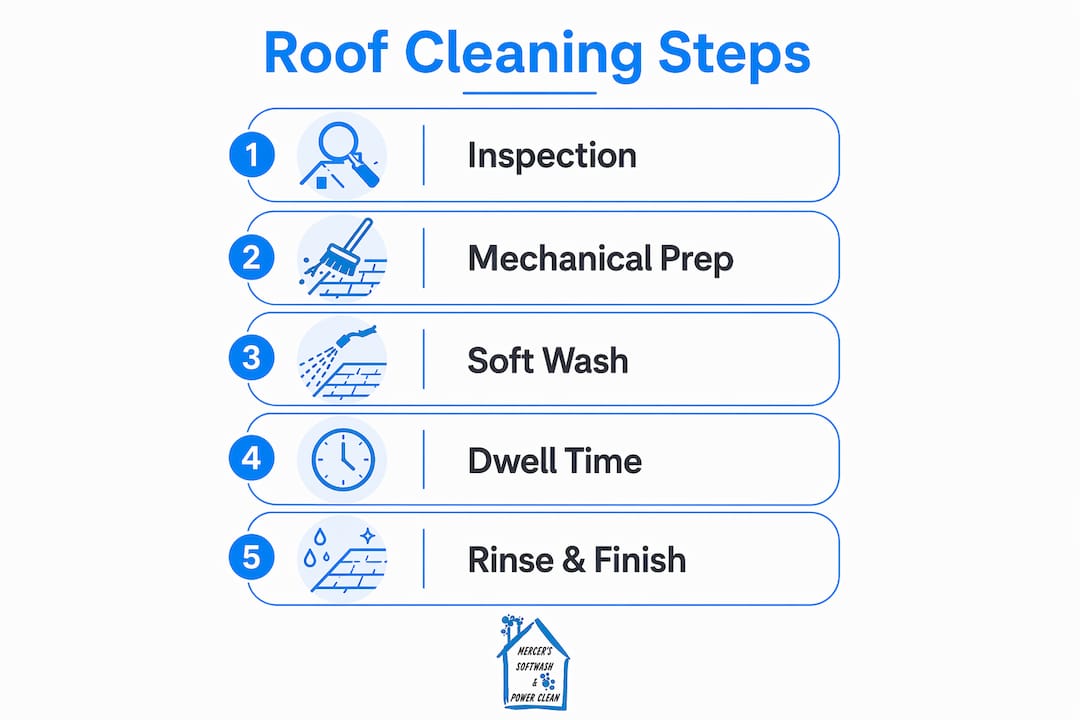
Soft washing is the warranty-safe cleaning method recommended for asphalt-shingle roofs. It applies a low-pressure chemical solution, typically below 100 PSI, using sodium hypochlorite and surfactants to kill moss, algae, lichen, and mildew at the biological level. The surfactants help the solution penetrate and cling to the roof surface, improving contact time with the organisms.
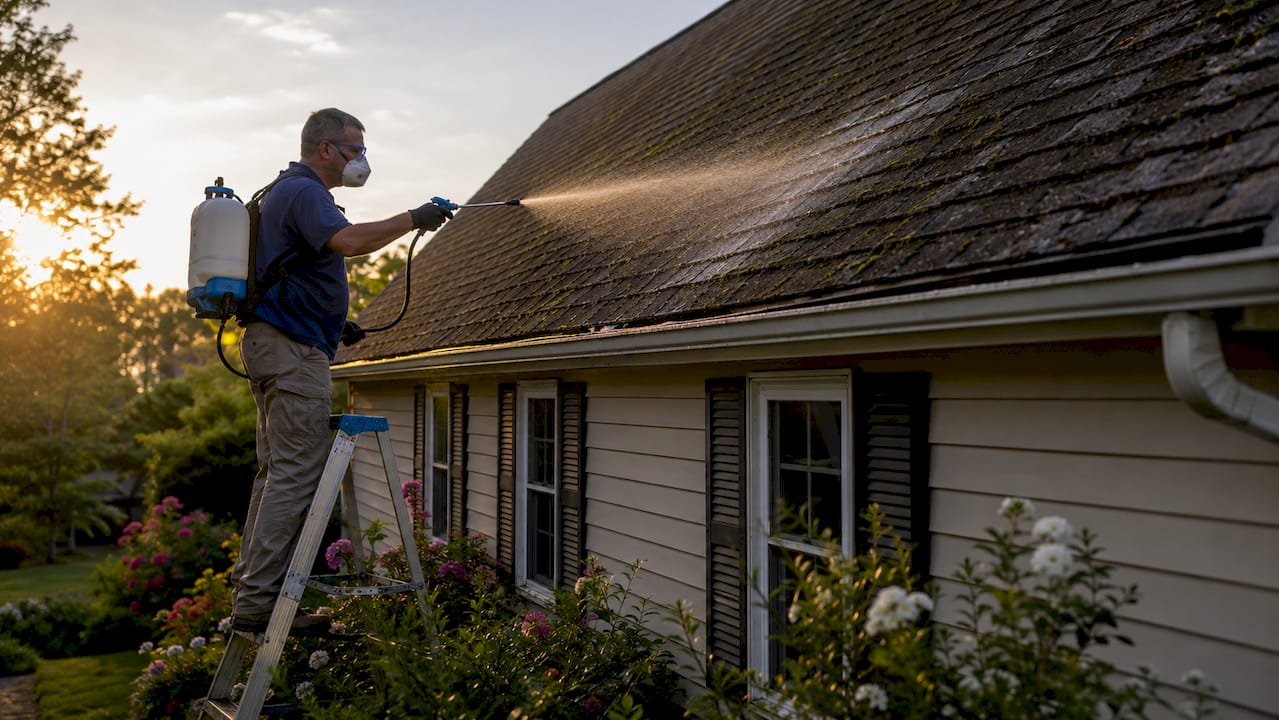
Dwell time of 10–20 minutes is critical to the process. The chemical solution must remain wet on the surface long enough to kill organisms fully before rinsing. Allowing the solution to dry before rinsing reduces effectiveness and can leave staining on shingles. Technicians rinse within the optimal time window to remove residue cleanly and avoid any chemical buildup.
High-pressure washing above 1,200–1,500 PSI strips the protective granules from asphalt shingles and voids most manufacturer warranties. That granule layer is what protects the asphalt core from UV degradation and physical wear. Once stripped, shingles age significantly faster. Soft washing eliminates the need for abrasive force entirely by letting chemistry do the work.
For roofs with heavy moss accumulation, a mechanical pre-treatment step may precede the chemical application. Technicians use soft brushes or low-pressure air to loosen thick moss mats before applying the sodium hypochlorite solution. This improves chemical penetration and kill rates on the underlying surface.
Roof type also determines the correct protocol. Asphalt shingles favour soft washing, while metal roofs may require different chemical concentrations and rinsing procedures to avoid oxidation. Compatibility with your specific roof material and manufacturer warranty conditions should always be confirmed before any cleaning begins.
Pro Tip: Soft wash technicians apply chemicals in overlapping sections working from the ridge downward. Gravity assists even coverage across the entire surface, and this technique is especially important on shaded or north-facing sections where biological growth is heaviest and moisture lingers longest.
How does roof cleaning protect your roof’s lifespan and avoid costly repairs?
Preventative cleaning protects your roof by eliminating the biological and moisture conditions that degrade materials from the outside in. Biological growth causes moisture retention that accelerates roofing material deterioration even before leaks appear inside the home. This is the core reason why cleaning is structural maintenance, not cosmetic upkeep.
The benefits of regular cleaning extend well beyond surface appearance. Here is how the process protects your roof at each stage:
-
Moisture control. Removing moss, algae, and debris eliminates the primary sources of sustained moisture contact with shingles and wood decking. Dry roofing materials resist freeze-thaw damage and UV degradation far more effectively than saturated ones.
-
Improved drainage. Clean roof surfaces allow water to shed freely into gutters and downspouts. Debris-free valleys and flashings prevent ponding, which is a leading cause of membrane stress and leak formation on both pitched and flat roofs.
-
Better inspection quality. A clean roof surface allows inspectors and technicians to identify cracked shingles, failing flashings, and deteriorating sealants that biological growth would otherwise conceal. Early detection of these defects prevents minor issues from becoming major repairs.
-
Warranty preservation. Many asphalt shingle manufacturers, including GAF and Owens Corning, include maintenance requirements in their warranty terms. Neglecting scheduled cleaning can provide grounds for a warranty claim denial if biological damage is present at the time of a claim.
-
Insurance alignment. Some property insurers in Canada expect documented maintenance records as part of a claim review. Scheduled cleaning with professional records supports your position if moisture damage is ever disputed.
The financial case is straightforward. A professional roof cleaning costs a fraction of what shingle replacement or structural decking repair costs. Treating a roof proactively every one to two years is a predictable, manageable expense. Waiting until damage is visible means paying for repairs that preventative care would have avoided entirely.
What role does drainage system maintenance play in preventative roof cleaning?
Drainage maintenance is the second half of any effective preventative roof care plan. Clogged drainage points increase risk during heavy rain, causing water to back up against roofing materials and create sustained moisture exposure that accelerates membrane and shingle breakdown. Cleaning the roof surface without clearing the drainage system leaves the water management side of the equation unresolved.
For pitched roofs, this means keeping gutters, downspouts, and valley channels clear of leaves, seed pods, and debris. For flat roofs, it means inspecting and clearing primary drains, secondary drains, and emergency overflow outlets on a more frequent schedule. Flat roofs are particularly vulnerable because standing water has nowhere to go if drainage is compromised.
The table below outlines recommended maintenance tasks and frequencies based on roof type and drainage configuration.
| Roof Type | Drainage Component | Recommended Frequency | Key Task |
|---|---|---|---|
| Pitched (asphalt shingle) | Gutters and downspouts | Twice yearly | Clear debris, check for sag or separation |
| Pitched (asphalt shingle) | Valley channels and flashings | Annually | Remove debris, inspect sealant condition |
| Flat (membrane) | Primary roof drains | Twice yearly minimum | Clear debris, inspect drain collar and membrane |
| Flat (membrane) | Emergency overflow outlets | Annually | Confirm unobstructed flow path |
| Any roof type | Full drainage inspection | Annually | Combined surface and drainage review |
Emergency overflow outlets on flat roofs are often overlooked until a torrential downpour overwhelms the primary drainage system. These outlets exist specifically to handle excess water volume during heavy storms. A blocked overflow during a major rain event can add significant structural load to the roof deck and increase the risk of collapse in extreme cases.
Pro Tip: Schedule your drainage inspection at the same time as your annual roof cleaning. Combining both tasks in a single visit reduces cost, ensures nothing is missed, and gives you a complete picture of your roof’s condition in one appointment.
How should you schedule and implement preventative roof cleaning?
The right cleaning schedule depends on your roof’s exposure, pitch, surrounding vegetation, and local climate. Most residential roofs in Southern Ontario benefit from annual professional cleaning plus inspections, with increased frequency for shaded or moss-prone areas. Roofs beneath mature trees or facing north accumulate biological growth faster and warrant attention every six months.
Knowing when to act is the first step. The following signs indicate your roof needs cleaning now rather than at the next scheduled interval:
- Visible moss or lichen growth, particularly along the ridge, in valleys, or on north-facing sections
- Dark streaks or patches running down the shingle surface, which indicate active algae colonies
- Green or grey discolouration on shingles that was not present during the last inspection
- Debris accumulation in valleys, around chimneys, or along the eaves that is not clearing between rain events
- Granule loss visible in gutters or at downspout outlets, which may indicate shingle degradation already underway
You can find a detailed breakdown of these warning signs at signs your roof needs cleaning to help you assess your roof’s current condition.
Moss prevention treatments extend the time between full cleanings. Zinc ridge strips protect roofs for 12–24 months by releasing zinc carbonate when it rains, which inhibits moss and algae regrowth across the roof surface below. These strips work best when installed after a thorough cleaning that removes all existing biological material. Reapplication or replacement of zinc-based inhibitors is typically recommended every 18–24 months depending on local conditions and rainfall volume.
Integrating your cleaning schedule with professional inspections twice per year for high-risk roofs creates a complete maintenance cycle. The inspection identifies structural concerns, the cleaning removes biological and debris threats, and the drainage check confirms water management is functioning correctly. This three-part cycle is the foundation of effective preventative maintenance for any residential or commercial roof.
Key takeaways
Preventative roof cleaning is the most cost-effective way to extend roof lifespan, preserve manufacturer warranties, and prevent moisture-driven structural damage before it becomes visible.
| Point | Details |
|---|---|
| Cleaning is structural maintenance | Biological growth traps moisture and degrades shingles before leaks appear indoors. |
| Soft washing is the correct method | Applying sodium hypochlorite below 100 PSI kills organisms without stripping granules or voiding warranties. |
| Drainage upkeep is equally critical | Clearing gutters, drains, and overflow outlets must accompany surface cleaning for full protection. |
| Frequency depends on exposure | Annual cleaning suits most roofs; shaded or moss-prone roofs need attention every six months. |
| Zinc treatments extend protection | Zinc ridge strips inhibit regrowth for 12–24 months when applied after a thorough cleaning. |
Why i think most homeowners underestimate this maintenance task
From my experience working with roofs across Southern Ontario, the most common and costly mistake I see is treating roof cleaning as optional until something goes wrong. By the time a homeowner notices a water stain on the ceiling, the biological damage on the roof surface has typically been progressing for two or three years. The repair bill at that point is always far larger than the cleaning cost would have been.
The second mistake I see regularly is DIY pressure washing. Homeowners rent a pressure washer, set it to a high PSI, and blast the roof clean in an afternoon. The roof looks great for a few weeks. Then the granule loss shows up in the gutters, the shingles start to cup and crack, and the manufacturer warranty is void because the cleaning method was not compliant. I would strongly recommend reading about soft washing vs. pressure washing before touching your roof with any equipment.
My practical advice is this: always check your shingle manufacturer’s warranty documentation before selecting a cleaning method. GAF, Owens Corning, and IKO all publish maintenance guidelines, and most specify low-pressure chemical cleaning as the only approved method. Hiring a professional who understands those requirements protects both your roof and your warranty coverage. Combining that cleaning with a professional gutter cleaning at the same visit gives you complete water management maintenance in a single appointment.
— Felix
How Mercerssoftwashpowerclean can help protect your roof
Mercerssoftwashpowerclean provides professional soft washing and preventative roof maintenance services for residential and commercial properties across Southern Ontario. The team applies sodium hypochlorite-based treatments at low pressure to kill moss, algae, and lichen without damaging shingles or voiding manufacturer warranties. Services include scheduled roof cleaning, biological growth treatment, and combined gutter and roof drain clearing for complete water management maintenance. Recurring maintenance plans are available for property managers and homeowners who want consistent, documented care without the guesswork. To understand the full process before booking, read the soft washing guide for homeowners or visit the roof washing service page to learn what a professional treatment includes.
FAQ
What is preventative roof cleaning exactly?
Preventative roof cleaning is a scheduled maintenance process that removes moss, algae, lichen, debris, and mildew from a roof surface before these contaminants cause moisture damage or structural deterioration. It typically combines soft washing with drainage system upkeep as part of a recurring maintenance plan.
How often should a roof be cleaned?
Most residential roofs benefit from annual professional cleaning, while shaded or moss-prone roofs may require cleaning every six months. Frequency depends on roof exposure, surrounding vegetation, and local climate conditions.
Does roof cleaning void the manufacturer warranty?
High-pressure washing above 1,200–1,500 PSI can void asphalt shingle warranties by stripping protective granules. Soft washing at below 100 PSI is the warranty-compliant cleaning method accepted by most major shingle manufacturers.
What are the signs your roof needs cleaning?
Visible moss growth, dark algae streaks on shingles, green or grey discolouration, and debris accumulation in valleys or around flashings all indicate that cleaning is overdue. Granule loss visible in gutters is a sign that biological damage may already be progressing.
Can zinc strips replace professional roof cleaning?
Zinc ridge strips inhibit moss and algae regrowth for 12–24 months after installation, but they do not remove existing biological growth. They work as a preventative supplement applied after a thorough professional cleaning, not as a replacement for it.


