

Exterior building maintenance is defined as the proactive, ongoing care of a building’s outer surfaces from the roof down to the foundation, covering every exposed element that faces weather, pollution, and daily wear. It includes cleaning, inspecting, and repairing facades, siding, windows, gutters, roofing, and surrounding site elements to preserve structural integrity and property value. Both homeowners and property managers rely on this process to prevent small defects from becoming expensive failures. Understanding what exterior building maintenance involves is the first step toward protecting one of your most significant assets.
What does exterior building maintenance involve?
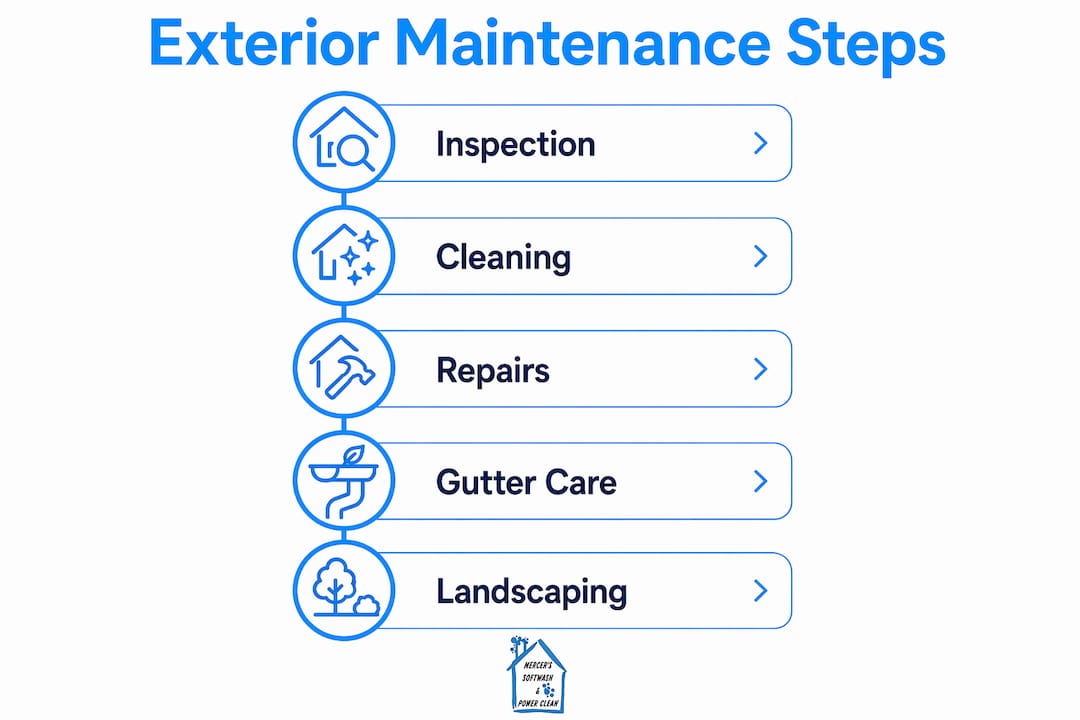
Exterior building maintenance is a proactive care process covering a building’s exterior from roof to foundation, preserving surfaces and preventing larger repairs. It is not a single task. It is a structured programme of cleaning, inspection, and repair activities that work together to keep a building safe, functional, and presentable.
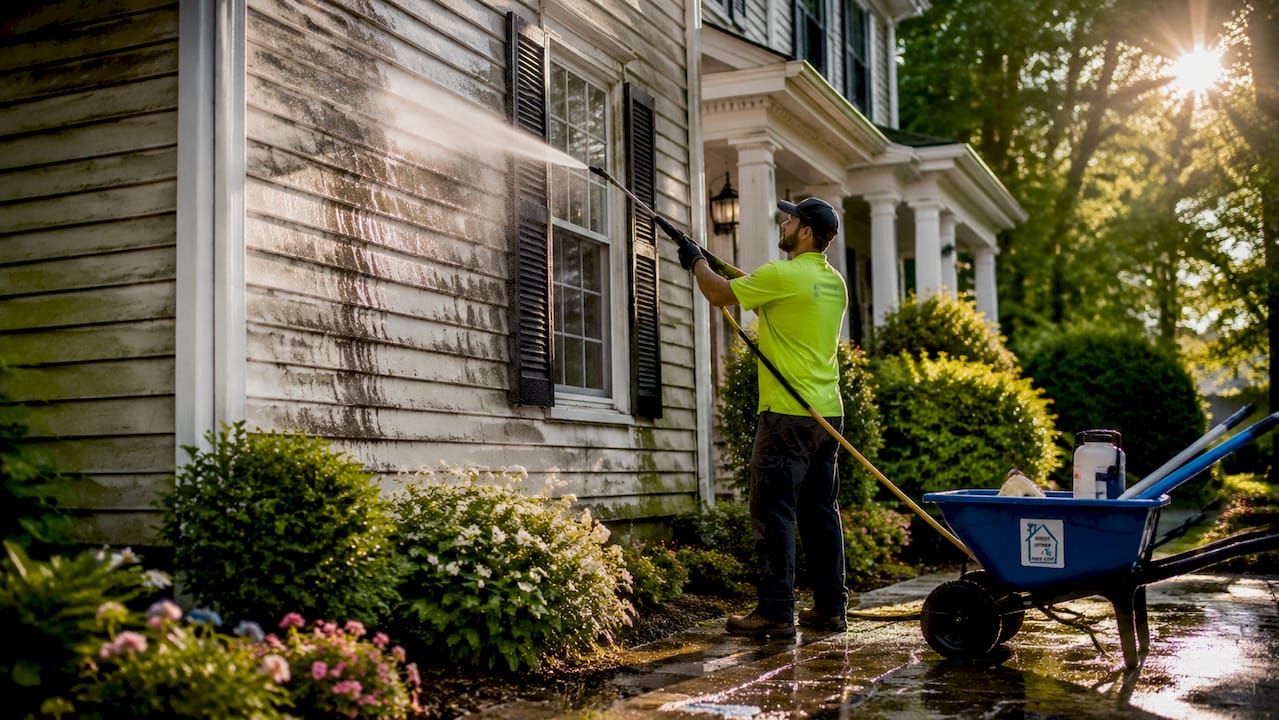
Cleaning is the most visible component. Facades, siding, windows, and entryways accumulate dirt, algae, mould, and pollution stains over time. Left untreated, biological growth like algae and mould accelerates surface degradation, particularly on wood, stucco, and painted finishes. Regular cleaning removes these contaminants before they cause lasting damage.
Inspection is equally critical. Roofs, gutters, exterior walls, and structural joints all require periodic evaluation to catch deterioration early. Water intrusion often occurs at hidden joints, penetrations, and transitions due to deteriorated sealants and flashing. Facade specialists recommend detailed evaluation of these critical water entry points to prevent damage that can spread deep into a building’s structure.
Repairs complete the cycle. Caulking gaps, replacing damaged siding panels, resealing flashings, and patching cracks are all standard repair tasks that follow from thorough inspections. The goal is to address minor defects before they escalate into water intrusion, rot, or structural compromise.
Pro Tip: Clean your gutters at least twice a year, once in late spring and once in late autumn, to prevent water from backing up against your fascia and foundation.
What key tasks are included in building exterior upkeep?
A well-rounded exterior maintenance programme covers several distinct task categories, each targeting a specific part of the building envelope.
Facade and siding cleaning removes biological growth, oxidation staining, and pollution deposits from vertical surfaces. Soft washing with low-pressure water and appropriate cleaning agents is the preferred method for painted siding, stucco, and wood, as high pressure can force water behind cladding and cause damage.
Roof and gutter maintenance protects the building from water ingress at its most vulnerable points. Commercial exterior maintenance baselines include 1–2 exterior clean and inspection visits per year plus quarterly gutter and drainage checks. Blocked gutters cause water to overflow against fascia boards and pool near foundations, leading to rot and settlement issues.
Window and glazing cleaning maintains visibility and prevents the etching of glass surfaces caused by mineral deposits and pollution. For commercial buildings, glazing also forms part of the building envelope and requires inspection for failed seals and frame deterioration.
Structural element checks cover exterior walls, entryways, stairways, and balconies for cracks, spalling, and surface deterioration. Even hairline cracks in masonry or concrete deserve attention because they allow water to penetrate and freeze, widening the crack with each freeze-thaw cycle.
Landscaping and site maintenance rounds out the programme. Overgrown vegetation against a building traps moisture against cladding and can physically damage surfaces over time. Keeping plants trimmed back and drainage channels clear is a straightforward but often overlooked exterior maintenance tip.
How often should exterior maintenance be performed?
Preventive exterior maintenance programmes generally use at least two annual inspections timed in spring and fall to reduce emergency repairs and maintain curb appeal. Spring inspections catch damage from winter freeze-thaw cycles. Fall inspections prepare the building for the coming cold season and clear gutters of leaf debris before freeze-up.
Not every task follows the same schedule. Scheduling maintenance in tiers balances thoroughness without over-servicing. Monthly checks cover high-risk areas like walkways, exterior lighting, and visible drainage. Quarterly checks address gutters, downspouts, and drainage systems. Seasonal cleaning covers facades, windows, and siding. Annual professional evaluations cover roofing, foundations, and structural elements.
Several factors influence how frequently your property needs attention. Climate is the most significant. Properties in Southern Ontario face hard winters, spring thaw, summer humidity, and autumn leaf fall, all of which create distinct maintenance demands across the year. Building materials also matter. Painted wood siding requires more frequent cleaning and inspection than brick or fibre cement. Properties near busy roads accumulate pollution staining faster than those in quieter areas.
| Maintenance task | Recommended frequency |
|---|---|
| Gutter and downspout clearing | Quarterly (minimum twice per year) |
| Walkway and lighting inspection | Monthly |
| Facade and siding cleaning | Seasonally (spring and fall) |
| Window cleaning | Twice per year or quarterly |
| Roof and structural inspection | Annually plus after major storms |
| Foundation and sealant check | Annually |
Pro Tip: Schedule your spring exterior inspection for may, after the last frost, so you can accurately assess any freeze-thaw damage before planning repairs.
Residential vs. commercial exterior maintenance: what are the differences?
The goals of exterior upkeep are the same for both property types: preserve the building, protect occupants, and maintain value. The scope, complexity, and regulatory requirements differ significantly.
Residential exterior maintenance centres on curb appeal, seasonal cleaning, and routine inspections. Homeowners typically manage tasks like gutter cleaning, seasonal exterior cleaning, siding washing, and deck maintenance on an annual or semi-annual basis. The building envelope is simpler, and most tasks can be handled by a professional cleaning or inspection service without specialised engineering input.
Commercial exterior maintenance operates at a different scale and level of formality. It involves a systematic programme covering facade cladding, glazing systems, signage, mechanical penetrations, and drainage infrastructure. For high-rise commercial buildings in New York City, Local Law 11 facade inspections occur on a 5-year cycle, requiring a qualified certified inspection and a filed report. Licensed QEWI professionals conduct these inspections with close-up wall access, distinguishing them from general building inspections.
The cost implications are also different. NYC Local Law 11 facade inspection costs range from $8,000 to $60,000, with projects lasting 2 to 6 months or longer if repairs are needed. While Canadian commercial properties operate under different regulatory frameworks, the principle is the same: larger buildings carry greater inspection complexity and higher maintenance costs.
Property managers overseeing apartment building exteriors face additional considerations around tenant satisfaction and legal liability. A poorly maintained exterior signals neglect to prospective tenants and can create liability exposure if deteriorated surfaces cause injury.
Key distinctions between residential and commercial maintenance:
Residential priorities:
- Curb appeal and seasonal cleaning
- Gutter, roof, and siding upkeep
- Deck, fence, and driveway maintenance
- Annual professional inspection for structural elements
Commercial priorities:
- Facade cladding and glazing system inspection
- Signage cleaning and structural integrity
- Compliance with municipal inspection requirements
- Documented maintenance records for liability and insurance purposes
- Quarterly drainage and mechanical penetration checks
How to develop an effective exterior maintenance plan
Consistent, property-specific maintenance programmes matched to site conditions and materials outperform ad hoc or one-off repairs. A tailored plan improves safety, reduces costs, and maintains asset value better than reactive work orders. Building a plan does not need to be complicated, but it does need to be deliberate.
-
Assess your building’s components and risk factors. Walk the full perimeter and note every exterior surface type, its current condition, and its exposure to weather, moisture, and traffic. Pay particular attention to areas where different materials meet, such as where siding meets trim or where a roof meets a wall, because these transitions are where deteriorated sealants and flashing most often allow water entry.
-
Set a maintenance schedule based on risk tiers. Use the tiered frequency model: monthly for high-risk areas, quarterly for drainage, seasonally for cleaning, and annually for professional structural evaluations. Write the schedule down and assign responsibility for each task.
-
Document every inspection and repair. Keep a simple log noting the date, what was inspected, what was found, and what action was taken. This record becomes invaluable when planning capital repairs, dealing with insurance claims, or demonstrating due diligence to tenants or buyers.
-
Hire professionals for tasks beyond your capability. Roof inspections, facade assessments, and high-access cleaning require trained professionals with the right equipment. Attempting these tasks without proper training or equipment creates safety risks and can cause surface damage.
-
Address minor defects immediately. A hairline crack in caulking or a loose piece of flashing costs very little to fix. Left alone, the same defect can allow water intrusion that rots framing, damages insulation, and requires thousands of dollars in remediation.
Pro Tip: Take dated photographs during every inspection. A visual record of your building’s condition over time makes it far easier to track deterioration rates and justify repair budgets.
Key takeaways
Exterior building maintenance is a structured, proactive programme of cleaning, inspection, and repair that protects building integrity, prevents water damage, and preserves property value over the long term.
| Point | Details |
|---|---|
| Definition and scope | Exterior maintenance covers all exposed building surfaces from roof to foundation, including cleaning, inspection, and repair. |
| Inspection frequency | Perform at least two full inspections per year in spring and fall, with monthly checks on high-risk areas. |
| Residential vs. commercial | Residential focuses on curb appeal and seasonal upkeep; commercial adds compliance, glazing systems, and documented records. |
| Tiered scheduling | Organise tasks by risk: monthly for walkways and lighting, quarterly for gutters, seasonally for facades, annually for structural elements. |
| Proactive over reactive | Addressing small defects like deteriorated sealants early prevents costly water intrusion and structural damage later. |
Why I think most property owners underestimate exterior maintenance
After years of working with properties across Southern Ontario, the pattern I see most often is this: owners treat exterior maintenance as something to do when a problem becomes visible. By that point, the damage is already done.
The most expensive repairs I have seen all started with something small. A section of deteriorated caulking around a window frame. A gutter that was never cleared in autumn. A crack in stucco that was painted over instead of properly sealed. None of these looked serious at first glance. All of them eventually allowed water into the building envelope, and water is patient.
What I find most telling is that property owners who follow a consistent schedule, even a simple one, almost never face emergency repairs. They spend less money overall because they catch problems at the $50 stage rather than the $5,000 stage. That is not a coincidence. Maintenance as an investment protects building value and ensures safety rather than functioning as a superficial cleaning task.
My honest advice: stop waiting for something to look wrong before you act. Schedule your spring and fall inspections now, get your gutters cleared before freeze-up, and document what you find. The cost of consistent care is a fraction of the cost of neglect.
— Felix
Professional exterior cleaning services from Mercerssoftwashpowerclean
Mercerssoftwashpowerclean provides professional exterior cleaning and maintenance services for residential and commercial properties across Southern Ontario. Whether you need soft washing for siding, roof cleaning, window washing, or professional gutter cleaning to protect your property from water damage, the team brings the right equipment and expertise to every job. Not sure where to start? Check the top signs your exterior needs cleaning to assess your property’s current condition and prioritise what needs attention first.
FAQ
What is exterior building maintenance?
Exterior building maintenance is the proactive care of all exposed building surfaces, including facades, roofing, gutters, windows, and siding, to preserve structural integrity and prevent deterioration. It combines regular cleaning, scheduled inspections, and timely repairs.
How often should you inspect a building’s exterior?
Most preventive programmes recommend at least two full inspections per year, timed in spring and fall, with monthly checks on high-risk areas like walkways and gutters cleared quarterly.
What is the difference between residential and commercial exterior maintenance?
Residential maintenance focuses on seasonal cleaning, curb appeal, and routine upkeep, while commercial maintenance adds facade compliance requirements, glazing system inspections, and formal documentation of all maintenance activities.
Why does exterior maintenance prevent costly repairs?
Small defects like deteriorated sealants and hairline cracks allow water to enter the building envelope. Addressing these early costs far less than remediating the rot, mould, and structural damage that water intrusion causes over time.
What does a good exterior maintenance plan include?
A solid plan includes a tiered inspection schedule, documented records of all findings and repairs, seasonal cleaning of facades and gutters, and annual professional evaluations of roofing and structural elements.


