

Pressure washing gets most of the attention when homeowners think about exterior cleaning, but it is not always the right tool. Soft washing is a low-pressure, chemistry-driven cleaning method that removes algae, mildew, mould, and organic staining without the mechanical force that can crack siding, strip granules from shingles, or void expensive manufacturer warranties. Understanding what soft washing is, how it works, and when to use it can save you money on repairs and extend the life of surfaces you may be cleaning incorrectly right now.
Key takeaways
| Point | Details |
|---|---|
| Low-pressure cleaning | Soft washing operates under 500 PSI, compared to 1,500 to 4,000+ PSI for standard pressure washing. |
| Chemistry does the work | Sodium hypochlorite, surfactants, and neutralizers remove organic growth at the source, not just at the surface. |
| Surface preservation matters | Delicate materials like asphalt shingles, stucco, and vinyl siding require soft washing to avoid irreversible damage. |
| Warranty compliance | Major shingle manufacturers recommend soft washing and may void warranties when high-pressure methods are used. |
| Longer-lasting results | Soft washing extends cleaning intervals by treating the root of organic growth rather than blasting away surface staining. |
What is soft washing, exactly?
Soft washing is a cleaning technique that uses low-pressure water delivery combined with biodegradable chemical solutions to remove organic growth, dirt, and biological staining from exterior surfaces. Where pressure washing relies on force, soft washing relies on chemistry. The cleaning system operates under 500 PSI, while a standard pressure washer typically runs between 1,500 and 4,000 PSI or more.
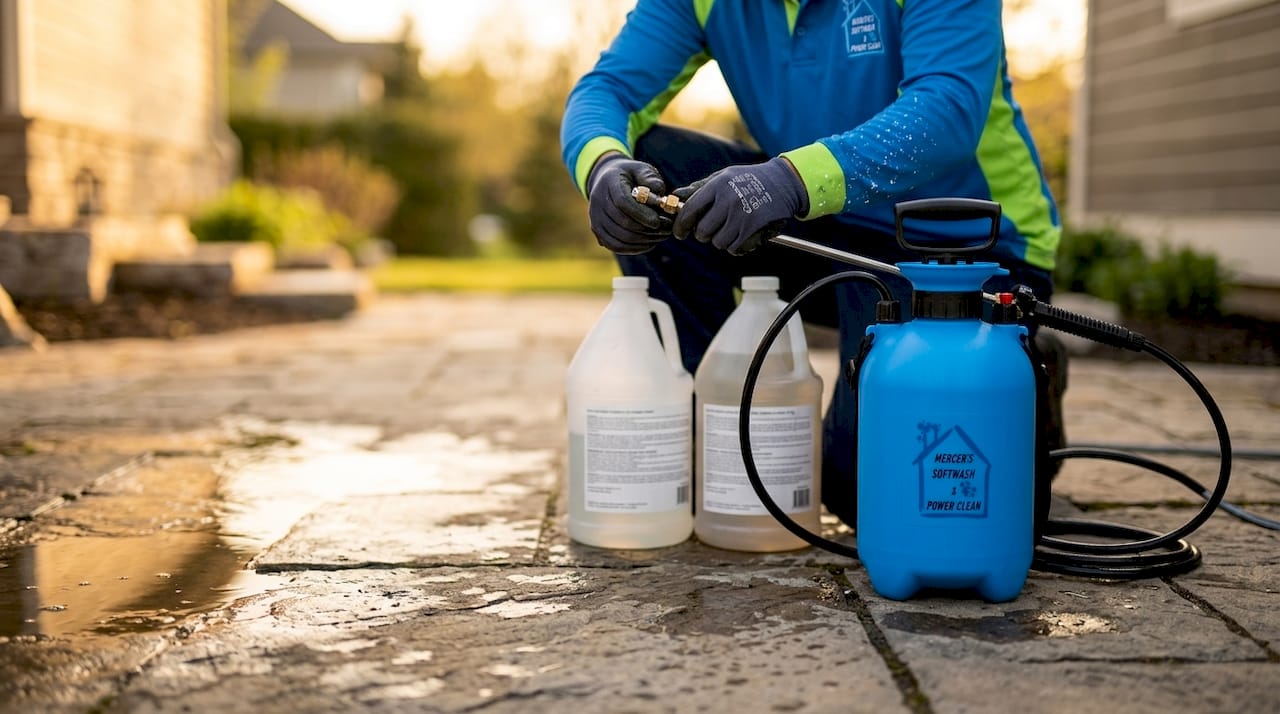
The distinction matters because many surface contaminants, particularly algae, mildew, lichen, and mould, are biological organisms with root structures. Blasting them off with high pressure removes only what is visible, leaving behind microscopic spores and root systems that allow regrowth within weeks or months. Soft washing kills those organisms at a molecular level, which is why clean surfaces stay clean significantly longer.
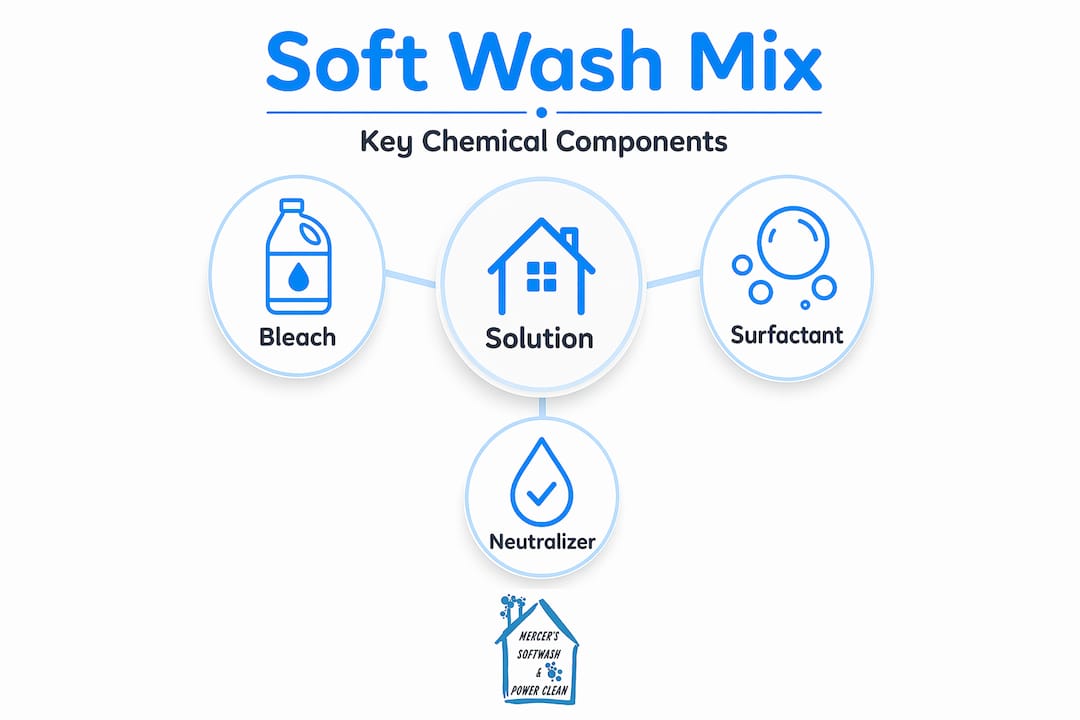
The core chemical components in a professional soft wash solution are sodium hypochlorite (bleach), surfactants, and neutralizers. Each plays a specific role. Sodium hypochlorite kills the biological organisms. Surfactants help the solution cling to surfaces and penetrate growth rather than running off immediately. Neutralizers protect surrounding landscaping and restore surface chemistry after treatment.
| Feature | Soft washing | Pressure washing |
|---|---|---|
| Operating pressure | Under 500 PSI | 1,500 to 4,000+ PSI |
| Cleaning mechanism | Chemical treatment | Mechanical force |
| Best for | Roofs, siding, stucco, painted wood | Concrete, brick, metal |
| Effect on organic growth | Kills at root level | Removes surface layer only |
| Risk of surface damage | Very low | Moderate to high on delicate materials |
Pro Tip: If you can see algae or dark streaking returning within a season of pressure washing, the pressure approach is not solving the problem. It is only delaying it.
Understanding the soft wash solution
The soft wash solution is where most of the actual cleaning happens, and understanding its composition helps you appreciate why professional application matters. Professional soft wash solutions typically contain water, biodegradable surfactants, and sodium hypochlorite diluted to roughly 1% for siding surfaces or up to 3% for roofs.
Professional-grade sodium hypochlorite typically comes at 12% concentration, which technicians then dilute to the appropriate working strength based on the surface being treated. This is meaningfully different from household bleach, which is typically 3% to 6% concentration and contains additives that are not formulated for exterior cleaning. Using household bleach as a substitute for professional soft wash chemistry often produces inconsistent results and may damage certain surfaces or plant life.
Surfactants are the unsung component of a good soft wash mix. Surfactants reduce surface tension, allowing the sodium hypochlorite to cling to vertical surfaces long enough to penetrate and neutralise organic growth. Without them, the solution runs off almost immediately, reducing dwell time and overall effectiveness. Better dwell time means you need less chemical volume to achieve the same result, which benefits both the surface and the environment.
Neutralizers and plant wash products are the third component, and they are often overlooked even by people who understand the other two. After treatment, sodium hypochlorite residue can damage landscaping, harm grass, and alter the surface pH of certain materials. Neutralizers restore plant health and protect neighbouring vegetation after the cleaning is complete. They are not optional on any professionally executed job.
Pro Tip: Never attempt to replicate a professional soft wash mix by guessing dilution ratios. Over-concentration damages surfaces and plants. Under-concentration leaves biological growth alive and often just spreads it.
Soft washing versus pressure washing
Choosing between soft washing and pressure washing is not a matter of preference. It is a matter of matching the right tool to the surface and the contaminant. You can read a detailed breakdown on soft washing vs pressure washing, but the essential principle is this: soft washing protects materials that cannot withstand mechanical force, while pressure washing is better suited to dense, hard surfaces where force will not cause damage.
Asphalt shingles are the clearest example of why this distinction matters. Major shingle manufacturers recommend soft washing for roof cleaning and explicitly state that high-pressure cleaning can void warranty coverage. The granules embedded in asphalt shingles provide UV protection and weather resistance. High pressure strips those granules prematurely, reducing the functional lifespan of the roof by years. A roof cleaned with the right soft washing technique looks cleaner immediately and lasts longer over time.
Stucco, vinyl siding, cedar siding, painted wood, and composite wood panels all fall into the same category as surfaces that require soft washing. These materials either absorb water under pressure, crack under mechanical force, or have coatings and finishes that pressure washing degrades. Concrete driveways, brick walls, stone patios, and metal railings, on the other hand, are well-suited to pressure washing because their density and composition handle high-pressure water delivery without degradation.
Improper cleaning pressures can void expensive roof warranties, which makes the choice of cleaning method a financial decision, not just an aesthetic one. Before any cleaning project, identify what the surface is made of, check the manufacturer’s care instructions if available, and select the method accordingly.
The soft washing technique, step by step
Proper soft washing requires specific equipment and a disciplined process. The equipment includes low-pressure pumps, specialised nozzles, and chemical injectors designed to deliver the solution at the correct pressure and volume. A standard garden hose or pressure washer with a low-pressure tip is not an adequate substitute, because the delivery system affects both the chemical distribution and the contact quality on the surface.
The process follows a specific sequence that cannot be skipped or reordered without reducing effectiveness.
- Pre-wet surrounding surfaces. Before applying any chemical solution, wet down adjacent plants, grass, and hardscaping. This dilutes any chemical overspray that reaches unintended surfaces.
- Apply the soft wash solution. Using the appropriate dilution for the surface type, apply the solution evenly from bottom to top on vertical surfaces to prevent streaking.
- Allow dwell time. This is the most critical step. The solution needs time to penetrate and kill organic growth. Dwell time typically ranges from 5 to 15 minutes depending on the severity of growth and ambient temperature.
- Rinse thoroughly. After dwell time, rinse the surface completely with low-pressure water, working from top to bottom.
- Apply neutraliser. Treat any nearby vegetation with a neutraliser or plant wash to counteract chemical exposure.
The dwell time strategy is what separates effective soft washing from a surface-level rinse. Organic growth that is simply rinsed off will return quickly. Growth that has been chemically neutralised during adequate dwell time takes far longer to reestablish, which is why soft washing results can outlast pressure washing results by three to four times.
Proper personal protective equipment is non-negotiable. Sodium hypochlorite at working concentrations causes skin and eye irritation, and chemical-resistant gloves, eye protection, and appropriate clothing are required for safe handling. If you are managing your home’s exterior cleaning without professional support, familiarise yourself with the material safety data sheet for every chemical you are using before you start.
Pro Tip: Cold weather significantly slows down chemical reaction time. If you are soft washing in early spring or late autumn in Ontario, increase dwell time to account for lower surface and air temperatures.
Benefits of soft washing for your property
The advantages of soft washing extend well beyond a clean-looking exterior after the job is done. Because the technique kills organic growth at its source rather than removing only the visible layer, surfaces cleaned with soft washing stay cleaner for longer. Soft washing extends cleaning intervals by three to four times compared to pressure washing on the same surfaces, which translates directly into lower maintenance frequency and reduced long-term cost.
Surface preservation is one of the most compelling benefits for homeowners and property managers making long-term decisions. Repeated pressure washing on vinyl siding, composite panels, or painted surfaces introduces mechanical wear that accumulates over years. Soft washing eliminates that stress on the material, which extends the service life of your siding, roofing, and exterior finishes.
For roof maintenance specifically, soft washing for roofs is not just a cleaning preference. It is a warranty requirement with many leading manufacturers. Having documentation that your roof was cleaned using the manufacturer’s recommended method protects you if a warranty claim ever becomes necessary. That protection has real monetary value. Booking professional roof washing services from a company that understands these requirements is a straightforward way to maintain that protection.
The biodegradable nature of properly formulated soft wash solutions also reduces the environmental impact compared to harsh chemical alternatives. When mixed and applied correctly, these solutions break down after contact, minimising the chemical load on surrounding soil and water. That is a meaningful consideration if your property has gardens, natural water features, or mature landscaping worth protecting.
Improved curb appeal and property value are the immediate visible outcomes, but it is the long-term surface preservation, warranty compliance, and reduced maintenance frequency that make soft washing a sound investment for any property owner serious about maintaining what they own.
My perspective on soft washing and common misconceptions
In my experience working with homeowners and property managers, the most persistent misconception is that more pressure equals more cleaning power. It feels intuitive. High pressure feels aggressive and thorough. But I have seen that thinking cause thousands of dollars in damage to roofs and siding that simply did not need to be cleaned that way.
What I find genuinely compelling about soft washing as a precision approach is that it asks you to respect the material you are cleaning. Different surfaces have different tolerances, and a good exterior cleaning professional understands that chemistry should always take priority over force when the surface calls for it. The results are not just better cosmetically. They last longer, cause less wear, and keep warranties intact.
The homeowners I see run into trouble are typically those who hired the cheapest option or tried to do it themselves with equipment that was not right for the job. When evaluating any exterior cleaning provider, ask them directly what solution concentration they use for your specific surface type, how they protect your landscaping, and whether they are familiar with your roofing manufacturer’s cleaning recommendations. A knowledgeable contractor will answer those questions without hesitation. One who cannot should raise concern.
— Felix
How Mercerssoftwashpowerclean can help
At Mercerssoftwashpowerclean, we specialise in professional soft washing for residential and commercial properties across Southern Ontario. Whether you are dealing with algae on your roof, dark staining on your vinyl siding, or mildew creeping across your stucco, our approach combines the right chemical formulations with safe, low-pressure application to clean thoroughly without causing damage. Our soft washing for house siding service uses eco-friendly, biodegradable solutions applied by trained technicians who understand both the chemistry and the surfaces they are working on. We also provide professional roof washing that aligns with manufacturer guidelines so your warranty stays intact. If you are ready to protect your property the right way, reach out to Mercerssoftwashpowerclean for a consultation tailored to your specific surfaces and maintenance goals.
FAQ
What is soft washing and how does it differ from pressure washing?
Soft washing uses low-pressure water under 500 PSI combined with biodegradable chemical solutions to remove organic growth. Pressure washing uses mechanical force at 1,500 to 4,000+ PSI, which can damage delicate surfaces like shingles and vinyl siding.
What surfaces can be soft washed?
Soft washing is suitable for asphalt roofs, vinyl and wood siding, stucco, painted surfaces, cedar, and composite cladding. Any surface where high-pressure water delivery would cause damage or degrade finishes benefits from the soft washing technique.
Is soft washing safe for landscaping?
Yes, when applied correctly with proper pre-wetting and post-treatment neutralisers, soft washing is safe for surrounding plants and grass. Neutralisers are applied after the cleaning process to counteract any sodium hypochlorite residue and restore plant health.
How long do soft washing results last?
Soft washing results typically last three to four times longer than pressure washing results on the same surfaces, because the chemical treatment kills organic growth at the root rather than simply removing surface-level staining.
Does soft washing comply with roofing warranties?
Major shingle manufacturers specifically recommend soft washing for roof cleaning and often void warranties when high-pressure methods are used. Using a soft washing professional who follows those guidelines protects your warranty coverage.
Recommended
- Soft wash house siding guide for homeowners
- What Is The Difference Between Soft Washing And Pressure Washing In Port Hope? – Mercer’s Softwash & Power Clean Inc. | Pressure Washing Service
- Why home exterior cleaning matters for your property
- Roof Washing Service – Mercer’s Softwash & Power Clean Inc. | Pressure Washing Service


