

Exterior signage cleaning is the regular process of removing dirt, grime, pollutants, and organic buildup from outdoor business signs to preserve visibility, brand image, and structural integrity. Known in the industry as commercial sign maintenance, this practice covers everything from illuminated channel letters and vinyl wraps to metal fascia boards and acrylic face panels. Neglected signs collect algae, mould, exhaust residue, and bird fouling at a rate that visibly degrades their appearance within weeks. For business owners and facility managers across Southern Ontario, maintaining clean exterior signage is not a cosmetic preference. It is a direct investment in how customers perceive your brand before they ever walk through the door.
What is signage cleaning exterior and why does it matter?
Exterior signage cleaning is defined as the systematic removal of surface contaminants from outdoor signs using appropriate tools, cleaning agents, and techniques suited to the sign’s material and environment. The goal is to restore legibility, protect the substrate, and extend the sign’s functional lifespan. Clean signage is considered a building’s handshake, the first impression a business makes on every passing customer, delivery driver, and potential client.
The impact of dirty signage goes beyond aesthetics. Organic growth such as algae and lichen retains moisture against the sign face, accelerating oxidation on metal components and causing delamination on vinyl graphics. Illuminated signs with dirty faces produce noticeably less light output, reducing visibility at night when many businesses rely on signage most. Regular maintenance not only improves appearance but extends sign asset life significantly, reducing the frequency of costly replacements.
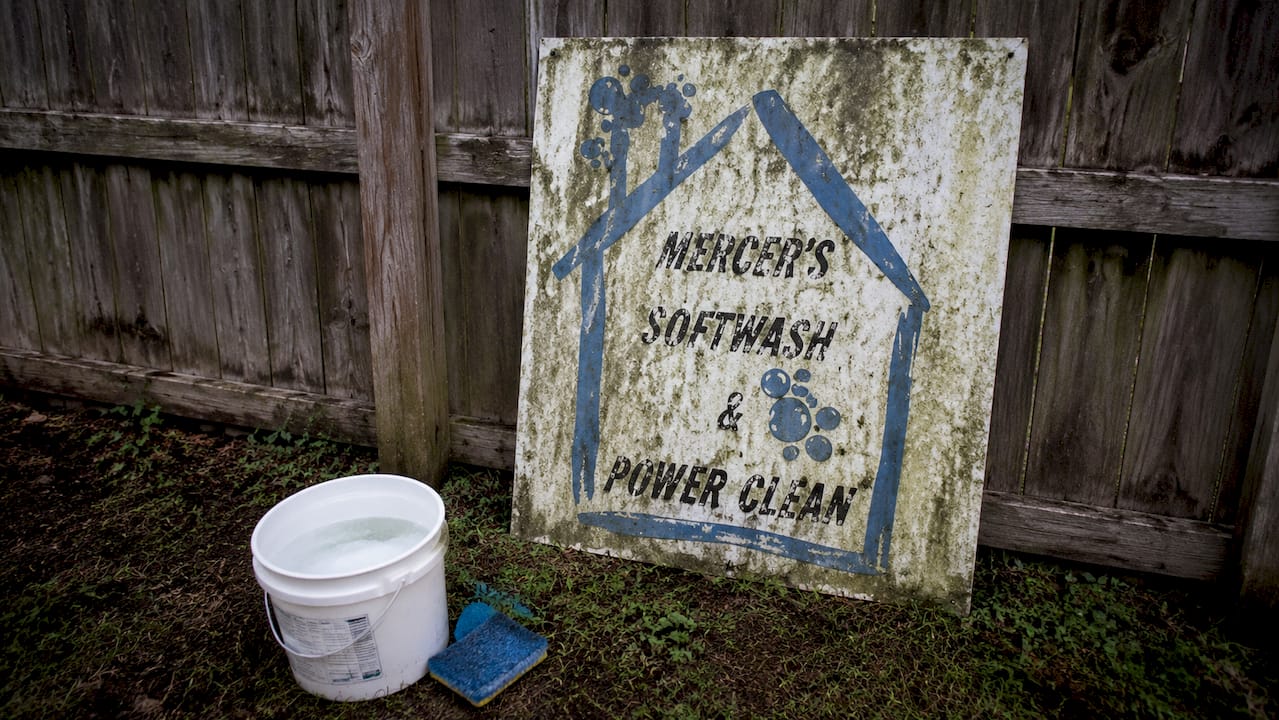
Safety is another factor that facility managers often overlook. Accumulated grime can obscure directional or safety signage, creating liability concerns. Electrical signs with moisture ingress from neglected cleaning and inspection cycles are a documented fire risk. Treating exterior sign cleaning as a scheduled maintenance task, rather than a reactive fix, is the standard that professional property managers apply to commercial assets of all sizes.
How to clean exterior signage safely and effectively
Cleaning exterior signage safely requires a methodical approach that matches the cleaning method to the sign material. Rushing the process or reaching for the nearest pressure washer causes more damage than the original dirt. The following steps represent current best practice for facility managers handling sign maintenance in-house or briefing a cleaning contractor.
Step 1: Power off illuminated signs. Before any water or cleaning solution contacts an illuminated sign, the power supply must be switched off at the source. Water and live electrical components are an obvious hazard, but moisture can also enter transformer housings and cause corrosion that only becomes apparent months later.
Step 2: Inspect the sign before cleaning. Look for cracked acrylic faces, lifting vinyl graphics, loose mounting hardware, and any existing water staining around seams. Electrical and structural inspections during maintenance uncover hidden moisture or cracks that prevent costly failures down the line. Document what you find before cleaning begins.
Step 3: Choose the right cleaning solution. Mild, pH-neutral soap diluted in water is appropriate for most sign materials. Biodegradable detergents are preferred for commercial properties where runoff enters storm drains. Avoid ammonia-based cleaners on acrylic, as they cause clouding. Avoid bleach-based products on vinyl graphics, as they accelerate colour fading.
Step 4: Apply with low-pressure equipment and soft tools. Soft microfibre cloths, soft-bristle brushes, and low-pressure spray equipment protect sign faces from scratching. Soft washing using low-pressure water and biodegradable solutions extends signage cleanliness three times longer than conventional scrubbing. This makes it the preferred method for commercial sign maintenance, particularly for vinyl and acrylic faces that scratch easily.
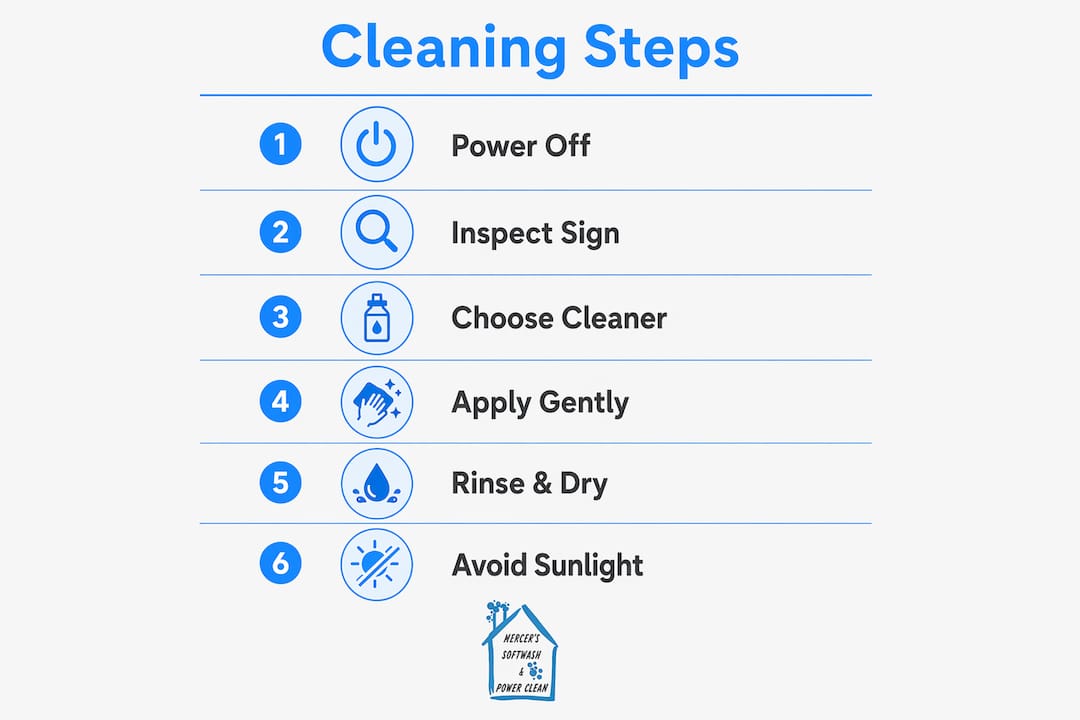
Step 5: Rinse thoroughly and dry. Residual cleaning solution left on sign faces attracts dust and can leave a film that reduces clarity. Rinse with clean water and allow the sign to air dry, or use a clean microfibre cloth to remove excess moisture from flat surfaces.
Pro Tip: Clean signs in shade or during overcast conditions. Cleaning in direct sunlight causes cleaning solution to dry too quickly, leaving water spots and streaks that are difficult to remove without a second pass.
How often should you clean exterior signs?
Cleaning frequency is one of the most common questions facility managers ask, and the answer depends on the sign’s environment more than its material. A vinyl banner in a rural setting accumulates far less contamination than the same banner mounted above a busy urban intersection.
Signs in urban or pollution-heavy areas should be cleaned every one to two months, while signs in dusty or industrial zones require monthly cleaning to prevent material degradation. This is a meaningful distinction because the particulate matter in industrial environments bonds to sign surfaces differently than urban exhaust residue, often requiring more aggressive (but still low-pressure) cleaning solutions to lift effectively.
Scheduling sign cleaning alongside other building maintenance tasks, such as facade washing or window cleaning, is a practical approach that reduces access costs and keeps the overall property appearance consistent. After major weather events, including ice storms, heavy winds, or extended periods of freezing rain common to Southern Ontario winters, an unscheduled inspection and spot clean is worth adding to your maintenance calendar. Debris impact and freeze-thaw cycles can dislodge mounting hardware and introduce moisture behind sign faces.
The table below summarises recommended cleaning intervals by environment and sign material to help you build a practical maintenance schedule.
| Environment | Sign material | Recommended interval |
|---|---|---|
| Urban or high-traffic | Vinyl, acrylic, illuminated | Every 1 to 2 months |
| Industrial or dusty | Metal, acrylic, vinyl | Monthly |
| Suburban or low-traffic | All materials | Every 3 months |
| Coastal or high-humidity | Metal, illuminated | Monthly (corrosion risk) |
| Post-storm (any location) | All materials | Inspect and spot clean immediately |
What are the material-specific risks in sign cleaning?
Different sign materials respond very differently to cleaning agents and pressure levels. Understanding these differences is what separates a clean sign from a damaged one.
Acrylic face panels are among the most sensitive sign materials. They scratch easily under abrasive cloths or stiff brushes, and ammonia-based cleaners cause permanent clouding of the surface. High-pressure washing acrylic faces forces water behind the panel and into the sign cabinet, where it pools around electrical components. Always use a soft microfibre cloth and a pH-neutral cleaner on acrylic.
Vinyl graphics and wraps are vulnerable to both chemical damage and mechanical lifting. Solvents, bleach, and high-pressure water directed at graphic edges will lift the adhesive bond, causing bubbling and peeling that cannot be reversed without replacing the graphic. Improper pressure or chemical use can cause discolouration, clouding, or permanent damage requiring full replacement.
Metal sign cabinets and frames tolerate slightly more robust cleaning but are susceptible to corrosion if moisture is trapped in joints or around fasteners after cleaning. After washing metal components, inspect all seams and fasteners for rust formation. A light application of a corrosion-inhibiting product on exposed metal hardware extends the service life of the mounting system significantly.
Illuminated and LED signs require the most careful approach because of the electrical components involved. Over-aggressive high-pressure washing causes premature sign failure including graphic lifting, water intrusion, and surface scratching. For illuminated signs, low-pressure rinsing and hand-wiping is the only safe method.
Pro Tip: Always test your cleaning solution on an inconspicuous area of the sign first, such as the back panel or a lower corner, and wait five minutes before proceeding. This single step prevents the majority of chemical damage incidents.
Additional maintenance practices that extend sign lifespan
Cleaning is the foundation of sign maintenance, but several supplementary practices extend the interval between cleanings and protect the sign’s structural integrity over the long term.
Applying a UV-resistant wax or weatherproof coating after cleaning is one of the most cost-effective protective measures available. UV-protectant coatings slow degradation and extend signage lifespan by reducing the rate of fading and oxidation caused by sunlight and temperature cycling. This is particularly relevant in Southern Ontario, where signs face intense summer UV exposure followed by freeze-thaw stress through winter.
Routine inspection for graffiti is another maintenance task that pays dividends when addressed promptly. Fresh graffiti is significantly easier to remove than cured paint, and most commercial graffiti removal products are safe for vinyl and metal surfaces when applied within 24 to 48 hours of the incident. Waiting longer often means the only solution is panel replacement.
Keeping the area immediately surrounding your signage clean also reduces the rate at which the sign itself becomes dirty. Overhanging tree branches deposit sap, pollen, and organic debris directly onto sign faces. Trimming vegetation away from signage and cleaning the mounting wall or fascia board during each sign cleaning cycle reduces recontamination between scheduled maintenance visits.
From a cost perspective, professional exterior sign cleaning services vary based on sign size, access requirements, and location. Sites requiring rope access or elevated work platforms carry higher service fees due to equipment and safety compliance costs. Consistent scheduled maintenance, however, is demonstrably less expensive than premature sign replacement driven by neglect. Pairing sign cleaning with seasonal exterior cleaning of the broader building envelope is a practical way to manage both cost and scheduling efficiently.
Key takeaways
Exterior signage cleaning protects brand visibility, prevents material degradation, and extends sign lifespan through scheduled, material-appropriate maintenance using low-pressure techniques and biodegradable cleaning agents.
| Point | Details |
|---|---|
| Use low-pressure methods | Soft washing extends cleanliness three times longer than scrubbing and prevents material damage. |
| Match frequency to environment | Urban and industrial signs need cleaning every one to two months; suburban signs every three months. |
| Know your sign material | Acrylic, vinyl, and illuminated signs each require specific cleaning agents and tools to avoid permanent damage. |
| Inspect during every clean | Check for moisture ingress, cracked faces, loose hardware, and corrosion at each maintenance visit. |
| Apply protective coatings | UV-resistant wax after cleaning slows fading and oxidation, reducing long-term replacement costs. |
Why I think most businesses are cleaning their signs wrong
In my experience working with commercial properties across Southern Ontario, the single most common mistake I see is the misuse of pressure washing on signage. Business owners assume that more pressure equals a cleaner result. More pressure does not equal cleaner signs; overuse of power washing is a major cause of premature sign failure. I have seen vinyl graphics peeled clean off a fascia board by a pressure washer in the hands of someone who genuinely thought they were doing the right thing.
The second mistake is treating sign cleaning as a once-a-year task tied to spring cleaning. Signs in high-traffic urban locations accumulate enough contamination in six weeks to noticeably affect their appearance and legibility. Waiting twelve months means you are operating with a degraded first impression for most of the year.
The third issue is ignoring the electrical and structural side of sign maintenance entirely. A surface clean that misses a cracked seal or a corroding mounting bracket is incomplete maintenance. The soft washing vs pressure washing decision is important, but so is the inspection that happens alongside the cleaning. I would encourage any facility manager to treat sign maintenance as a two-part task: clean the surface, then inspect the structure. Engaging a certified professional for complex or illuminated signage is not an unnecessary expense. It is the decision that prevents a far larger one.
— Felix
Professional exterior signage cleaning from Mercerssoftwashpowerclean
Mercerssoftwashpowerclean provides professional exterior signage cleaning for commercial properties across Southern Ontario, using soft washing techniques that protect sign materials while delivering a thorough, long-lasting clean. The team uses biodegradable, non-abrasive cleaning agents suited to acrylic, vinyl, metal, and illuminated sign types, and follows safety protocols for all elevated and electrical work. Whether you manage a single retail location or a multi-site commercial portfolio, Mercerssoftwashpowerclean can build a scheduled maintenance programme that keeps your signage looking sharp year-round. Explore the full range of commercial cleaning services or get in touch to discuss a tailored exterior sign cleaning solution for your property.
FAQ
What is exterior signage cleaning?
Exterior signage cleaning is the regular removal of dirt, grime, algae, pollutants, and organic buildup from outdoor business signs using appropriate tools and cleaning agents. The goal is to restore visibility, protect sign materials, and extend the sign’s operational lifespan.
How often should exterior signs be cleaned?
Signs in urban or pollution-heavy environments should be cleaned every one to two months, while signs in dusty or industrial zones require monthly cleaning. Suburban or low-traffic locations can typically maintain a three-month cleaning interval.
Is pressure washing safe for exterior signs?
High-pressure washing is not recommended for most exterior sign materials. Excessive pressure causes graphic lifting, water intrusion behind sign faces, and surface scratching on acrylic and vinyl. Low-pressure soft washing with biodegradable detergents is the safer and more effective method.
What cleaning products are safe for vinyl and acrylic signs?
pH-neutral, mild soap solutions and biodegradable detergents are safe for both vinyl and acrylic sign materials. Avoid ammonia-based cleaners on acrylic and bleach-based products on vinyl, as both cause irreversible surface damage.
Why does cleaning timing affect sign cleaning results?
Cleaning in direct sunlight causes cleaning solutions to dry too quickly, leaving water spots and streaks on sign faces. Cleaning during overcast conditions or in shaded areas allows proper rinsing and produces a streak-free result.


