

Exterior cleaning between tenant turnovers is a scheduled, multi-task process that restores a rental property’s kerb appeal and confirms rent-ready condition before a new tenancy begins. Property managers across Southern Ontario who treat this phase as a structured workflow, rather than a last-minute task, consistently reduce vacancy days and avoid costly rework. The process covers pressure washing, soft washing, window cleaning, gutter clearing, and biological growth removal, and it must be sequenced correctly within the broader make-ready timeline. Done well, it protects your deposit documentation, satisfies incoming tenants from day one, and preserves the long-term condition of the building envelope.
How to schedule exterior cleaning within your tenant turnover workflow
The typical make-ready window runs five to ten days, with seven days as the operational target for most single-family and multi-unit rentals. That is a tight window, and exterior cleaning must be slotted deliberately within it, not squeezed in wherever space appears.
A reliable sequence looks like this:
- Day 1: Move-out inspection and debris removal. Walk the full exterior with a checklist and photograph every surface before touching anything. Remove tenant-left debris, furniture, and waste.
- Days 2 to 4: Repairs and paint touch-ups. Address gutter damage, fascia repairs, cracked caulking, and any surface defects that would be obscured or worsened by cleaning.
- Days 4 to 5: Exterior cleaning. Schedule exterior cleaning after repairs are complete to eliminate double cleaning and prevent fresh paint or sealant from being disturbed by pressure washing.
- Days 5 to 6: Interior deep clean, running concurrently where possible. Locking exterior crews into a dedicated vendor track that runs alongside interior work reduces total vacancy days without adding complexity.
- Day 7: Final walkthrough. Confirm all exterior surfaces meet the condition standard documented at move-in.
Vendor coordination is the single factor most likely to compress or extend this timeline. Starting coordination 30 days before the tenant’s move-out date reduces average turnover duration by eight days. That means contacting your exterior cleaning crew before the current tenancy ends, confirming availability, and locking in a date contingent on repairs finishing on schedule.
Pro Tip: Book your exterior cleaning vendor at the same time you serve the move-out notice. Availability for professional soft washing and pressure washing in Southern Ontario fills quickly during spring and summer, and a confirmed booking costs you nothing if the date shifts slightly.

What exterior cleaning tasks should be included between tenants?
Not every surface requires the same method, and choosing the wrong approach causes damage that costs more than the cleaning itself. The two primary methods used in professional post-tenant cleaning services are pressure washing and soft washing, and they serve different purposes.
| Surface | Recommended method | Why |
|---|---|---|
| Vinyl and wood siding | Soft washing | High pressure strips paint, forces water behind cladding, and damages wood fibres |
| Concrete driveways and walkways | Pressure washing | Hard surfaces tolerate high PSI and require mechanical force to remove oil and staining |
| Asphalt shingle roofs | Soft washing with Sodium Hypochlorite | Pressure washing dislodges granules; low-pressure chemical treatment kills algae and moss at the root |
| Interlock and paving stone | Pressure washing with controlled PSI | Removes organic growth and staining without dislodging sand joints if done correctly |
| Gutters and downspouts | Manual clearing plus flush | Debris removal by hand followed by a low-pressure flush confirms flow and reveals damage |
| Windows and entryways | Squeegee and purified water system | Streak-free finish on glass; first impression surface for incoming tenants |
The tasks that most property managers underestimate are biological growth treatment and gutter clearing. Algae, mould, and lichen on siding or roofing do not wash away with water alone. They require a surfactant-based solution, typically Sodium Hypochlorite diluted to the appropriate concentration, applied at low pressure and allowed to dwell before rinsing. Skipping this step means the growth returns within weeks, which is exactly the kind of complaint a new tenant will raise in their first month.
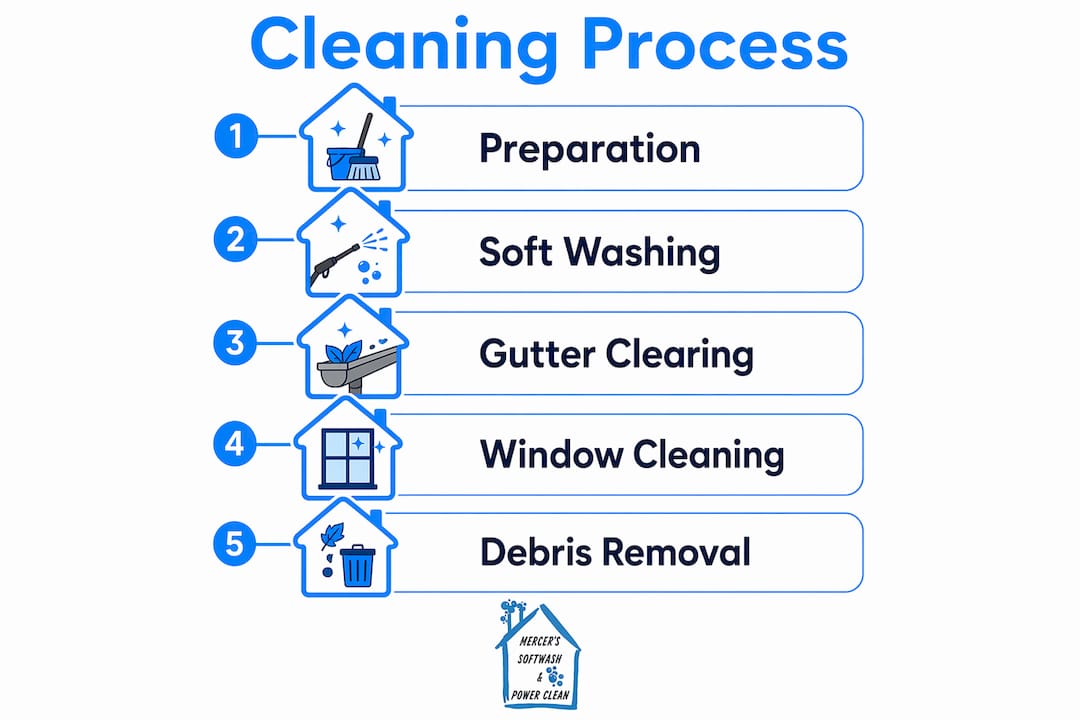
Window and entryway cleaning deserves equal attention. These are the surfaces an incoming tenant sees and touches first. Grimy glass, stained thresholds, and dirty light fixtures signal neglect before the tenant has opened the front door. Professional window cleaning for rentals uses purified water systems that leave no mineral deposits or streaking, which is a result that standard squeegee work rarely achieves consistently.
Debris removal, including leaves in window wells, cobwebs under soffits, and organic buildup in corners, should be completed before any washing begins. Washing over debris simply redistributes it.
Why documenting exterior condition protects you during tenant disputes
Timestamped photo documentation of all visible exterior surfaces, taken before and after cleaning, is the foundation of defensible deposit dispute records. Without it, a departing tenant can credibly claim that damage existed before their tenancy, and you have no evidence to the contrary.
The documentation process should follow a consistent structure on every turnover:
- Photograph siding, walkways, entries, fencing, decking, and roofline before any cleaning or repairs begin.
- Note specific staining, biological growth, graffiti, or physical damage in writing alongside the photos.
- Require your exterior cleaning vendor to upload completion photos immediately after the job, with timestamps intact.
- Store all records in a property management platform or a shared folder organised by unit and date.
Before and after photos from contractors establish a clear condition baseline that supports your position if a deposit deduction is challenged. This is not bureaucratic caution. It is the practical difference between recovering cleaning costs and absorbing them.
Pro Tip: Use a smartphone app that automatically embeds GPS coordinates and timestamps into photos, such as the native camera app on iOS or Android with location services enabled. This metadata is admissible in most provincial tenancy tribunal proceedings and is far more credible than undated screenshots.
Technology tools like Buildium, AppFolio, and Rentec Direct all include move-out inspection modules that allow photo uploads tied directly to a unit record. If you are managing more than a handful of properties, integrating your exterior cleaning documentation into one of these platforms removes the risk of photos being lost in email threads.
Common mistakes in exterior cleaning between tenant turnovers
The most expensive mistake in apartment turnover cleaning is scheduling exterior cleaning before repairs are finished. Pressure washing a wall and then having a contractor drill anchor points for a new light fixture means the wall needs washing again. Proper sequencing places cleaning after all surface work is complete, without exception.
Several other patterns consistently delay turnovers and increase costs:
- Late vendor booking. Calling an exterior cleaning company two days before you need them during peak season results in either no availability or premium urgent pricing. Move-out cleaning services booked one to seven days out are priced at 1.75 to 2.5 times standard rates, reflecting the time pressure on the vendor.
- Skipping junk removal before cleaning. Exterior cleaning crews cannot effectively wash surfaces blocked by tenant-left furniture, bags, or equipment. Clearing the exterior first is not optional. Switching from full-service junk removal to curbside pickup coordination saves between $120 and $520 per unit and avoids the scheduling delays that come with booking a full removal crew.
- Underestimating scope. A property that has not had professional exterior maintenance for two or more years will require more dwell time, more chemical product, and potentially multiple passes on heavily stained surfaces. Providing your vendor with accurate photos before quoting prevents scope disagreements on the day of the job.
- Treating exterior cleaning as optional. Incoming tenants notice dirty siding, stained walkways, and grimy windows immediately. A negative first impression at move-in sets the tone for the tenancy and increases the likelihood of early complaints or short lease renewals.
Phase-by-phase checklists reduce oversight gaps and create repeatability across your portfolio. A written scope of work for each exterior cleaning visit, specifying surfaces, methods, and expected outcomes, protects both you and your vendor and eliminates ambiguity about what was agreed.
Understanding property exterior maintenance as a recurring operational cost, rather than a reactive expense, is what separates well-managed properties from those that accumulate deferred maintenance across tenancies.
Key takeaways
Exterior cleaning between tenant turnovers is most effective when sequenced after repairs, coordinated 30 days in advance, and documented with timestamped photos before and after every job.
| Point | Details |
|---|---|
| Sequence cleaning after repairs | Washing before repairs are complete causes rework and adds unnecessary cost to every turnover. |
| Book vendors 30 days out | Early coordination reduces turnover duration by up to eight days and avoids peak-season pricing premiums. |
| Match method to surface | Soft washing protects siding and roofing; pressure washing suits concrete, interlock, and hard surfaces. |
| Document before and after | Timestamped photos of all exterior surfaces create a defensible record for deposit disputes. |
| Treat scope seriously | Accurate pre-job photos and a written scope of work prevent cost disputes and missed surfaces on cleaning day. |
What I have learned about exterior cleaning in turnover operations
I have seen property managers treat exterior cleaning as the last item on the turnover list, something to squeeze in if time permits. That approach is backwards. The exterior is the first thing an incoming tenant sees, and it sets their expectation for everything inside. A clean, well-maintained exterior signals that the property is managed with care. A stained driveway and algae-covered siding signal the opposite, regardless of how well the interior was prepared.
The sequencing principle is the one I come back to most often. Cleaning before repairs are done is one of the most common and avoidable sources of extra cost in turnover operations. It seems obvious in theory, but under time pressure, with multiple vendors on site and a new tenant moving in on a fixed date, the temptation to start cleaning early is real. Resist it. The rework cost is never worth the perceived time saving.
Early vendor coordination is the other habit that consistently separates efficient turnovers from chaotic ones. Exterior cleaning crews, particularly those who specialise in soft washing and pressure washing for rental properties, book out quickly during warm months in Southern Ontario. If you are not on their calendar before your tenant gives notice, you are already behind. Treat your exterior cleaning vendor like a utility, something you schedule automatically as part of the turnover process, not something you call when you suddenly need them.
Documentation is the part most managers do well once they have been through a deposit dispute. The goal is to build that habit before the dispute, not after.
— Felix
How Mercer’s Softwash & Power Clean supports your turnover process
Mercerssoftwashpowerclean provides professional exterior cleaning services across Southern Ontario, with specific experience preparing rental properties for new tenants. The team handles soft washing, pressure washing, roof cleaning, gutter clearing, window cleaning, and interlock washing, covering the full scope of what a vacancy cleaning checklist requires. Understanding which method suits each surface is built into every job. If you are weighing your options, the soft washing vs. pressure washing guide explains the difference in plain terms. For properties requiring a broader range of services, the commercial services page outlines what Mercerssoftwashpowerclean offers for multi-unit and managed properties. Contact the team early in your turnover planning to confirm availability and lock in your cleaning date before the schedule fills.
FAQ
What is included in exterior cleaning between tenant turnovers?
Exterior cleaning between tenant turnovers typically includes pressure washing or soft washing of siding, cleaning of walkways and driveways, window washing, gutter clearing, and biological growth treatment for algae or mould. The specific scope depends on the property’s condition and the surfaces involved.
When should exterior cleaning be scheduled during a tenant turnover?
Exterior cleaning should be scheduled after all repairs and paint touch-ups are complete, typically on days four to five of a standard seven-day make-ready window. Cleaning before repairs are finished leads to rework and additional cost.
How far in advance should I book an exterior cleaning vendor for a turnover?
Book your exterior cleaning vendor at least 30 days before the tenant’s move-out date. Early vendor coordination reduces average turnover duration by eight days and avoids the premium pricing that comes with last-minute bookings.
Does exterior cleaning help with tenant deposit disputes?
Yes. Timestamped before-and-after photos of all exterior surfaces, taken before cleaning begins and after the job is complete, create a documented condition record that supports your position in deposit deduction disputes at a provincial tenancy tribunal.
What is the difference between soft washing and pressure washing for rental properties?
Soft washing uses low pressure combined with a Sodium Hypochlorite-based solution to treat biological growth on siding, roofing, and painted surfaces without causing damage. Pressure washing uses high-pressure water to remove staining and debris from hard surfaces like concrete and interlock. Choosing the wrong method for a surface can cause lasting damage, so matching the technique to the material is critical.


