

Professional exterior washing equipment is defined as the collection of machines, chemical delivery systems, and accessories that trained technicians use to clean building facades, roofs, driveways, and other outdoor surfaces safely and efficiently. The category includes pressure washers, soft wash systems, surface cleaners, and water-fed pole setups. Understanding what equipment pros use for washing helps you evaluate the quality of any service you hire, make smarter purchasing decisions if you operate a crew, and set realistic expectations for results. At Mercerssoftwashpowerclean, we work with this equipment daily across Southern Ontario, so this guide reflects real field experience.
What equipment do pros use for washing exterior surfaces?
Professional exterior washing relies on four core equipment categories. Each one serves a distinct purpose, and experienced technicians select from all four depending on the surface, the contaminant, and the risk of damage.
Pressure washers are the backbone of most exterior cleaning operations. Professional-grade machines range from $800 to $5,000 depending on flow rate and capability. Entry-level units deliver 4–5 GPM and cost $800–$2,000, while commercial-grade machines deliver 6–8 GPM and cost $2,000–$5,000. Higher GPM means more water volume moving across the surface, which translates directly to faster cleaning on large areas like driveways and commercial facades.
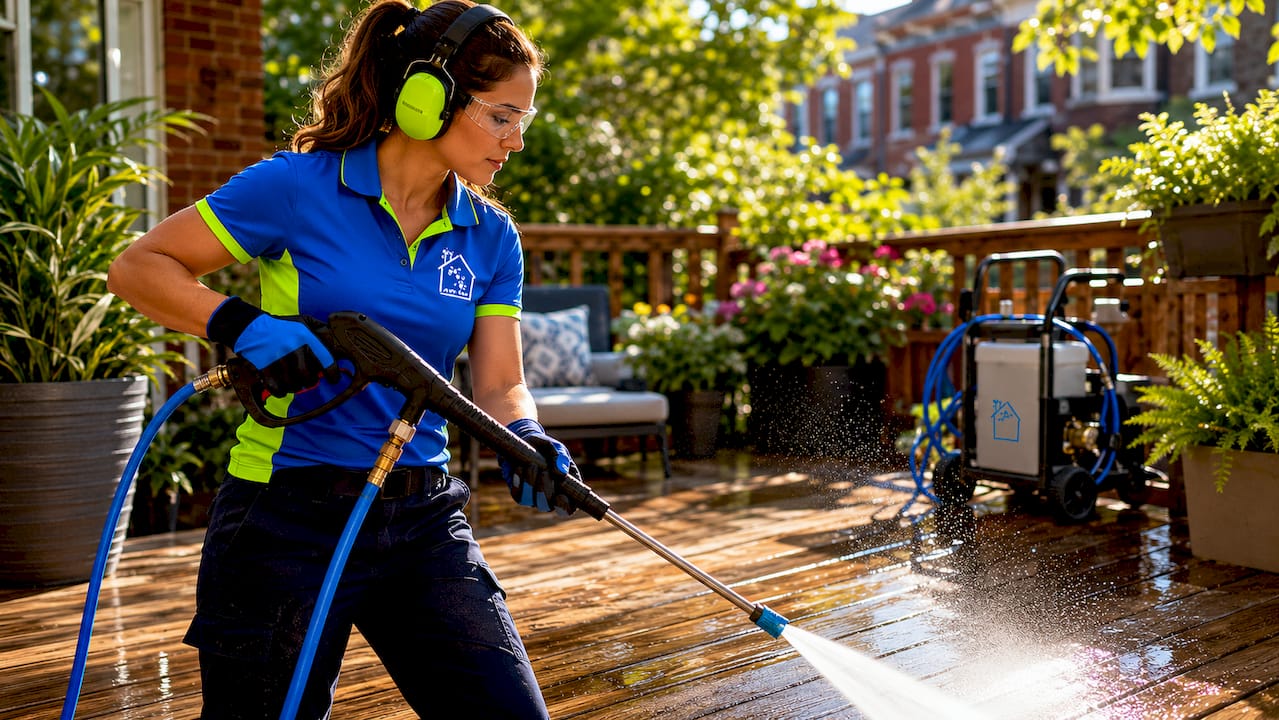
Surface cleaners attach to a pressure washer wand and spin two or more nozzles in a circular pattern. They cover ground far faster than a single wand and produce a consistent, streak-free finish on flat concrete or interlock. Professionals treat them as mandatory for any driveway or parking lot job.
Soft wash systems use low-pressure, high-flow pumps rated at 5.5–7 GPM with chemical proportioners to deliver diluted Sodium Hypochlorite and surfactants to delicate surfaces. The pumps are chemical-resistant and self-priming, which allows accurate solution mixing on site rather than batch mixing in a tank. Soft washing is the correct method for roofs, painted wood siding, and stucco where high pressure would cause damage.
Water-fed pole (WFP) systems deliver purified water through a telescopic carbon fibre or fibreglass pole to clean windows and cladding from ground level. WFP systems increase productivity by 30–50% over traditional ladder and squeegee methods on multi-storey buildings. That speed gain comes without the injury risk that ladder work carries.
Essential safety and support gear rounds out the professional kit:
- Chemical-resistant gloves, safety glasses, and rubber boots
- Downstream chemical injectors for pressure washers
- Hose reels (50–100 metre capacity) to reduce trip hazards
- Turbo nozzles and a full nozzle set (0°, 15°, 25°, 40°, and soap tip)
- Spare O-rings, quick-connect fittings, and a spare chemical injector
How do professional washing tools differ in efficiency and job suitability?
The right tool matched to the right job is what separates a clean result from a damaged surface or a rework call.
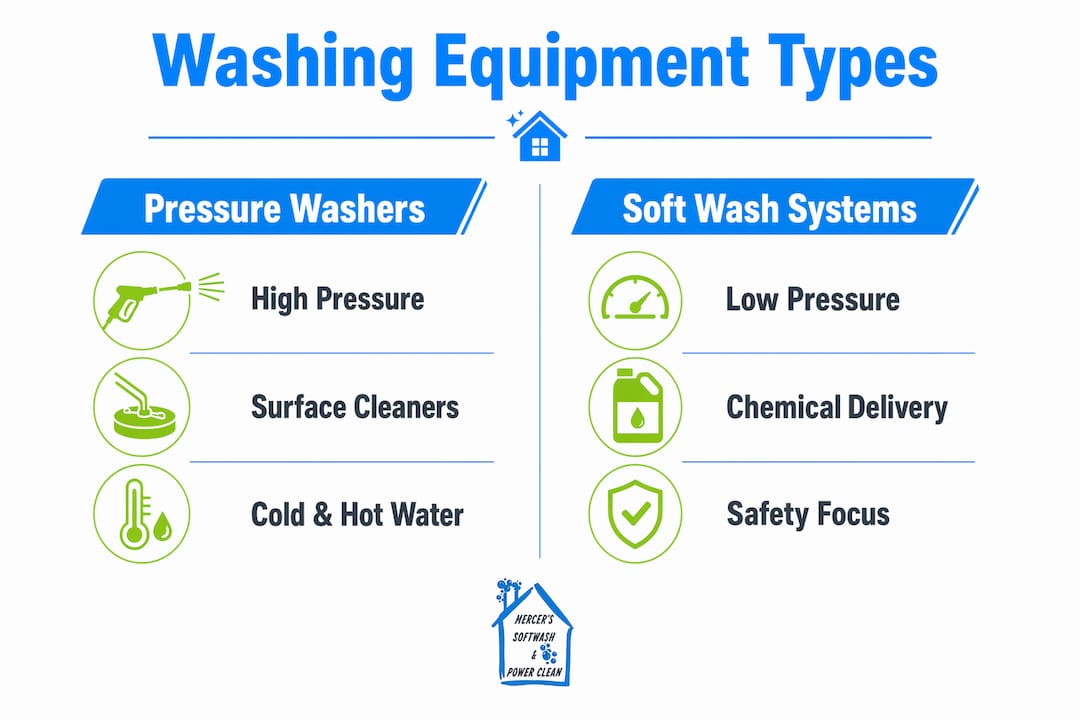
Cold water equipment handles roughly 80% of residential jobs and is simpler and less costly to maintain than hot water systems. Hot water units cost $3,000–$7,000 more than comparable cold water machines, but they are the correct choice for commercial grease removal on kitchen exhaust vents, loading docks, and food service exteriors. Buying a hot water unit for residential house washing is an unnecessary expense. Buying only a cold water unit and then bidding on restaurant contracts is a reliability problem.
Surface cleaner sizing is a technical detail that many new operators get wrong. Matching nozzle size and surface cleaner diameter to the machine’s GPM is non-negotiable. An oversized surface cleaner drops pressure at the nozzle tips, which causes “zebra striping” on concrete. Those alternating light and dark bands require a second pass and add time to every job.
| Equipment | Best application | Key spec to match |
|---|---|---|
| Cold water pressure washer (4–5 GPM) | Residential driveways, house washing | Surface cleaner diameter to GPM |
| Hot water pressure washer (6–8 GPM) | Commercial grease, fleet washing | Temperature output, GPM |
| Soft wash system (5.5–7 GPM) | Roofs, painted siding, stucco | Chemical proportioner ratio |
| Water-fed pole system | Multi-storey windows, cladding | Pole reach, water purity (TDS) |
Chemical-resistant hoses and spray guns are not optional for soft washing. Standard pressure washer hoses degrade quickly when exposed to Sodium Hypochlorite. Using the wrong hose leads to leaks, chemical exposure, and premature equipment failure.
Pro Tip: Always test your surface cleaner on a small, hidden section of concrete before committing to a full driveway run. If you see striping within the first two passes, your machine’s GPM is too low for that cleaner diameter. Switch to a smaller cleaner before you create a pattern you cannot fix.
What should pros carry beyond the main machines?
Backup parts prevent costly project delays, and equipment failures on a job site are inevitable. The difference between a one-hour delay and a cancelled job is whether you carry standardised spare parts.
Every professional rig should carry:
- Spare O-rings and quick-connect fittings in multiple sizes
- At least one backup chemical injector (downstream and upstream)
- Extra nozzle tips matched to your surface cleaner and wand
- A spare unloader valve if you run a high-volume commercial machine
- Teflon tape and a small adjustable wrench for field repairs
Digital tools matter as much as physical ones. Businesses that focus on operational systems, including digital invoicing and job tracking, reduce administrative overhead and improve cash flow. A technician who arrives on time, invoices immediately after the job, and follows up with a digital receipt looks more professional than one who mails a paper bill two weeks later.
Personal protective equipment (PPE) is also part of the professional kit. Chemical-resistant gloves, safety glasses rated for chemical splash, and rubber boots protect you from Sodium Hypochlorite and high-pressure water. Wearing branded workwear adds a layer of professionalism that clients notice and remember.
Pro Tip: Standardise your fittings across every machine on your rig. If every hose, gun, and surface cleaner uses the same quick-connect size, any part becomes interchangeable in the field. That one decision eliminates most mid-job equipment scrambles.
How do you choose the right washing equipment for each job?
Selecting the correct professional cleaning supplies comes down to matching the tool to the surface type, the contaminant, and your machine’s output specs.
-
Identify the surface first. Roofs, painted wood, and stucco require soft washing with low pressure and controlled chemical application. Concrete, brick, and interlock tolerate high-pressure washing. Choosing pressure washing over soft wash house siding causes paint stripping, wood fibre damage, and voided warranties.
-
Match your surface cleaner to your machine’s GPM. A 12-inch surface cleaner works well with a 4 GPM machine. A 20-inch cleaner needs at least 5–6 GPM to maintain consistent nozzle pressure. Running an undersized machine with an oversized cleaner is the single most common cause of striping complaints.
-
Select a chemical proportioner for soft washing jobs. Proportioners allow you to dial in the exact dilution ratio of Sodium Hypochlorite and surfactant at the point of application. Batch mixing in a tank is less accurate and wastes chemical. Precision proportioners also reduce the risk of over-applying bleach to sensitive plants and landscaping.
-
Choose water-fed poles for any multi-storey window or cladding work. WFP systems eliminate ladder work and reduce physical injury risk while delivering 30–50% faster completion times. The upfront cost of a quality carbon fibre pole and a reverse osmosis/deionisation (RO/DI) water purification unit is recovered quickly on commercial contracts.
-
Budget realistically for entry-level versus commercial-grade gear. An entry-level pressure washer at $800–$2,000 is adequate for residential work. Commercial contracts that involve grease, large surface areas, or daily use justify the investment in a $2,000–$5,000 commercial unit. Buying commercial-grade equipment before you have the contracts to support it ties up capital unnecessarily.
Understanding soft washing versus pressure washing is the foundation of every equipment decision. The method determines the machine, and the machine determines the accessories.
Key takeaways
Professional exterior washing requires matching the right equipment category to the surface type, contaminant, and machine output specs to achieve consistent results without damage.
| Point | Details |
|---|---|
| Four core equipment types | Pressure washers, surface cleaners, soft wash systems, and WFP setups each serve a distinct application. |
| GPM and surface cleaner sizing | An oversized surface cleaner drops nozzle pressure and causes striping; always match diameter to machine GPM. |
| Cold vs. hot water machines | Cold water handles 80% of residential jobs; hot water is reserved for commercial grease removal contracts. |
| Backup parts prevent downtime | Carrying spare O-rings, injectors, and fittings is what separates professional operations from side hustles. |
| Soft washing for delicate surfaces | Low-pressure chemical systems with proportioners protect roofs, painted siding, and stucco from pressure damage. |
What I have learned from years of running a professional washing rig
The equipment conversation in this industry almost always focuses on machines. Contractors debate GPM ratings and brand names, but the operators who build reliable businesses focus on the system around the machine.
I have seen crews with expensive commercial pressure washers lose jobs to downtime because they did not carry a $4 O-ring. I have also seen operators with mid-range equipment consistently outperform better-equipped competitors because their rig was organised, their parts were standardised, and their invoicing was immediate. Operational systems matter more than equipment cost once you pass a basic quality threshold.
The other thing I would tell anyone entering this field is to take soft washing seriously from day one. Pressure washing is intuitive. Soft washing requires you to understand chemical dilution, dwell time, and surface compatibility. The learning curve is steeper, but the equipment for professional soft washing opens up roof cleaning, delicate siding, and stucco work that pressure-only operators cannot safely bid on.
Water-fed poles changed how I approach multi-storey window and cladding work entirely. The productivity gain is real, and the reduction in physical strain over a full season is significant. If you are doing any commercial window cleaning, a quality WFP system pays for itself within a few contracts.
— Felix
Professional washing services and resources from Mercerssoftwashpowerclean
Mercerssoftwashpowerclean has been providing residential and commercial exterior cleaning across Southern Ontario using the full range of professional equipment covered in this guide. Whether you are a homeowner trying to understand what a contractor should be bringing to your property, or a professional looking to sharpen your knowledge, the resources on the Mercerssoftwashpowerclean website go deeper on every method.
Read the soft washing explained guide to understand how low-pressure chemical systems work and when they are the right choice. If you are weighing methods for your own property, the soft washing vs. pressure washing comparison breaks down exactly which surfaces call for which approach. For a full picture of what a professional house washing service covers, the house washing homeowner guide is a practical starting point.
FAQ
What pressure washer GPM do professionals use?
Professional exterior cleaning crews typically use machines rated at 4–8 GPM. Entry-level commercial units deliver 4–5 GPM and suit most residential jobs, while high-output commercial machines reach 6–8 GPM for large surface areas and grease removal.
What is a soft wash system and when do pros use it?
A soft wash system is a low-pressure, high-flow pump setup that delivers diluted Sodium Hypochlorite and surfactants to surfaces at safe pressure levels. Professionals use it on roofs, painted wood siding, and stucco where high-pressure washing would cause damage.
Why do pros use water-fed poles for window cleaning?
Water-fed pole systems deliver purified water through a telescopic pole to clean windows from ground level, eliminating ladder work. They increase completion speed by 30–50% on multi-storey buildings and significantly reduce the risk of falls and physical injury.
What spare parts should a professional washing rig carry?
A professional rig should carry spare O-rings, quick-connect fittings, downstream chemical injectors, replacement nozzle tips, and Teflon tape. These inexpensive parts prevent equipment failures from turning into cancelled jobs and lost revenue.
What is the difference between cold and hot water pressure washers?
Cold water pressure washers handle the majority of residential exterior cleaning tasks and cost less to purchase and maintain. Hot water units are necessary for commercial grease removal on loading docks and food service exteriors, but they cost $3,000–$7,000 more than equivalent cold water machines.


