

Parking lot pressure washing is a professional cleaning process that uses high-pressure water, hot water systems, and industrial detergents to remove oil, grease, salt, and debris from commercial paved surfaces. Property managers and commercial owners rely on it to reduce slip hazards, slow pavement degradation, and meet Canadian environmental regulations. Industry standards recommend at least biannual professional cleaning, typically in spring and fall. Wash water management is equally critical, as municipal sewer bylaws govern discharge and non-compliance carries serious financial penalties.
Examples of parking lot pressure washing techniques
Commercial pressure washing covers a wide range of methods, and the right technique depends on the type of contamination and the pavement surface. The most common examples of parking lot pressure washing fall into five practical categories that property managers can evaluate for their own sites.
Hot water pressure washing for oil and grease
Hot water combined with industrial detergents is the most effective method for heavy hydrocarbon contamination. Cold water alone cannot dissolve motor oil or transmission fluid embedded in asphalt pores. A hot water unit operating at 180°F to 200°F breaks the bond between the hydrocarbon and the pavement surface, allowing detergents to lift and flush the residue cleanly.
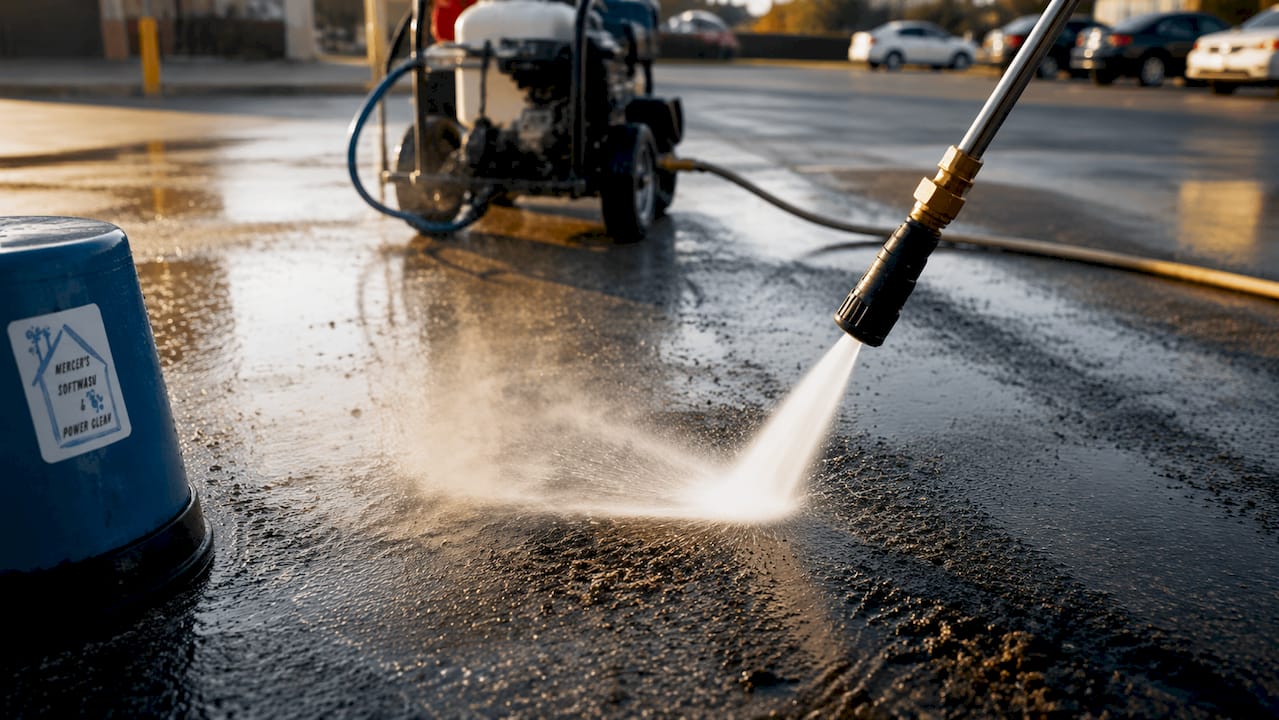
Surface cleaner attachments for large flat areas
A rotary surface cleaner attachment connects to a standard pressure washer and spins two or more nozzles in a circular pattern beneath a shroud. This produces uniform cleaning coverage without the streaking that a single wand creates. For a 200-stall parking lot, a surface cleaner can cut cleaning time significantly compared to wand-only methods.
Vacuum recovery systems for wash water capture
Wash water containment is mandatory in many Canadian provinces under environmental acts. A vacuum recovery system captures contaminated wash water before it reaches storm drains. The collected water is then transported to an approved disposal or treatment facility, keeping the cleaning process fully compliant.
Seasonal cleaning cycles
Spring cleaning targets road salt, sand, and freeze-thaw debris left from winter. Fall cleaning removes leaf tannins, organic growth, and summer grime before temperatures drop. Scheduling spring and fall cleaning cycles is the baseline standard for maintaining surface integrity across Canadian climates.
Surface preparation before restriping
Pressure washing parking lot lines before repainting is a necessary step that many property managers overlook. Old paint residue, rubber deposits, and grime prevent new line paint from bonding properly. A thorough wash, followed by a 24–48 hour drying period, gives fresh paint the clean, dry surface it needs to adhere and last.
Pro Tip: Before pressure washing a lot scheduled for restriping, use a surface cleaner at 2,500–3,000 PSI on concrete and 1,500–2,000 PSI on asphalt to avoid surface damage while still removing old paint residue effectively.
Industrial and large-scale parking lot cleaning examples
Large commercial and industrial sites require a different approach than a standard retail lot. The scale, contamination type, and regulatory exposure are all greater, and the equipment must match those demands.
-
High-capacity hot water units. Industrial facilities with multi-acre lots or loading docks require pressure washers with high PSI and GPM ratings. Industrial cleaning equipment must also account for pavement material to prevent surface damage from excessive pressure. Concrete tolerates higher PSI than asphalt, and pavers require the lowest settings of all.
-
Heated water systems for hydrocarbon removal. Loading dock areas accumulate diesel, hydraulic fluid, and industrial lubricants that cold water cannot address. Heated water systems, often paired with alkaline degreasers, are the standard approach for these zones. The heat accelerates the chemical reaction between the detergent and the hydrocarbon, reducing both cleaning time and chemical volume.
-
Customised cleaning protocols by surface type. A professional contractor assesses each surface zone before selecting pressure settings and detergent concentrations. Concrete aprons near loading bays may need an acid wash to remove calcium deposits, while asphalt lanes need a pH-neutral or alkaline cleaner to avoid surface softening.
-
Ministry of the Environment compliance documentation. Facility washing projects that exceed 10,000 litres per day require Ministry approval and strict water collection protocols. Property owners at large industrial sites should incorporate pressure washing into their Stormwater Pollution Prevention Plan to document methods, volumes, and disposal procedures.
-
Drainage and debris management. Industrial lots accumulate debris in drainage channels that can block flow and cause standing water. Pressure washing these channels as part of a scheduled programme prevents costly drain repairs and reduces the risk of flooding during heavy rain events.
-
Worker safety protocols. High-pressure equipment at industrial scale poses real risks to operators and bystanders. Certified contractors follow established safety protocols, including personal protective equipment, equipment inspection checklists, and site perimeter controls before each cleaning session.
Regulatory-compliant pressure washing practices
Environmental compliance is a core component of professional exterior cleaning, not an optional add-on. Property owners who ignore wash water regulations face fines and liability exposure that far exceed the cost of compliant service.
Municipal sewer bylaws in Canada restrict oil and grease discharge in wash water. Maximum oil and grease concentration allowed in effluent is often 15 mg/L, and violations carry fines of $10,000 or more per day. That threshold is easily exceeded when washing a lot with visible oil staining without a recovery system in place.
The Ontario Water Resources Act and British Columbia’s Environmental Management Act both set thresholds for contaminant discharge into waterways and municipal systems. Certified contractors understand these thresholds and carry the documentation to prove compliance. Property managers who hire uncertified operators assume full liability for any discharge violations that occur on their property.
Scheduling also matters for compliance. Washing during or immediately before heavy rain increases the risk of contaminated runoff reaching storm drains before the vacuum recovery system can capture it. Experienced contractors schedule cleaning during dry weather windows and monitor site drainage throughout the job.
Pro Tip: Ask any pressure washing contractor for their wash water disposal documentation before signing a contract. A compliant operator will have a named disposal facility and a written water management protocol ready to share.
The table below summarises the key regulatory considerations property managers should verify before hiring a contractor.
| Regulatory area | What to verify |
|---|---|
| Wash water discharge | Contractor uses vacuum recovery and approved disposal |
| Oil and grease limits | Effluent meets the 15 mg/L municipal threshold |
| Volume thresholds | Projects over 10,000 L/day have Ministry approval |
| Provincial legislation | Contractor is familiar with Ontario Water Resources Act or BC EMA |
| Contractor certification | Operator holds relevant environmental compliance credentials |
Situational examples: safety, aesthetics, and pavement preservation
The goal of a pressure wash determines the technique, the timing, and the follow-up treatment. These four scenarios cover the most common situations property managers face.
Reducing slip and fall liability in high-traffic lots
Slip and fall accidents are a leading cause of premises liability claims in commercial settings. Oil deposits and algae growth both reduce traction dramatically, especially when wet. Regular pressure washing removes these hazards and creates a documented maintenance record that supports liability defence if an incident does occur.
Restoring pavement texture and traction
Organic growth including moss, algae, and lichen fills the aggregate texture of asphalt and concrete over time. This growth makes the surface slick and accelerates surface degradation by retaining moisture. A thorough wash with an appropriate biocidal detergent removes the growth and restores the original texture, improving both traction and drainage.
Extending pavement life through preventive cleaning
Removing corrosive road salts and contaminants before freeze-thaw cycles delays the need for costly repairs and sealcoating. Salt penetrates asphalt binder and weakens the pavement matrix from within. A spring wash that removes winter salt residue is one of the highest-return maintenance tasks a property manager can schedule.
Preparing surfaces for sealcoating or crack filling
Surfaces must be fully dried and cured after washing before applying sealcoating or crack fillers. Drying time is typically 24–48 hours post-washing. Skipping this wait causes adhesion failure, which means the sealcoat peels prematurely and the crack filler does not bond, leading to repeat repairs within a single season.
Clearing drainage channels to prevent standing water
Blocked drainage channels create standing water that accelerates pavement deterioration and creates ice hazards in winter. Pressure washing drainage channels as part of a routine maintenance programme keeps water moving off the lot surface and reduces the frequency of costly drain repairs.
Key takeaways
Effective parking lot pressure washing combines the right equipment, compliant water management, and a seasonal schedule to protect pavement, reduce liability, and meet Canadian environmental regulations.
| Point | Details |
|---|---|
| Use hot water for oil and grease | Cold water cannot dissolve hydrocarbons; hot water units at 180°F+ are required for effective results. |
| Vacuum recovery is mandatory | Wash water containment prevents storm drain contamination and keeps cleaning legally compliant. |
| Schedule spring and fall cleanings | Biannual cleaning removes seasonal contaminants and is the Canadian industry baseline standard. |
| Allow 24–48 hours before sealcoating | Surfaces must fully dry after washing or sealcoat and crack filler adhesion will fail. |
| Verify contractor compliance credentials | Property owners bear liability for discharge violations caused by uncertified operators on their site. |
What I’ve learned about parking lot pressure washing after years in the field
Most property managers treat parking lot cleaning as a reactive task. The lot looks bad, so they call someone. That approach costs more in the long run. Pressure washing is preventive maintenance, and the properties that treat it that way spend less on asphalt repairs, face fewer liability claims, and have tenants who notice the difference.
The compliance piece is where I see the most mistakes. Property owners hire the cheapest operator, and that operator washes the lot straight into the storm drain. The property owner then receives the fine, not the contractor. Environmental compliance is not a detail to sort out after the fact. It belongs in the hiring conversation before the job starts.
The other mistake I see regularly is washing a lot and then immediately applying sealcoat. The surface looks dry, but it is not cured. The sealcoat fails within months, and the property manager blames the product when the real issue was timing. A 24–48 hour cure window after washing is non-negotiable. Building that window into your maintenance schedule is the difference between a repair that lasts and one that does not.
— Felix
Professional parking lot cleaning services from Mercerssoftwashpowerclean
Mercerssoftwashpowerclean provides commercial pressure washing services for property managers and business owners across Southern Ontario. The team uses hot water pressure washing, rotary surface cleaners, and vacuum recovery systems to deliver thorough, compliant cleaning on asphalt, concrete, and paver surfaces. Every job follows documented water management protocols that meet Ontario environmental standards. Whether you manage a retail plaza, office complex, or industrial facility, Mercerssoftwashpowerclean can build a scheduled cleaning programme that protects your pavement and keeps your lot safe year-round. Learn more about the benefits of commercial pressure washing and contact the team to schedule your next service.
FAQ
What is parking lot pressure washing?
Parking lot pressure washing is a professional cleaning process that uses high-pressure water, hot water systems, and industrial detergents to remove oil, grease, salt, and debris from commercial paved surfaces. It improves safety, extends pavement life, and keeps properties compliant with Canadian environmental regulations.
How often should a commercial parking lot be pressure washed?
Industry standards recommend at least biannual professional cleaning, with spring and fall as the standard scheduling windows. High-traffic lots or those near food service or industrial operations may require more frequent cleaning.
Do I need a vacuum recovery system for parking lot washing?
Wash water containment is legally mandatory in many Canadian provinces. A vacuum recovery system captures contaminated water before it reaches storm drains, and failure to use one can result in fines of $10,000 or more per day under municipal sewer bylaws.
How long should I wait after pressure washing before applying sealcoat?
Surfaces must dry and cure for 24–48 hours after pressure washing before sealcoating or crack filling. Applying these treatments to a wet or uncured surface causes adhesion failure and premature peeling.
Can pressure washing damage asphalt or concrete?
Excessive pressure on the wrong surface type can cause damage. Asphalt requires lower PSI settings than concrete, and pavers need the lowest settings of all. A certified contractor selects pressure settings based on surface type and contamination level to clean effectively without causing harm.


