

HVAC unit exterior cleaning is the process of removing dirt, debris, leaves, and biological buildup from the outdoor condenser components of your heating and cooling system to maintain proper airflow and heat exchange. Most homeowners overlook this task until their energy bills climb or the system struggles on a hot July afternoon. The outdoor condenser unit pulls air through aluminium fins and copper coils to release heat. When those surfaces are clogged, the entire system works harder than it should. Tools like a garden hose, a fin comb, and a coil cleaner solution are the standard starting point for keeping these components in working order.
What does HVAC unit exterior cleaning involve?
HVAC unit exterior cleaning covers every step needed to clear the outdoor condenser of accumulated debris and restore its ability to transfer heat efficiently. Dirt, dust, leaves, and debris block airflow and heat transfer, which forces the compressor to work harder and shortens the unit’s service life. The process is straightforward when approached methodically, but skipping steps or using the wrong technique causes more harm than the original buildup.
Turning off power before you start
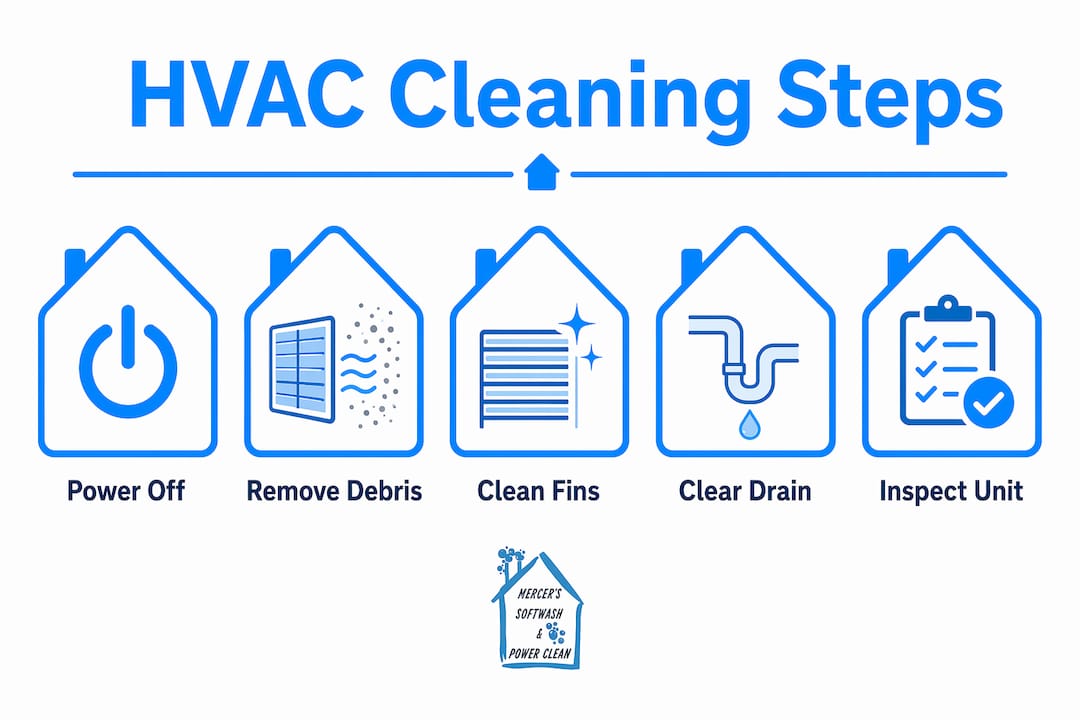
The first step is always to cut power to the unit at the disconnect box located near the condenser, and also at the breaker panel. Working around a live condenser is a genuine safety risk, not a precaution you can skip. Once power is off, remove the top grille or fan cage if your unit design allows it, and clear any leaves or debris that have collected inside.
Cleaning the fins and coils
The aluminium fins that surround the condenser are thin and bend easily. Use a soft brush or a fin comb to remove surface debris, working in the direction of the fins rather than across them. After brushing, apply a purpose-made coil cleaner spray and allow it to sit for the time specified on the product label. Then rinse gently with low-pressure water from a garden hose, directing the stream from the inside outward to push debris out rather than deeper into the coil.
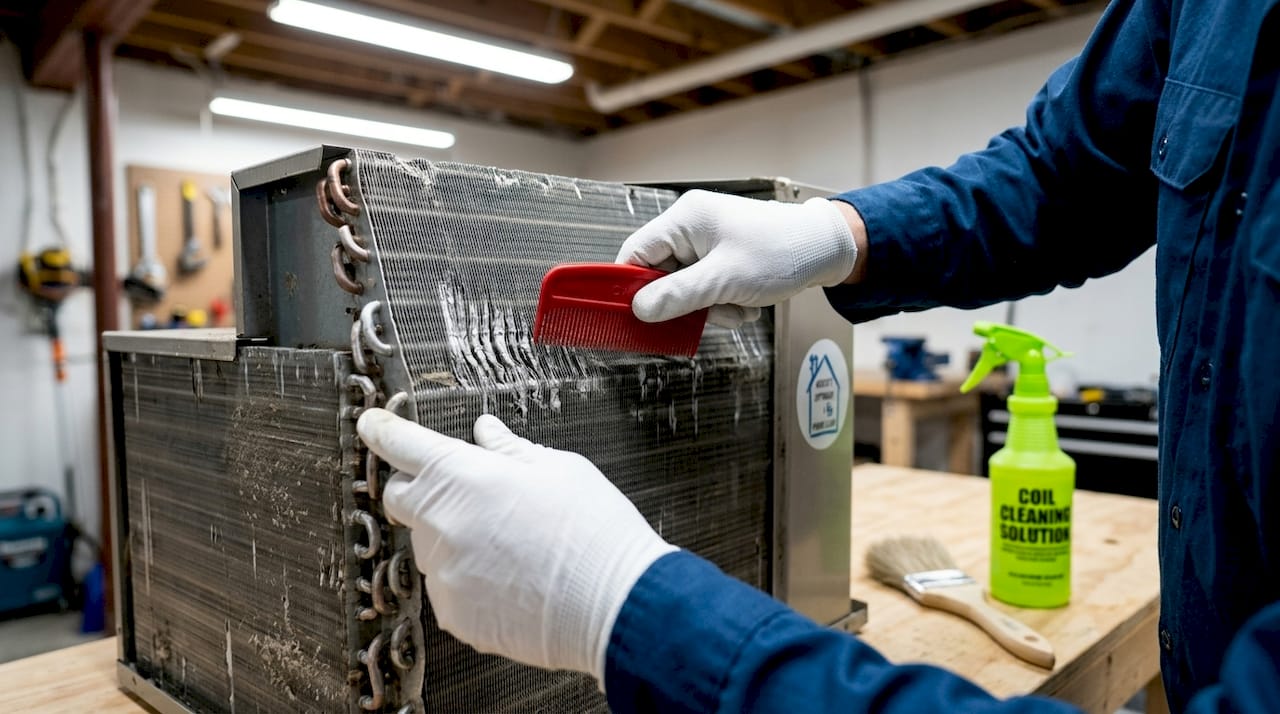
Pro Tip: Never use a pressure washer on condenser fins. The concentrated force bends the aluminium fins and permanently restricts airflow, which is the exact problem you are trying to solve.
Clearing the base pan and drainage area
The base pan at the bottom of the unit collects standing water, dirt, and organic matter. Drainage and base-pan areas can become clogged with debris, causing corrosion and operational failures even when the coils appear clean. Clear the drain openings with a stiff brush and rinse the pan thoroughly. Trim back any vegetation growing within 60 centimetres of the unit to prevent future debris accumulation and to maintain adequate airflow clearance on all sides.
How does regular cleaning improve performance and reduce costs?
Dirty condenser coils are the single most common cause of reduced cooling capacity in residential HVAC systems. When the fins and coils are coated in grime, the system cannot release heat effectively, so the compressor runs longer cycles to reach the set temperature. Dirty coils restrict airflow, decreasing cooling output and increasing both energy consumption and repair costs. This is not a gradual, barely-noticeable decline. A heavily fouled condenser can reduce system efficiency by a measurable margin within a single season.
“Cleaning coils is vital for cooling capacity, energy savings, and preventing costly repairs.” — HVAC expert commentary, SFGate
The energy cost impact is direct. A system running inefficient cycles draws more electricity for the same output, which shows up on your monthly utility bill. Over a full cooling season in Southern Ontario, that added consumption accumulates into a meaningful expense. Beyond energy, extended run times accelerate wear on the compressor, the most expensive component in the system to replace.
Performance tracking with data metrics such as temperature differential and airflow rates before and after cleaning provides objective evidence of how much cleaning actually restores capacity. Property managers who run formal maintenance programmes use this data to justify cleaning schedules and document equipment condition for insurance and warranty purposes. For individual homeowners, the simpler proof is a system that cools the house faster and runs quieter after a proper cleaning.
Indoor air quality also benefits indirectly. A condenser that cycles properly maintains consistent indoor humidity levels, which reduces the conditions that support mould growth and dust mite populations inside the home.
DIY cleaning vs. professional HVAC exterior maintenance
Understanding when to handle cleaning yourself and when to call a professional saves both money and equipment damage. The table below outlines the practical differences.
| Factor | DIY cleaning | Professional service |
|---|---|---|
| Cost | Minimal (hose, brush, coil cleaner) | $100 to $200 for spring maintenance |
| Time required | 15 to 20 minutes for light debris | 45 to 90 minutes including inspection |
| Coil access | Outer surface only | Inner coil rows and full unit interior |
| Chemical treatment | Basic consumer coil cleaner | Commercial-grade solutions with controlled application |
| Fin straightening | Limited with a consumer fin comb | Precision tools for full fin restoration |
| Inspection included | No | Yes, covers refrigerant levels, electrical connections, and drainage |
DIY cleaning handles the outer coil surface effectively when debris is light and the unit is accessible. The limitation is depth. Some HVAC units have multiple coil rows, and effective cleaning may require access to inner coils beyond the first visible rows. Partial cleaning leaves buildup inside, reducing effectiveness even after the unit looks clean from the outside. This is the gap that professional service fills.
Professional cleaning is the right choice when you notice bent fins across large sections of the coil, when the unit has not been serviced in more than two years, or when cooling performance has declined noticeably despite a DIY cleaning. Technicians also check refrigerant charge and electrical connections during a service visit, which are beyond the scope of any exterior cleaning task. For safe exterior cleaning methods that protect delicate components, the principle is the same whether you are cleaning siding or a condenser: low pressure and the right chemistry always outperform brute force.
How often should you clean your HVAC unit exterior?
Spring is the best time for annual cleaning before the cooling season begins, giving the system a clean start before it faces peak demand. This once-yearly schedule works well for most residential properties in Southern Ontario where winters are cold and the cooling season runs roughly from May through September.
Several environmental factors push that frequency higher:
- Properties near agricultural fields or unpaved roads accumulate dust and pollen at a faster rate, often requiring a mid-season rinse in addition to the spring clean.
- Coastal or lakeside properties face salt-laden air that accelerates corrosion on aluminium fins and copper tubing, making twice-yearly cleaning a sound investment.
- Properties with mature trees directly above or beside the unit collect leaf debris and seed pods inside the condenser cage throughout the growing season.
- High-traffic commercial properties with multiple units may benefit from quarterly visual inspections to catch heavy fouling before it affects performance.
Cleaning frequency should be adjusted to environmental risk factors, not simply set on a fixed calendar schedule. A unit in a sheltered suburban backyard with no nearby trees may stay clean for 18 months. A unit beside a cedar hedge in a dusty rural setting may need attention every six months.
Pro Tip: Take a photo of your condenser coils each spring before cleaning and again after. Comparing images year over year shows you how quickly your specific environment deposits debris, which tells you exactly how often your unit actually needs attention.
Tying your HVAC exterior maintenance into your broader home exterior cleaning schedule makes the task easier to remember and keeps the whole property in consistent condition. A clean condenser beside a clean deck and freshly washed siding is not just about aesthetics. It reflects a property that is actively maintained rather than reactively repaired.
Key takeaways
Regular HVAC exterior cleaning is the most cost-effective maintenance task a homeowner or property manager can perform to protect system efficiency, reduce energy costs, and extend equipment lifespan.
| Point | Details |
|---|---|
| Definition of the task | HVAC exterior cleaning removes debris and buildup from outdoor condenser fins, coils, and the base pan. |
| Core performance benefit | Dirty coils restrict airflow and increase energy consumption; cleaning restores cooling capacity directly. |
| Safe cleaning method | Use a garden hose at low pressure and a purpose-made coil cleaner. Never use a pressure washer on fins. |
| DIY vs. professional | DIY handles surface debris; professionals access inner coil rows and inspect electrical and refrigerant systems. |
| Recommended frequency | Clean once each spring at minimum; adjust to twice yearly in dusty, coastal, or heavily treed environments. |
Why I think most homeowners underestimate this task
From my experience working with exterior cleaning across Southern Ontario, HVAC condenser cleaning is consistently the most deferred item on a homeowner’s maintenance list. People wash their cars, clean their gutters, and pressure wash their driveways, but the condenser unit sitting beside the house gets ignored until something goes wrong.
The reason, I think, is visibility. A dirty driveway is obvious. A dirty condenser looks fine from five metres away. You cannot see the grime packed between the fin rows, and the system keeps running, so there is no immediate signal that anything is wrong. By the time performance drops enough to notice, the compressor has already been working under stress for months.
What I have found actually works is treating the condenser cleaning as a fixed spring task, the same way you would schedule a furnace filter change in the fall. Pair it with a visual inspection of the fins for bending or corrosion. If more than a quarter of the fin surface looks damaged or compacted, that is the point where a professional service call pays for itself in avoided repair costs.
The other mistake I see regularly is using too much water pressure during rinsing. A garden hose at normal tap pressure is sufficient. The goal is to flush debris out, not blast it through. Gentle and thorough beats fast and forceful every time when you are working with aluminium fins that bend at 30 psi.
— Felix
How Mercerssoftwashpowerclean can help protect your HVAC investment
Mercerssoftwashpowerclean provides professional exterior cleaning services across Southern Ontario, and soft washing is one of the most appropriate methods for cleaning around delicate outdoor equipment. Soft washing uses low-pressure water combined with biodegradable cleaning solutions to remove dirt, algae, and biological buildup without the risk of fin damage that comes with pressure washing. If you are unsure whether your condenser and the surrounding exterior surfaces are being cleaned safely, understanding what soft washing is is a practical starting point. Mercerssoftwashpowerclean’s team brings the right equipment and chemistry to protect your property’s exterior, including the areas around your HVAC equipment, so you get a thorough clean without the risk of accidental damage.
FAQ
What is HVAC unit exterior cleaning exactly?
HVAC unit exterior cleaning is the removal of dirt, debris, leaves, and biological buildup from the outdoor condenser unit, including the aluminium fins, coils, and base pan. The goal is to restore proper airflow and heat transfer so the system runs at full efficiency.
Can I clean my outdoor AC unit myself?
Yes, basic DIY cleaning using a garden hose, soft brush, and coil cleaner handles light surface debris effectively in 15 to 20 minutes. For units with heavy fouling, bent fins, or multiple coil rows, professional service provides more thorough results.
How often should I clean the outside of my HVAC unit?
Once per year in spring is the standard recommendation for most residential properties. Homes in dusty, coastal, or heavily treed environments benefit from a second cleaning mid-season or in the autumn.
What should I never do when cleaning my HVAC unit?
Never use a pressure washer on condenser fins. High-pressure water bends aluminium fins and permanently restricts airflow, which reduces efficiency rather than improving it. Also avoid harsh chemical cleaners not formulated specifically for HVAC coils.
Does cleaning the outside of my AC unit actually lower energy bills?
Yes. Dirty coils force the compressor to run longer cycles to achieve the same cooling output, which increases electricity consumption. Restoring clean coil surfaces allows the system to transfer heat efficiently and reach the set temperature faster, reducing total run time and energy use.
Recommended
- What is industrial exterior cleaning for facilities
- Why home exterior cleaning matters for your property
- How Often Should You Wash Your House Exterior In Port Hope? – Mercer’s Softwash & Power Clean Inc. | Pressure Washing Service
- Commercial Services – Mercer’s Softwash & Power Clean Inc. | Pressure Washing Service


