

The best time to wash your house exterior is during spring (March through May) or early fall (September through October), when temperatures sit between 40°F and 75°F and conditions are dry and calm. This temperature window matters because surfaces clean more effectively when neither freezing nor baking in direct heat. Professional exterior cleaning, which includes techniques like soft washing and pressure washing, depends heavily on these conditions to protect siding, painted wood, vinyl, and stucco from damage. Getting the timing right is not just about convenience. It directly affects how well your home cleans and how long those results last.
What weather conditions are best for washing your house exterior?
Weather is the single most controllable variable in your house wash schedule, and most homeowners underestimate how much it affects results. Temperature, wind, sunlight, and recent rainfall each play a distinct role in whether your cleaning session succeeds or causes problems.
Temperature is the starting point. Temperatures below 50°F risk freezing damage to both the cleaning solution and the surface itself, while temperatures above 75°F cause cleaning chemicals to evaporate too quickly before they can do their job. This is why mid-season days in spring and fall are the sweet spot for exterior cleaning in Southern Ontario.
Sunlight is a factor many homeowners overlook entirely. Overcast days outperform sunny days for washing because direct sunlight accelerates solution evaporation and causes streaking. When a cleaning agent dries on the surface before it has time to break down organic growth like algae, mould, or mildew, you lose dwell time and cleaning effectiveness. A bright, sunny afternoon might feel ideal, but a mild overcast morning will give you far better results.
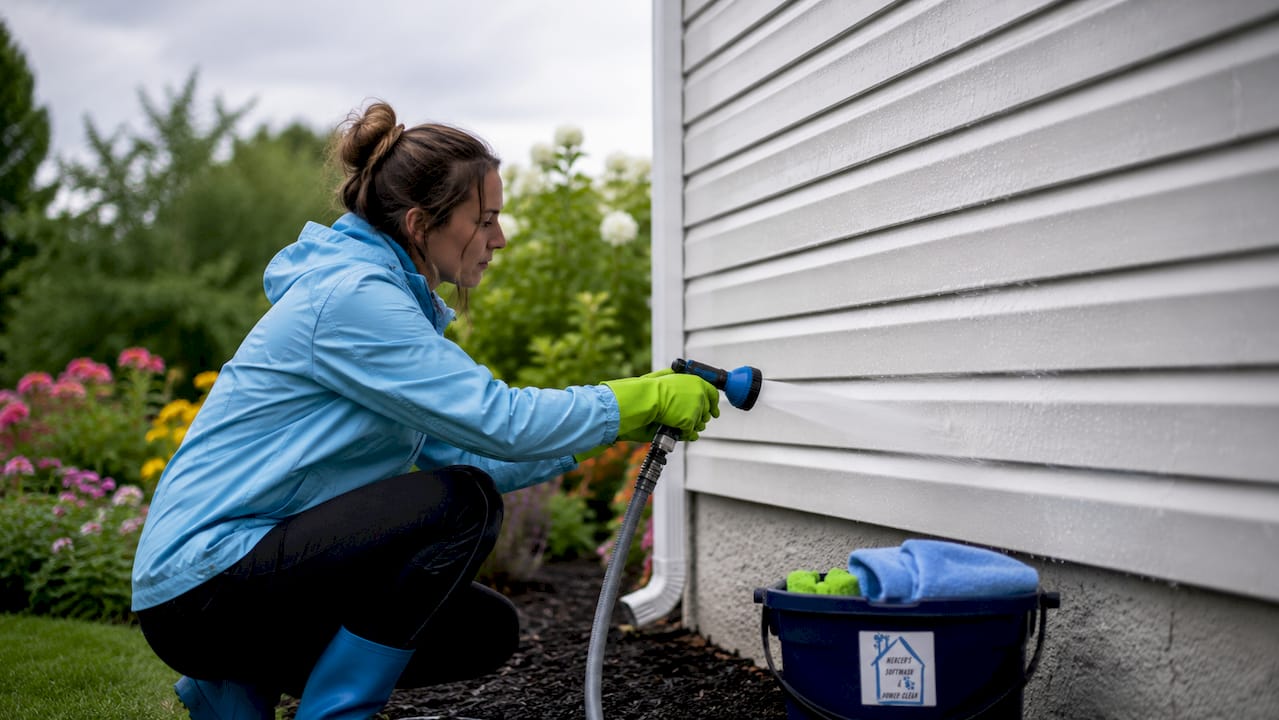
Wind is another variable that demands attention. Sustained winds above 15 mph make washing ineffective and can push spray drift onto nearby plants, vehicles, or neighbouring property. Even at lower wind speeds, spray control becomes harder, which affects both safety and precision. Check your local forecast and aim for calm days with winds under 10 mph where possible.
Rainfall timing also matters, particularly for wood surfaces. Wait at least 3 days after heavy rain before washing wood siding or trim. Wood that is still saturated from recent precipitation is more vulnerable to splintering and moisture trapping, especially under pressure. Humidity affects dwell time as well. High humidity slows evaporation, which can actually extend the contact time of cleaning solutions, but it also slows surface drying after rinsing, increasing the risk of mould re-establishing quickly.
Pro Tip: Schedule your exterior wash for a calm, overcast morning after at least three dry days. This single habit eliminates most of the common causes of streaking, uneven cleaning, and surface damage.
How do seasonal factors guide the timing of house exterior washing?
Each season presents a different set of conditions for exterior cleaning, and understanding those differences helps you build a house wash schedule that works for your specific home and climate.
Spring is the most popular season for exterior washing, and for good reason. Winter leaves behind a layer of road salt, grime, organic debris, and biological growth that has had months to settle into siding and trim. Washing in March through May clears that buildup before it causes staining or accelerates surface degradation. It also prepares your home’s exterior for the warmer months, when curb appeal matters most.
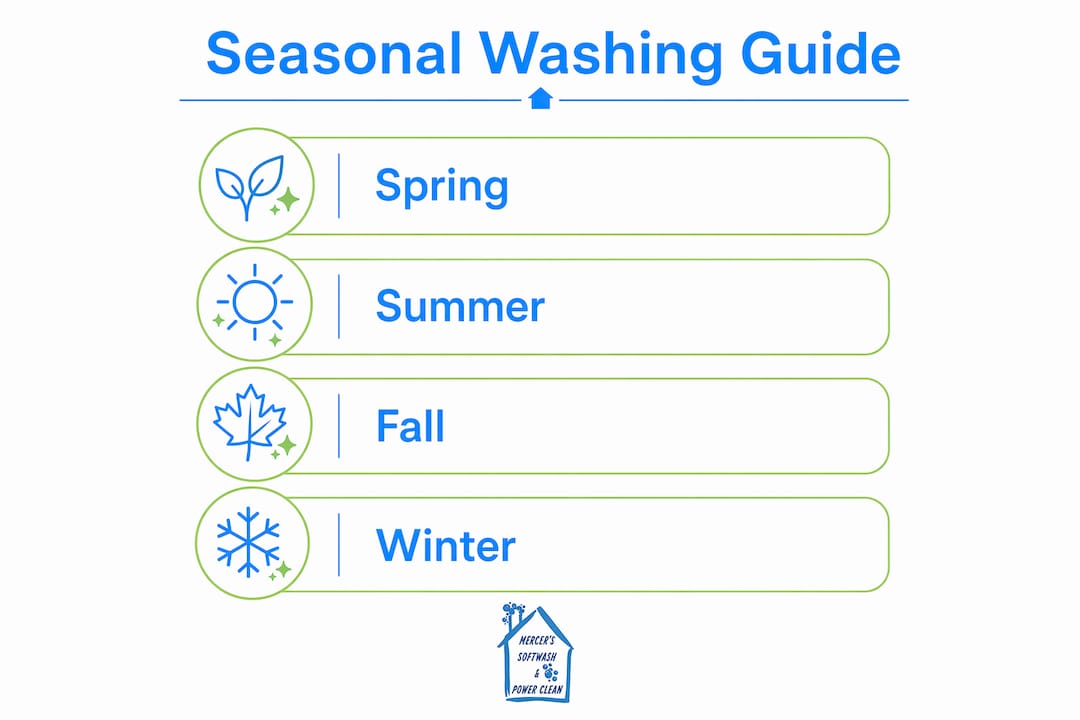
Fall cleaning is underrated but strategically sound. Autumn washing removes pollen and debris before winter moisture arrives, and surfaces that enter the cold season clean are significantly easier to maintain. Biological growth like algae and moss retains moisture, which accelerates freeze-thaw damage on siding and masonry. Washing in September or October addresses this before temperatures drop.
Summer washing is possible but requires more care. High daytime temperatures cause cleaning chemicals to dry too fast, reducing their effectiveness and increasing the chance of streaks. If you wash in summer, start early in the morning or wait until late evening when temperatures are lower and direct sun is minimal.
Winter washing in Southern Ontario is generally not advisable. Freezing temperatures risk water intrusion behind siding panels, and cleaning solutions lose effectiveness in cold conditions. The exception is a mild winter day above 10°C, though this is rare and still not ideal.
| Season | Conditions | Recommended? |
|---|---|---|
| Spring (March–May) | Mild temperatures, post-winter buildup, stable weather | Best choice |
| Summer (June–August) | High heat, rapid evaporation risk | Possible with early morning timing |
| Fall (September–October) | Cooling temperatures, pre-winter prep | Excellent second choice |
| Winter (November–February) | Freezing risk, ineffective chemicals | Not recommended |
Regional climate in Southern Ontario adds another layer to consider. Homes near Lake Ontario or in areas with heavy tree cover accumulate organic growth faster than homes in open, dry locations. North-facing and shaded walls attract algae, mould, and mildew more rapidly and may need washing more frequently than south-facing surfaces that receive more sun.
What cleaning methods work best for different exterior surfaces?
Choosing the right method is as important as choosing the right time. The two primary approaches in professional exterior cleaning are soft washing and pressure washing, and they are not interchangeable.
Soft washing uses 500 to 1,000 PSI with biodegradable surfactants and is the correct method for vinyl siding, stucco, and painted wood. The cleaning agent, often a diluted Sodium Hypochlorite solution combined with a surfactant, does the work rather than the water pressure. This approach kills biological growth at the root rather than simply blasting it off the surface, which means results last longer. You can read more about how soft washing works before deciding on an approach.
Pressure washing uses higher PSI and is appropriate for harder surfaces like concrete, brick, and some wood structures. For wood siding and stucco, pressure should stay in the 1,200 to 1,500 PSI range. Exceeding this risks forcing water behind siding panels, stripping paint, or gouging softer materials. High pressure can damage siding by creating entry points for moisture, which leads to rot, mould, and costly repairs over time.
| Surface type | Recommended method | PSI range |
|---|---|---|
| Vinyl siding | Soft washing | 500–1,000 PSI |
| Painted wood | Soft washing | 500–1,000 PSI |
| Stucco | Soft washing or low pressure | 1,200–1,500 PSI |
| Brick or concrete | Pressure washing | 1,500–3,000 PSI |
| Wood decking | Low pressure wash | 1,200–1,500 PSI |
Dwell time is a critical and frequently misunderstood part of the soft washing process. Soft washing requires 10 to 15 minutes of dwell time before rinsing to allow the cleaning solution to break down organic growth fully. Many DIYers rinse too early, then compensate by increasing pressure, which is exactly the wrong response. Patience during dwell time produces better results than force. If you are unsure whether your siding can handle DIY pressure washing, the soft washing vs pressure washing comparison guide from Mercerssoftwashpowerclean is a practical reference.
Pro Tip: If you see streaking after a wash, the cause is almost always premature rinsing or washing in direct sunlight. Both problems are solved by adjusting timing and dwell time, not by increasing pressure.
How to plan and schedule your house exterior washing
A reliable exterior cleaning schedule accounts for weather forecasts, your home’s specific exposure, and the time of day you start. Timing is situational, not strictly seasonal. A home surrounded by mature trees in a humid area will need washing more often than a newer home on an open lot, regardless of the calendar.
Here is a practical scheduling approach to follow:
-
Check the forecast three days out. Confirm at least three dry days before your planned wash date, especially if your home has wood siding or trim. Rain before washing saturates surfaces; rain after washing can wash away cleaning solutions before they fully dry.
-
Assess your home’s exposure. North-facing walls, walls shaded by trees, and surfaces near water accumulate organic growth faster. These areas may need attention twice per year rather than once.
-
Start early in the day. Starting early maximises drying time and reduces the risk of prolonged moisture on surfaces, which can encourage mould growth. Aim to begin by 8 or 9 a.m. on your chosen day.
-
Avoid windy conditions. Confirm wind speeds are below 15 mph before starting. Spray drift in higher winds reduces precision and can damage plants or neighbouring property.
-
Prepare surfaces before washing. Close all windows and doors, cover electrical outlets and light fixtures, and move patio furniture away from the work area. Wet down nearby plants before applying any cleaning solution to dilute any overspray.
A general rule for most homes in Southern Ontario is to wash the exterior once per year, with a second wash for problem areas like north-facing walls or surfaces near heavy vegetation. Homes in areas with higher pollution, proximity to busy roads, or significant tree cover may benefit from washing every six months.
Key takeaways
The best time to wash your house exterior is during mild, dry weather in spring or early fall, with temperatures between 40°F and 75°F, calm winds, and an overcast sky for maximum cleaning effectiveness.
| Point | Details |
|---|---|
| Optimal seasons | Spring (March–May) and early fall (September–October) offer the best conditions for exterior washing. |
| Ideal temperature range | Wash between 40°F and 75°F to prevent freezing damage and chemical evaporation. |
| Overcast days preferred | Cloudy conditions prevent premature drying of cleaning solutions and reduce streaking risk. |
| Soft washing for siding | Use 500–1,000 PSI with biodegradable surfactants on vinyl, stucco, and painted wood surfaces. |
| Scheduling matters | Wait 3 days after heavy rain, start early in the day, and avoid winds above 15 mph. |
What I have learned from years of watching homeowners get the timing wrong
The most common mistake I see is homeowners picking a bright, sunny Saturday in July and wondering why their siding looks streaky afterwards. The logic makes sense on the surface. Good weather, free time, warm temperatures. But direct sunlight is one of the worst conditions for exterior washing, and most people do not realise it until they see the results.
The second most common mistake is treating the calendar as the only guide. Spring and fall are the right seasons for most homes, but a heavily shaded property in a humid area near a lake may need washing in late summer simply because the biological growth does not wait for a convenient schedule. I have seen north-facing walls develop significant algae growth within four months of a spring wash. The home’s environment matters more than the date.
The third thing I would push back on is the assumption that more pressure equals a better clean. Soft washing, which relies on proper chemistry and dwell time rather than force, consistently outperforms high-pressure washing on siding surfaces. The soft washing guide for homeowners from Mercerssoftwashpowerclean covers this in detail, and it is worth reading before you pick up a pressure washer. Protecting your siding from water intrusion is a long-term investment. The right method and the right timing work together. Neither one alone is enough.
— Felix
How Mercerssoftwashpowerclean can help you get the timing right
Mercerssoftwashpowerclean serves homeowners across Southern Ontario with professional exterior cleaning that accounts for all the variables covered in this guide. The team specialises in soft washing for delicate siding materials, applying the correct PSI, cleaning chemistry, and dwell time for each surface type. Rather than guessing at weather windows or risking siding damage with the wrong method, you get a scheduled service timed to your home’s specific conditions and seasonal needs. For homeowners who want to understand the method before booking, the soft washing service guide explains exactly how the process works and why it protects your exterior better than pressure alone. For a full comparison of cleaning options, the house power washing service page outlines what professional service includes.
FAQ
What is the best time of year to wash house exterior?
The best months for house washing are March through May and September through October, when temperatures stay between 40°F and 75°F and weather conditions are stable. These seasons avoid the freezing risk of winter and the rapid evaporation problems of peak summer heat.
Is it better to wash your house on a cloudy or sunny day?
Cloudy days are better for exterior washing because direct sunlight causes cleaning solutions to evaporate before they can fully break down dirt and organic growth, which leads to streaking. An overcast morning with calm winds is the ideal condition for effective results.
How often should you wash your house exterior?
Most homes benefit from washing once per year, typically in spring. Homes with north-facing walls, heavy tree cover, or proximity to water may need washing twice per year due to faster accumulation of algae, mould, and biological growth.
Can you pressure wash your house in cold weather?
Washing in temperatures below 50°F is not recommended because cleaning solutions lose effectiveness and water can freeze on surfaces or behind siding panels, causing damage. In Southern Ontario, this rules out most of November through February for exterior washing.
What is the difference between soft washing and pressure washing for house siding?
Soft washing uses 500 to 1,000 PSI with a biodegradable cleaning solution and is the correct method for vinyl, stucco, and painted wood siding. Pressure washing uses higher force and is better suited to hard surfaces like concrete and brick. Using high pressure on siding risks water intrusion and paint damage.


