

Post-winter home cleaning is a seasonal deep-clean and full reset of your home after months of closed windows, continuous heating, and winter residue accumulation. It goes well beyond your weekly routine. Where regular cleaning maintains surfaces, this process restores them, targeting the specific damage that Canadian winters leave behind: road salt residue and basement mould, calcium chloride staining, moisture buildup, and dust recirculated by heating systems running for months on end. For most Canadian homes, the optimal window runs from late February through early May, with Ontario homeowners typically starting in late February or March.
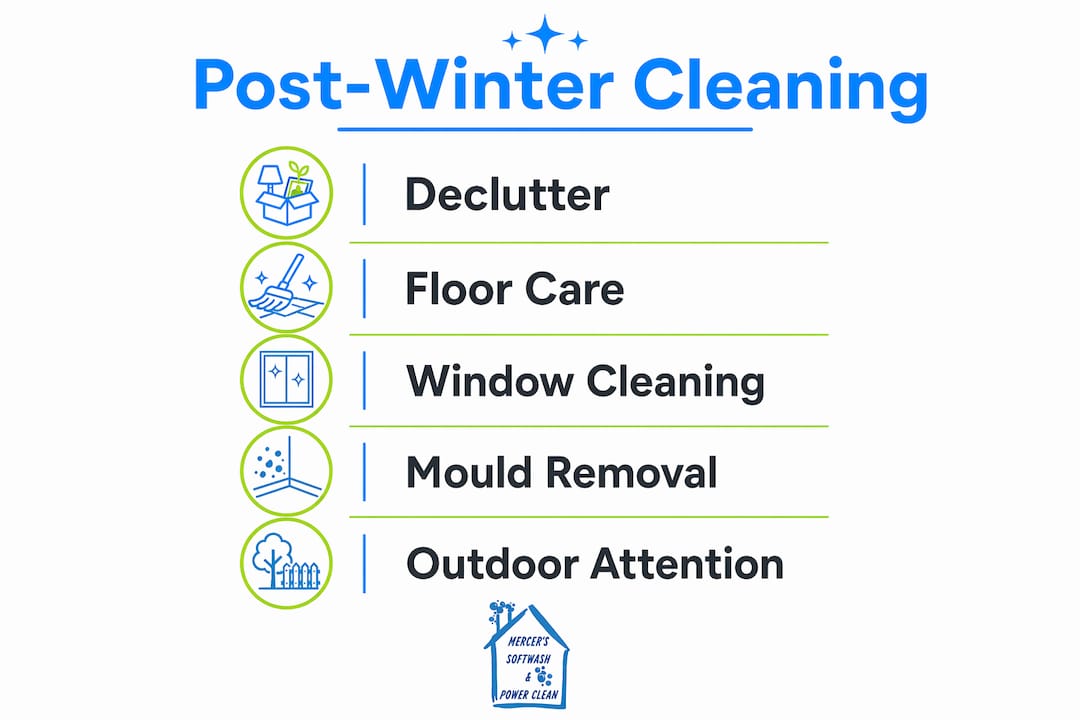
The main tasks this seasonal reset addresses include:
- Removing road salt and calcium chloride stains from floors, grout, and baseboards
- Treating mould and moisture in basements and around window sills
- Replacing furnace and HVAC filters after the heating season
- Deep cleaning kitchens and bathrooms, including mineral deposit removal
- Washing windows and clearing window tracks of winter grime
- Decluttering and reorganising storage areas used heavily during winter
- Cleaning and inspecting outdoor areas including decks, porches, and gutters
Why Canadian homes need a post-winter deep clean
Winter conditions create a category of buildup that routine cleaning simply cannot address. Road salt and sand track through your entryway from november through march, leaving white crusty residue that scratches hardwood, stains tile grout, and eats into baseboard finishes. A quick mop does not dissolve calcium chloride. You need targeted products and technique.
Indoor air quality also degrades significantly over winter. With windows sealed and heating systems running continuously for seven or more months, dust, allergens, pet dander, and mould spores recirculate through your home without relief. Opening windows in spring is not enough on its own. A thorough clean removes the accumulated source material that keeps degrading the air you breathe.
The damage risks are real and specific:
- Salt corrosion on hardwood floors and grout if left untreated past spring
- Mould growth in basements and on window sills from snowmelt moisture
- Reduced HVAC efficiency from clogged filters after months of continuous use
- Hidden grime behind appliances and in window tracks that worsens with heat
Restoration-focused cleaning after winter is what distinguishes this process from maintenance. You are not just tidying up. You are undoing specific seasonal damage before it compounds.
Priority cleaning tasks to tackle after winter
Starting with the right tasks saves time and prevents re-doing work. Tackle high-impact areas first, then work outward.
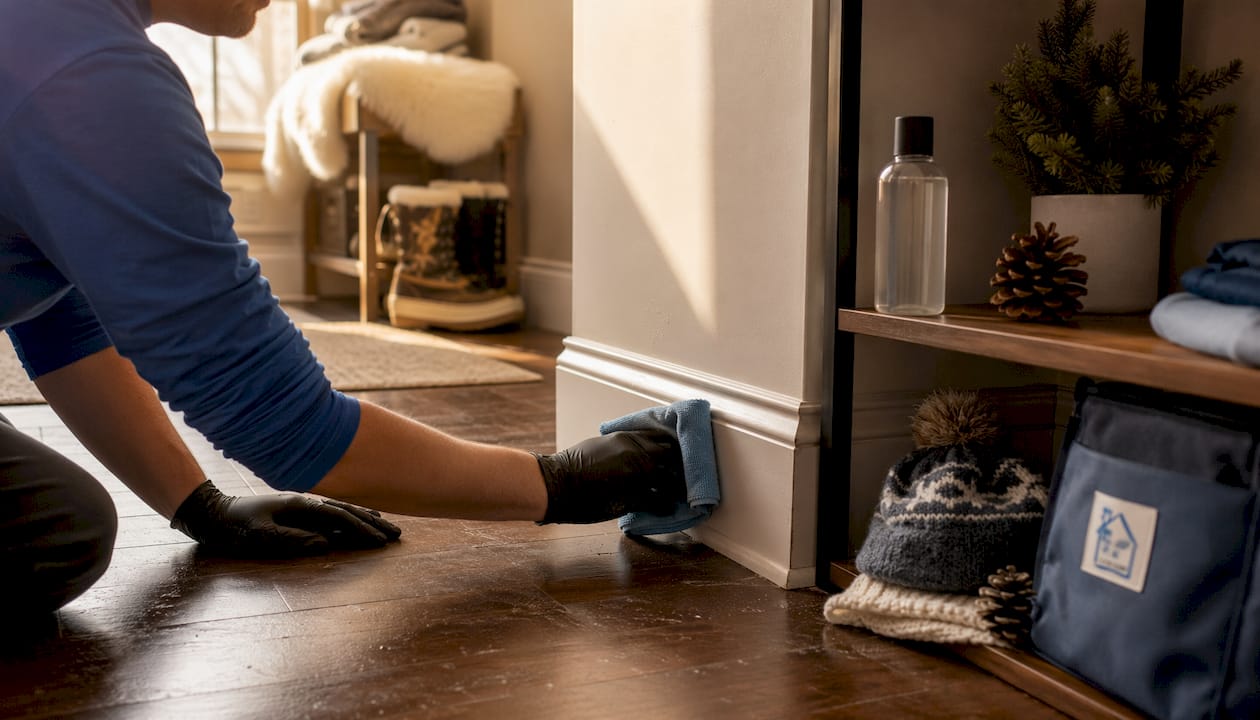
Floors and baseboards take the worst of winter. For hardwood, use a mist-and-wipe method with a pH-neutral cleaner rather than a wet mop. Soaking hardwood causes swelling and finish degradation, which is a common post-winter mistake. For tile and concrete with salt staining, mix one cup of white vinegar with one gallon of warm water, apply to the stained surface, let it sit for five minutes, then scrub with a stiff brush and extract with a mop or wet vacuum.
Pro Tip: Never pressure wash concrete salt stains at close range. High pressure drives salt crystals deeper into the surface rather than removing them, worsening the damage over time. The vinegar solution method with mechanical scrubbing is the correct approach.
Kitchens and bathrooms need targeted mineral deposit care. Bleach does not dissolve the calcium and lime deposits that Canadian hard water leaves on faucets and showerheads. Fill a bag with white vinegar, tie it around the showerhead, and soak for two to four hours, then scrub with a toothbrush. For persistent black mould on bathroom caulking, cleaning products cannot fully remove deep-set mould. Full recaulking with mould-resistant caulk is the only permanent fix.
HVAC and safety systems are non-negotiable after a long heating season. Key tasks include:
- Replace furnace and HVAC filters after seven-plus months of continuous use
- Test smoke detectors and carbon monoxide detectors, replace batteries
- Remove HVAC vent covers, vacuum inside the openings, and wipe covers before reinstalling
- Clean the dryer vent, as lint buildup is a genuine fire hazard
- Check your spring HVAC maintenance schedule before switching from heating to cooling mode
Mould and moisture require early attention. Basements and window sills are the most vulnerable areas, where snowmelt seeps in and humidity rises through march and april. Use a dehumidifier to bring indoor humidity toward the 40–50% range, and treat visible mould with a mould-specific cleaner. Early detection prevents costly water damage that compounds quickly once temperatures rise.
Decluttering before you clean makes the entire process faster. Removing unused winter gear and clearing storage-heavy areas like coat closets and entryway benches before you start means fewer dusty surfaces to move around and less clutter blocking floors and baseboards.
Windows and window frames collect grime, ice residue, and mould in the tracks over winter. Vacuum tracks first, then wipe with warm soapy water. A butter knife wrapped in a cloth works well for tight grooves. For the glass itself, equal parts vinegar and water in a spray bottle with a microfibre cloth gives a streak-free result.

Outdoor areas including decks, porches, and driveways need attention once temperatures hold consistently above 10°C. Clear winter debris, inspect deck boards for freeze-thaw damage, and clean concrete surfaces using the vinegar-based method described above. Gutters need clearing after the last major snowmelt to prevent water backing up against your fascia. You can review a detailed Southern Ontario gutter checklist to time this correctly for your region.
How to keep your home fresh after the deep clean
Completing the reset is only half the work. Maintaining that freshness through spring requires a few consistent habits.
Continue changing HVAC filters on schedule rather than waiting until the next annual clean. Ongoing humidity control matters as temperatures fluctuate through april and may. Keep indoor humidity in the 40–50% range to prevent mould from re-establishing in basements and bathrooms.
Regular maintenance habits to build into your spring routine:
- Wipe baseboards monthly to prevent dust accumulation from resettling
- Maintain a floor care schedule suited to your surface type, using pH-neutral products on hardwood
- Keep entryway mats in place and wash them regularly to reduce tracked-in grime
- Declutter winter gear storage areas as the season fully transitions, reducing dust traps
- Run bathroom fans during and after showers to manage moisture before it settles into grout
Windows benefit from a quick wipe-down every few weeks through pollen season, particularly in southern Ontario and the Fraser Valley where airborne particles are heavy. Keeping seasonal exterior cleaning on your calendar prevents the gradual buildup that makes the following year’s reset much harder.
Professional exterior cleaning services that protect your home
Interior cleaning handles what you can reach. The exterior of your home, however, accumulates a different category of winter residue that requires professional equipment and technique to address safely.
Roof surfaces, siding, gutters, decks, fences, and interlock all collect algae, mould, oxidation, and winter grime that standard consumer tools cannot remove without risking surface damage. Soft washing uses low-pressure water combined with biodegradable cleaning solutions, including sodium hypochlorite at controlled concentrations, to break down biological growth and residue at the surface level without the mechanical damage that high-pressure washing can cause on siding, shingles, or wood.
Mercerssoftwashpowerclean serves residential and commercial properties across Southern Ontario, providing the full range of exterior cleaning services homeowners need after winter:
- Soft washing for house siding, roofs, and delicate surfaces
- Pressure washing for driveways, walkways, and interlock
- Gutter cleaning and flushing to clear winter debris
- Deck and fence washing to remove mould, algae, and weathering
- Window cleaning for streak-free results on all exterior glass
Understanding what soft washing involves helps you choose the right method for each surface. Not every exterior needs high pressure. In fact, applying too much pressure to aged siding or wood decking causes more damage than the grime it removes. Professionals assess the surface first and match the method to the material.
Engaging a professional for exterior work also means a trained eye on your home’s condition. Winter damage to caulking, fascia, and siding often goes unnoticed until it becomes a repair bill. A thorough exterior clean at the start of spring gives you a clear picture of what needs attention before the warm season is underway.
Key takeaways
Post-winter home cleaning is a targeted seasonal reset that removes winter-specific damage, including road salt, mould, mineral deposits, and recirculated dust, to restore indoor air quality and protect your home’s surfaces before spring.
| Point | Details |
|---|---|
| Timing for Canadian homes | The optimal window runs from late February through early May, with Ontario homeowners typically starting in late February or March. |
| Salt stain removal | Mix one cup of white vinegar with one gallon of warm water, let sit five minutes, scrub, and extract. Never use high-pressure washing on concrete salt stains. |
| HVAC filters are critical | Replace furnace filters after seven-plus months of continuous heating use before switching to cooling mode. |
| Mould requires recaulking | Persistent black mould on bathroom caulking cannot be cleaned away. Full recaulking with mould-resistant caulk is the permanent solution. |
| Exterior needs professional care | Soft washing and pressure washing by trained technicians protects siding, roofs, and decks from surface damage that DIY high-pressure tools can cause. |


