
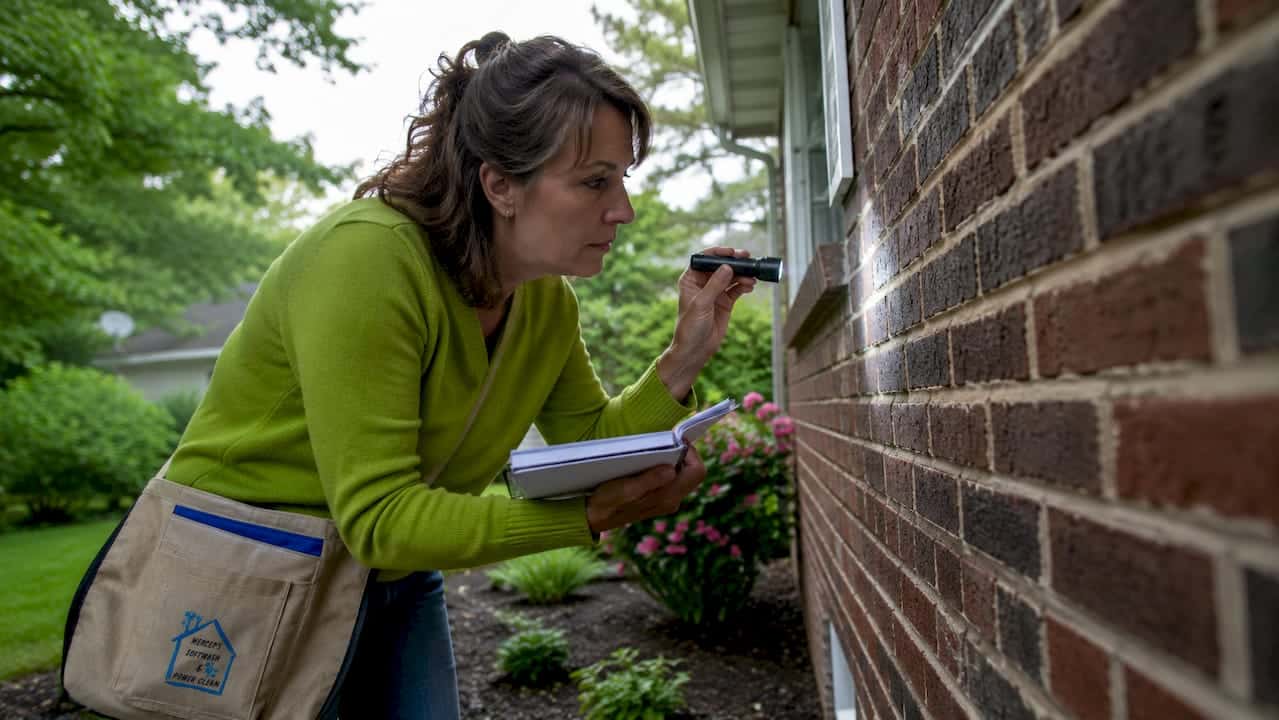
Brick mortar absorbs water far more rapidly than the bricks it bonds, and that single fact shapes every safe cleaning decision you will make about your home’s exterior. When water contacts mortar joints, it penetrates the porous matrix, causes swelling, and can dissolve the calcium hydroxide binders that hold the structure together. High-pressure washing physically erodes the sealed outer layer of mortar joints, reducing durability and leaving the wall vulnerable to weathering and freeze-thaw cycles. Prolonged moisture also triggers lime leaching, where dissolved calcium hydroxide migrates to the brick face and reacts with carbon dioxide in the air to form hard crystalline calcium carbonate deposits, commonly called efflorescence. Understanding these effects before you pick up a hose is the difference between a clean wall and a damaged one.
How brick mortar physically reacts to washing
Mortar joints absorb and release water more rapidly than bricks, making them the most vulnerable component during any cleaning process. Research on historic brickwork masonry confirms that the flow velocity of water absorption is measurably higher in mortar than in brick specimens, meaning mortar saturates quickly and holds that moisture longer. That retained moisture softens the joint, dissolves binding agents, and reduces the mortar’s ability to resist further weathering.
The mechanical effects are equally direct. Water directed at mortar joints under pressure removes material from the sealed outer surface, the very layer a bricklayer works to create a smooth, dense finish. Once that outer seal is gone, the joint sits exposed and porous, drawing in water with every rain event. Jet washing is often misused to remove construction stains, giving a false sense of cleanliness while compromising the mortar’s structural integrity beneath the surface.
Chemically, water saturation causes lime leaching: excess water flows through mortar, dissolves free lime (calcium hydroxide), and deposits it on the brick face. The calcium hydroxide then reacts with carbon dioxide in the air, producing a hard crystalline formation of calcium carbonate. This process stains the wall white and, if left unaddressed, requires acidic cleaners to reverse.
Common methods for washing brick mortar and their effects
Choosing the right cleaning method protects mortar joints from unnecessary erosion. Each approach carries a different risk profile depending on pressure, chemistry, and technique.
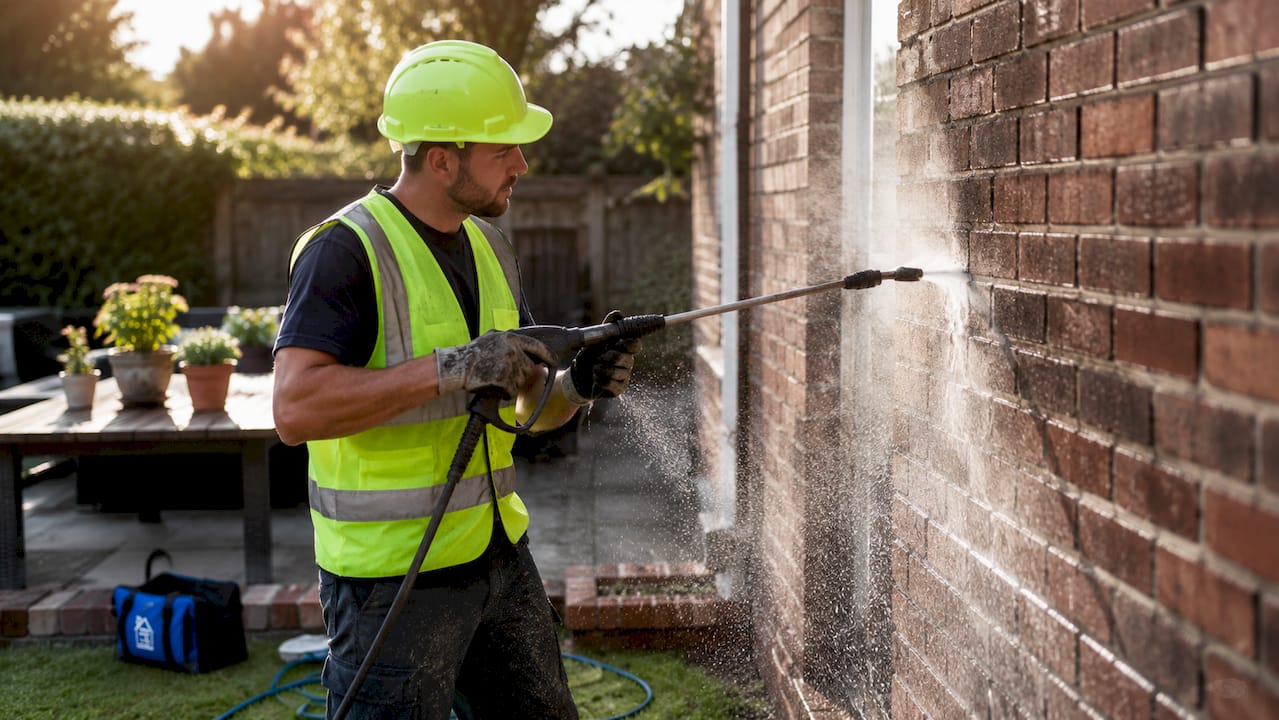
Low-pressure washing (600–1,500 PSI) is the recommended range for most brick masonry. Safe pressure for cleaning brick sits between 600 and 1,500 PSI, and consumer-grade washers frequently exceed this without manual regulation. Fan or cone jet nozzles of at least 25 degrees should be used to spread the water stream and reduce the cutting effect on mortar surfaces.
Chemical pre-treatment reduces the mechanical force needed to clean a surface. Applying a masonry detergent or biocide solution before rinsing allows the chemistry to do the lifting, so the pressure rinse serves only to flush away loosened material. This approach is far gentler on mortar joints than relying on water pressure alone.
Acid-based cleaners require careful handling. Applying acid to dry brick allows deeper chemical penetration, causing salt crystallisation and damage to both brick and mortar. Professionals saturate the surface with water first to limit how deeply the acid penetrates before application.
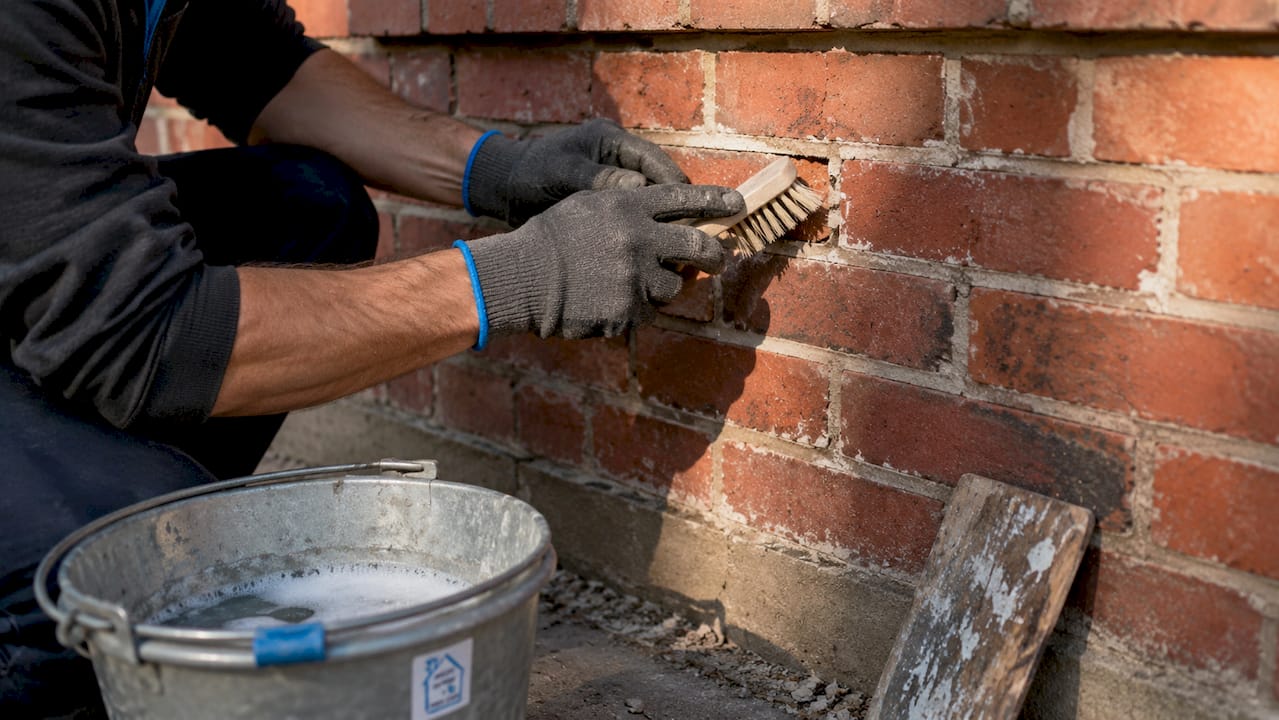
Hand scrubbing with nylon brushes and wooden scrapers is the safest method for removing mortar smears from brick faces. Metal tools scratch the brick surface and leave residue in joints, so they should be avoided entirely.
Soft washing with biocide treatment is the preferred approach for algae, moss, and biological growth on shaded or north-facing walls. The biocide kills the growth; a low-pressure rinse at 600–800 PSI removes the dead material without eroding the mortar underneath.
Pro Tip: Always test your pressure washer on a small, low-visibility section of the wall before cleaning the full surface. Allow it to dry completely before assessing the result. Mortar damage from excessive pressure is irreversible, and no sealant or repair product restores the original joint surface.
Risks of washing brick mortar the wrong way
1. High-pressure erosion of mortar joints
High-pressure water directed at mortar joints removes material faster than it removes dirt from brick faces. A single cleaning session at excessive PSI can open joints that were intact before washing, creating pathways for water to enter the wall cavity. That damage cannot be undone with sealant.
2. Lime leaching and efflorescence staining
Water saturation dissolves calcium hydroxide from within the mortar. As that dissolved lime migrates to the brick surface and reacts with air, it leaves white crystalline deposits. Cleaning the surface removes the deposit, but it does not address the moisture pathway causing it.
3. Compressive strength reduction from moisture
Water saturation reduces mortar’s compressive strength by 6%–39%, depending on the degree of moisture exposure and mortar type. The loss results from dissolved binders and weakened adhesion between brick and mortar at the joint interface.
4. Interior damage from excessive water penetration
Excessive water saturation penetrates deeply into wall assemblies, causing damage to interior plaster and finishes that costs far more to repair than the exterior masonry itself. Loose mortar dislodged by high-pressure rinsing creates open channels that allow water to travel directly into the building.
5. Freeze-thaw damage in Canadian climates
Water trapped inside mortar joints expands when it freezes, cracking the joint from within. Southern Ontario’s repeated freeze-thaw cycles through winter and early spring accelerate this process significantly on walls that have been over-saturated during cleaning.
6. Sealing over wet or damaged mortar
Applying a sealant before mortar has fully dried traps moisture inside the wall. Film-forming sealants are particularly problematic because they prevent the wall from breathing, concentrating moisture pressure behind the sealed surface and accelerating deterioration of both mortar and brick.
7. Signs of mortar damage to watch for after washing
Recessed joints, crumbling edges, white staining on brick faces, and dark streaks following repeated moisture exposure are all indicators that mortar has been compromised. Open voids in joints that were previously flush are a clear sign that pressure was too high or the mortar was already deteriorated before cleaning began.
How long does brick mortar take to dry after washing?
Drying time for mortar after washing is longer than most homeowners expect, and rushing the process leads to the sealing and maintenance mistakes described above.
Research on mortar drying curves shows two distinct phases. In the first phase, mortar loses moisture relatively quickly in the days immediately following washing. The second phase is a slow, steady evaporation that continues for weeks. In controlled testing, mortar specimens stabilised (weight decreasing by less than 0.74% between consecutive measurements) only after 36 days. Brick specimens reached stability after 34 days, but the amount of water lost by mortar during the first seven days was less than one-fifth of the total water absorbed.
Practically, partial drying may take 7–14 days under good conditions: warm temperatures, low humidity, and adequate air circulation. Full drying to a stable moisture content requires several weeks. In cooler or overcast Canadian weather, particularly in spring or autumn, that timeline extends further.
Mortar that remains wet through a freeze event is at serious risk. Water inside the joint expands as it freezes, widening cracks and accelerating erosion. Timing your cleaning to avoid the weeks before the first frost is one of the most practical steps you can take to protect your masonry through winter.
Pro Tip: Schedule brick washing in late spring or early summer in Southern Ontario. This gives mortar the maximum drying window before autumn temperatures drop and freeze-thaw risk returns.
Expert insights and best practices for maintaining mortar after washing
The masonry industry is clear on one point: cleaning should prioritise chemistry doing the work, with pressure used only for rinsing. Mechanical force without prior chemical treatment and without follow-up repairs leads to permanent damage that no cosmetic treatment corrects.
Key finding: Water saturation reduces masonry compressive strength by 6%–39%, with an average reduction of 19% across tested brick columns. This is not a marginal effect. For older Southern Ontario homes with lime-based mortars, the lower end of that range is not guaranteed.
Keeping pressure between 600 and 1,500 PSI is the foundational rule, but the specific target within that range depends on brick type and mortar age. Pre-1920 soft common brick and lime-based mortars require the lower end of that range, closer to 600–800 PSI. Post-war brick with Portland cement mortar tolerates pressures up to 1,200 PSI more safely. Pressure washer PSI ratings require manual regulation; the machine’s rated output is not the pressure at the wall face, and nozzle distance, angle, and flow rate all affect the actual force applied.
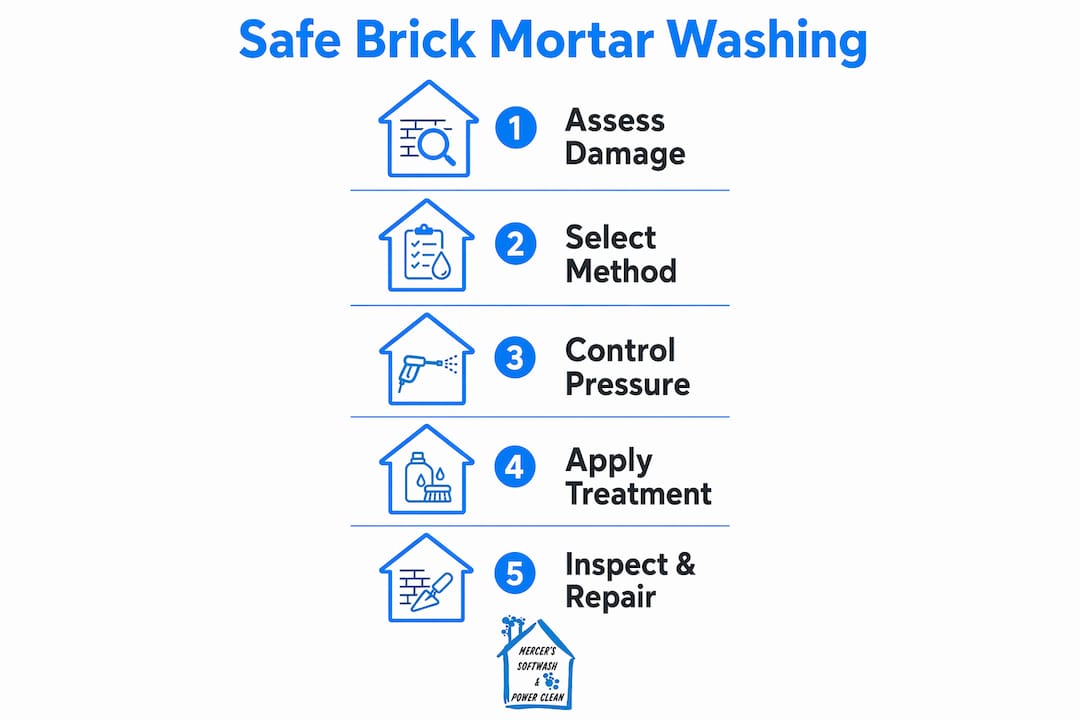
The correct maintenance sequence matters as much as the cleaning method itself. Repair deteriorated mortar joints first, then clean, then seal if the brick type warrants it. Cleaning without tuckpointing cleans the surface but does not stop water entry through open joints. Sealing without tuckpointing traps whatever moisture is already entering through those joints inside the wall, accelerating the deterioration it was meant to prevent.
For biological growth on shaded walls, low-pressure washing combined with biocide treatment extends masonry life by removing the growth that retains moisture against the surface. The biocide does the removal work; the rinse clears the residue. This approach is consistent with what Mercerssoftwashpowerclean applies on residential properties across Southern Ontario, where north-facing walls and tree-shaded facades regularly develop algae and moss that hold moisture against mortar joints year-round.
When sealing is appropriate, use only a breathable silane or siloxane penetrating product. Film-forming sealants trap moisture inside the brick, creating the same damaging pressure as hard Portland cement mortar applied over soft historic brick. A penetrating sealer allows the wall to breathe while reducing moisture entry. It is not a substitute for sound mortar joints, and it should never go over open or recessed joints. If you want to understand which surfaces suit soft washing before committing to a cleaning method, that decision starts with knowing your brick type and mortar condition.
For homeowners who want professional guidance on the right approach for their specific masonry, soft washing explained covers how low-pressure, chemistry-first cleaning protects mortar integrity while still achieving a thorough clean. Mercerssoftwashpowerclean evaluates mortar and brick condition before applying water to any surface, because the cleaning method that works on one wall can permanently damage another.
Key takeaways
Mortar absorbs water faster than brick and takes over 34 days to fully dry, making pressure control and proper sequencing the two most critical factors in safe brick washing.
| Point | Details |
|---|---|
| Mortar saturates faster than brick | Mortar absorbs and releases water more rapidly than brick, making joints the first point of damage during washing. |
| Pressure must stay within 600–1,500 PSI | Exceeding this range erodes mortar joints irreversibly; older lime-based mortars require the lower end of that range. |
| Moisture reduces compressive strength | Water saturation lowers masonry compressive strength by 6%–39%, with an average reduction of 19%. |
| Drying takes 36 days to stabilise | Mortar specimens reach stable moisture content after 36 days; sealing before full drying traps moisture inside the wall. |
| Repair before cleaning, not after | Tuckpoint deteriorated joints first, then clean, then seal with a breathable penetrating product if appropriate. |


