

Low pressure washing, known in the industry as soft washing, is a cleaning method that combines water delivered at 40 to 150 PSI with specialised chemical solutions to remove biological growth, dirt, and staining from exterior surfaces without physical force. Where traditional pressure washing relies on mechanical impact at 2,500 PSI or higher to blast away contaminants, soft washing relies on chemistry. The result is a deeper, longer-lasting clean that preserves the integrity of delicate surfaces like asphalt shingles, vinyl siding, and stucco. This guide covers how the method works, why it outperforms high-pressure alternatives on sensitive materials, and what best practices actually look like in the field.
How does low pressure washing work?
The core principle behind low pressure washing is straightforward: chemistry does the work, not force. A calibrated mixture of sodium hypochlorite and surfactants is applied to the surface at 40 to 150 PSI, which is roughly equivalent to the pressure from a garden hose. That low delivery pressure means there is no mechanical abrasion on the surface being treated.
Sodium hypochlorite is the active agent. It penetrates biological growth, including algae, mould, mildew, lichen, and moss, and kills the organisms at the root level rather than simply dislodging them. This is the critical distinction from pressure washing, which displaces surface-level contamination without eliminating the root structure. Regrowth after pressure washing is rapid because the organism’s anchor point remains intact.
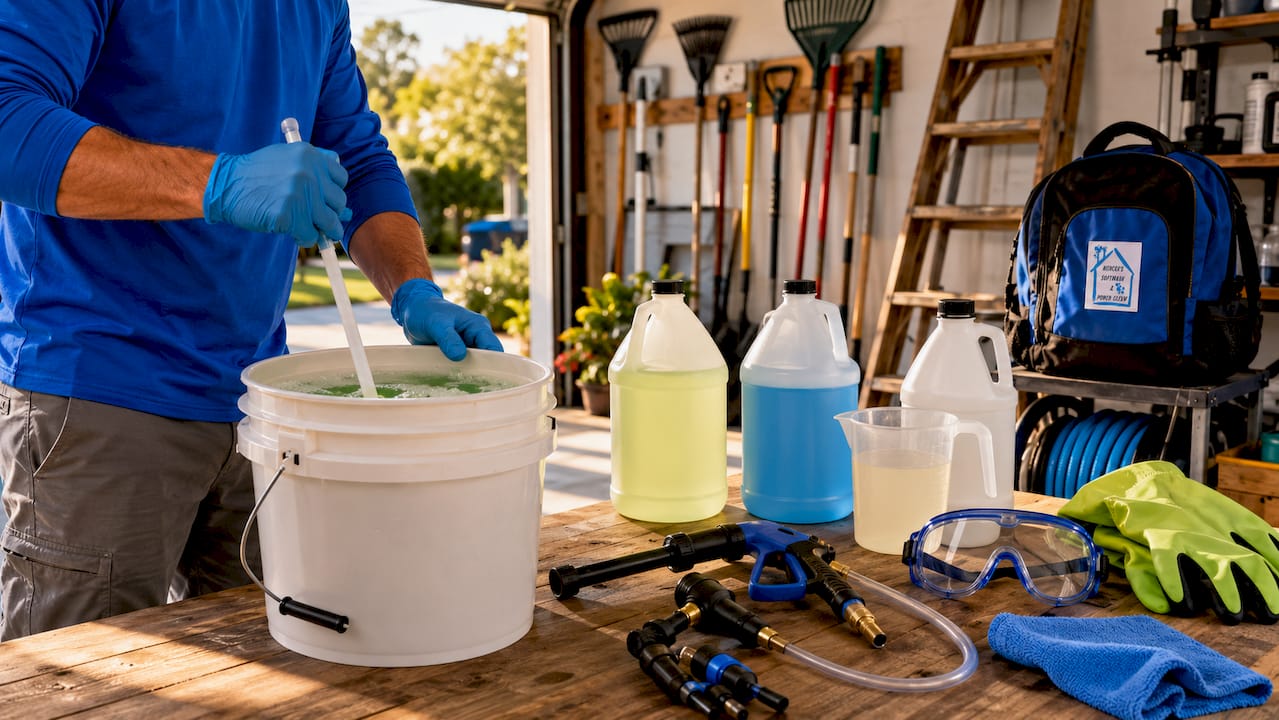
Surfactants play an equally important role. On vertical surfaces like siding or fascia boards, gravity works against the cleaning solution. Surfactants reduce surface tension, allowing the chemical mixture to cling to the surface rather than run off immediately. This adhesion gives the solution time to penetrate and work effectively, which matters especially on porous materials like stucco or cedar shakes.
After application, the solution requires adequate dwell time before rinsing. This is where many DIY attempts fail. The mixture must remain on the surface long enough to complete the biological kill cycle. Once dwell time is complete, a low-pressure rinse removes the dead organic matter and residual chemicals cleanly.
Pro Tip: Never apply soft wash solution on a hot surface in direct sunlight. Heat accelerates evaporation and reduces dwell time, which can lead to incomplete treatment and streaking.
What are the benefits of low pressure washing?
The most significant advantage of soft washing over traditional pressure washing is the longevity of results. Soft-washed surfaces stay clean for 12 to 24 months, compared to regrowth appearing within weeks after a high-pressure clean. That difference exists because soft washing eliminates the biological organism entirely, while pressure washing leaves the root system behind. For a homeowner or property manager, this means fewer cleaning cycles and lower long-term maintenance costs.
Surface preservation is the second major benefit. High-pressure washing can cause etching, splintering, and coating damage on painted wood, vinyl siding, and asphalt shingles. Soft washing eliminates that risk entirely because the water delivery pressure is too low to cause mechanical damage. Protective granules on shingles stay intact, paint adhesion is not compromised, and there is no risk of forcing water behind cladding or into window seals.
Warranty protection is a less-discussed but financially significant benefit. Roof manufacturers void warranties when high-pressure washing is used on asphalt shingles. Soft washing is the manufacturer-recommended method for roof cleaning, which means it is the only approach that keeps your warranty intact. For a homeowner with a relatively new roof, this distinction alone justifies the method.
“Soft washing is not ‘weak’ washing. It is a more effective approach that sanitises rather than just cleans superficially.” — Sunny Pressure Washing
Water consumption is also lower. Soft washing uses about 60% less water than traditional high-pressure washing because the chemical solution does the cleaning rather than volume and velocity of water. For property managers overseeing multiple buildings, this reduction in water use adds up meaningfully over a season.
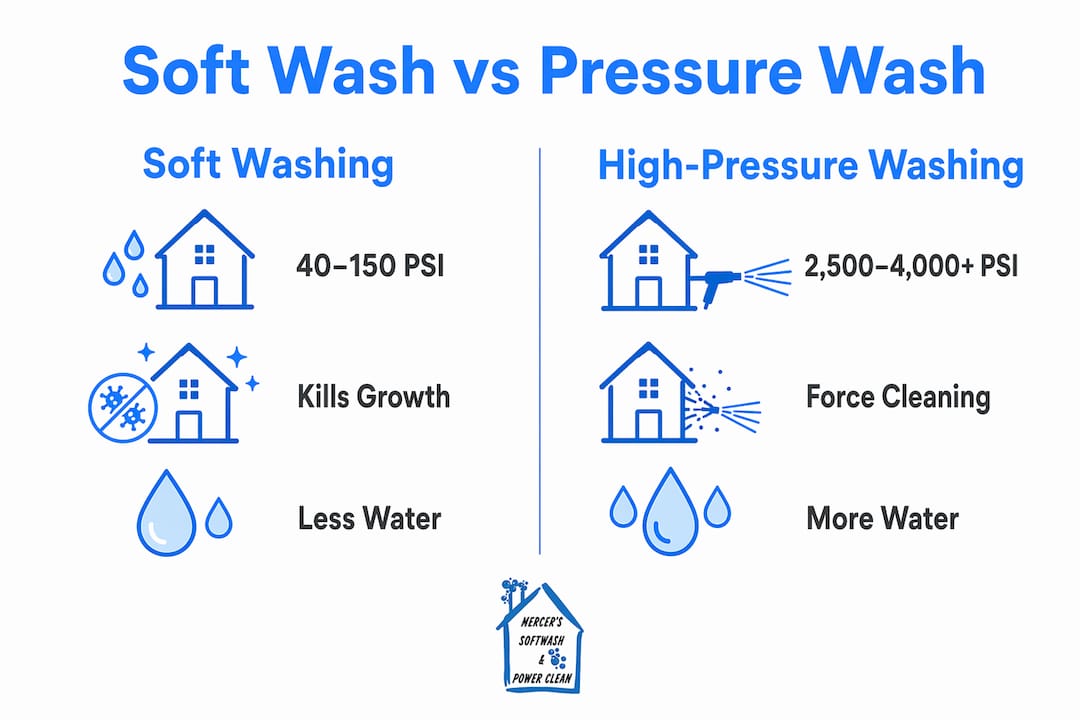
| Factor | Soft washing | High-pressure washing |
|---|---|---|
| Operating pressure | 40–150 PSI | 2,500–4,000+ PSI |
| Cleaning mechanism | Chemical treatment | Mechanical force |
| Results longevity | 12–24 months | Weeks to 3 months |
| Surface damage risk | Minimal | High on delicate surfaces |
| Water consumption | ~60% less | High |
| Warranty compatibility | Yes (asphalt shingles) | No (voids most warranties) |
Which surfaces are ideal for low pressure washing?
Low pressure washing is the correct method for any surface where mechanical force would cause damage or where biological growth has penetrated below the surface layer. The following surfaces require this approach.
Asphalt shingle roofs are the clearest case. The granules embedded in shingles protect against UV degradation and water infiltration. High pressure strips those granules, accelerating deterioration significantly. Soft washing removes algae, moss, and lichen from roof surfaces without touching the granule layer.
Vinyl siding is another surface where low pressure is non-negotiable. Pressure above 500 PSI can crack or warp vinyl panels, and it can force water behind the cladding, creating conditions for mould growth inside the wall cavity. Soft washing cleans the surface thoroughly without any of those risks. You can read more about the specifics in this house siding guide for homeowners.
Stucco, painted wood, cedar shakes, and window screens all fall into the same category. These materials are either porous, coated, or structurally fragile enough that high-pressure water causes irreversible damage. Soft washing treats them safely.
Concrete driveways, brick, and natural stone are different. These dense, hard surfaces can typically tolerate higher pressure without damage, and pressure washing is often appropriate for removing embedded grime or oil stains from those materials. The key principle is matching the method to the material, not defaulting to one approach for every surface on the property.
A common misconception among homeowners is that more pressure means a better clean. Many homeowners underestimate how many of their exterior surfaces require low pressure cleaning to avoid permanent damage. The reality is that for biological contamination on sensitive materials, chemistry outperforms force every time.
What are best practices for effective low pressure washing?
Getting soft washing right requires attention to chemical calibration, timing, and surface preparation. These are the steps that separate a professional result from a DIY attempt that causes damage or fails to clean properly.
-
Pre-wet surrounding landscaping. Before applying any cleaning solution, thoroughly wet all plants, grass, and garden beds within the treatment zone. Sodium hypochlorite at working concentrations can damage or kill vegetation if it contacts dry plant tissue. Pre-wetting dilutes any overspray that reaches plant surfaces.
-
Calibrate your dilution ratio to the surface. A roof with heavy lichen growth requires a stronger sodium hypochlorite concentration than vinyl siding with light algae staining. Proper chemical calibration based on surface type and contamination level is the single most important variable in achieving a clean result without causing damage. Using a one-size-fits-all mix is a reliable way to either under-treat or damage the surface.
-
Apply solution evenly and allow full dwell time. A dwell time of 10 to 20 minutes is required for the sodium hypochlorite to penetrate and kill biological root systems. Rinsing too early is the most common failure point in soft washing. If the solution dries before rinsing, reapply and restart the dwell period.
-
Rinse thoroughly at low pressure. Once dwell time is complete, rinse the surface and all surrounding areas with clean water at low pressure. This removes dead organic matter, residual chemicals, and any solution that may have contacted landscaping.
-
Post-rinse landscaping again. A second rinse of all plant material after the job is complete removes any chemical residue that settled during treatment. This step is particularly important on windy days when drift is more likely.
Pro Tip: Professional soft wash rigs use dedicated proportioners to dial in exact dilution ratios on the fly. If you are attempting DIY soft washing, pre-mix your solution carefully and test on a small, inconspicuous area before treating the full surface.
Using the right equipment matters as much as the chemistry. Dedicated soft wash systems deliver solution at controlled low pressure through larger-diameter hoses and downstream injectors or 12-volt pump systems. A standard pressure washer with a downstream injector can work for some applications, but it does not offer the same level of control as purpose-built soft wash equipment. For delicate surfaces, that control is not optional.
Key takeaways
Low pressure washing is the most effective and safest cleaning method for biological contamination on sensitive exterior surfaces, combining sodium hypochlorite, surfactants, and controlled dwell time to deliver results that last 12 to 24 months.
| Point | Details |
|---|---|
| Chemistry over force | Sodium hypochlorite kills biological growth at the root; pressure washing only displaces it. |
| Longer-lasting results | Soft-washed surfaces stay clean for 12 to 24 months versus weeks with high-pressure methods. |
| Surface and warranty protection | Soft washing preserves asphalt shingle granules and keeps manufacturer warranties intact. |
| Dwell time is critical | The cleaning solution must remain on the surface for 10 to 20 minutes for full biological kill. |
| Match method to material | Concrete and brick tolerate high pressure; vinyl, shingles, and stucco require soft washing. |
Why I think most homeowners are asking the wrong question
When homeowners contact us at Mercerssoftwashpowerclean, the question is almost always some version of “how much pressure do you use?” It is the wrong question, and it reveals a widespread misunderstanding about how exterior cleaning actually works.
I have seen the results of pressure washing done at the wrong PSI on asphalt shingles. The granule loss is visible from the ground. The homeowner paid for a cleaning service and unknowingly accelerated the deterioration of a roof that might have had another decade of life. That is not a minor mistake. Roof replacement in Southern Ontario is a significant expense, and it is entirely avoidable when the right method is used from the start.
The question worth asking is not about pressure. It is about what is actually growing on the surface and what chemistry is needed to eliminate it. A roof with black streaking from Gloeocapsa magma algae needs sodium hypochlorite at the right concentration, adequate dwell time, and a low-pressure rinse. That is it. No high-pressure equipment required, and no risk to the surface.
What I have found over years of working with homeowners across Southern Ontario is that education is the most protective thing we can offer. When you understand why soft washing works and what high pressure actually does to delicate surfaces, the decision becomes straightforward. You can also compare both approaches in detail by reading about soft washing vs pressure washing to see which method fits your specific situation.
The shift toward low pressure washing as the standard for residential exterior cleaning is not a trend. It is the correction of a long-standing industry habit of defaulting to force when chemistry is the better tool.
— Felix
How Mercer’s Softwash & Power Clean can help
Mercerssoftwashpowerclean specialises in professional soft washing for residential and commercial properties across Southern Ontario. If you are unsure whether your siding, roof, or deck requires low pressure or high-pressure treatment, the answer starts with a proper surface assessment, not a guess. The team at Mercerssoftwashpowerclean uses calibrated soft wash equipment, professional-grade surfactant blends, and surface-specific dilution ratios to deliver results that last. Start with the homeowner’s guide to soft washing to understand the full process, or reach out directly to discuss your property’s specific cleaning needs.
FAQ
What is low pressure washing?
Low pressure washing, also called soft washing, is an exterior cleaning method that uses water at 40 to 150 PSI combined with sodium hypochlorite and surfactants to remove biological growth and dirt from surfaces. It relies on chemical action rather than mechanical force to clean and sanitise.
Is low pressure washing safe for roofs?
Soft washing is the manufacturer-recommended method for cleaning asphalt shingle roofs. High-pressure washing strips protective granules and voids most roofing warranties, while low pressure washing removes algae, moss, and lichen without causing physical damage.
How long do low pressure washing results last?
Soft-washed surfaces typically remain clean for 12 to 24 months because the biological organisms are killed at the root level. High-pressure washing, by contrast, displaces surface growth without eliminating root systems, leading to regrowth within weeks.
Can I do low pressure washing myself?
DIY soft washing is possible but carries real risks. Incorrect sodium hypochlorite concentrations can damage surfaces or harm landscaping, and insufficient dwell time leads to incomplete treatment. Professional equipment and calibrated dilution ratios produce more reliable and safer results.
Which surfaces should not be soft washed?
Dense, hard surfaces like concrete driveways, brick, and natural stone generally do not require soft washing and respond well to appropriate pressure washing. Soft washing is specifically suited to delicate or coated surfaces such as asphalt shingles, vinyl siding, stucco, painted wood, and cedar shakes.


