

A restaurant’s exterior is the first thing a customer sees, and it communicates quality before a single dish is served. Frequent cleaning of restaurant exteriors is not simply an aesthetic choice. It is an operational necessity that affects safety, regulatory compliance, brand reputation, and the long-term condition of your building surfaces. Grease overspray, food residue, biological growth, and weather all degrade exterior surfaces continuously. Restaurant owners and managers who treat exterior maintenance as a year-round programme protect their business on every front.
Why restaurant exteriors need frequent cleaning: safety and compliance risks
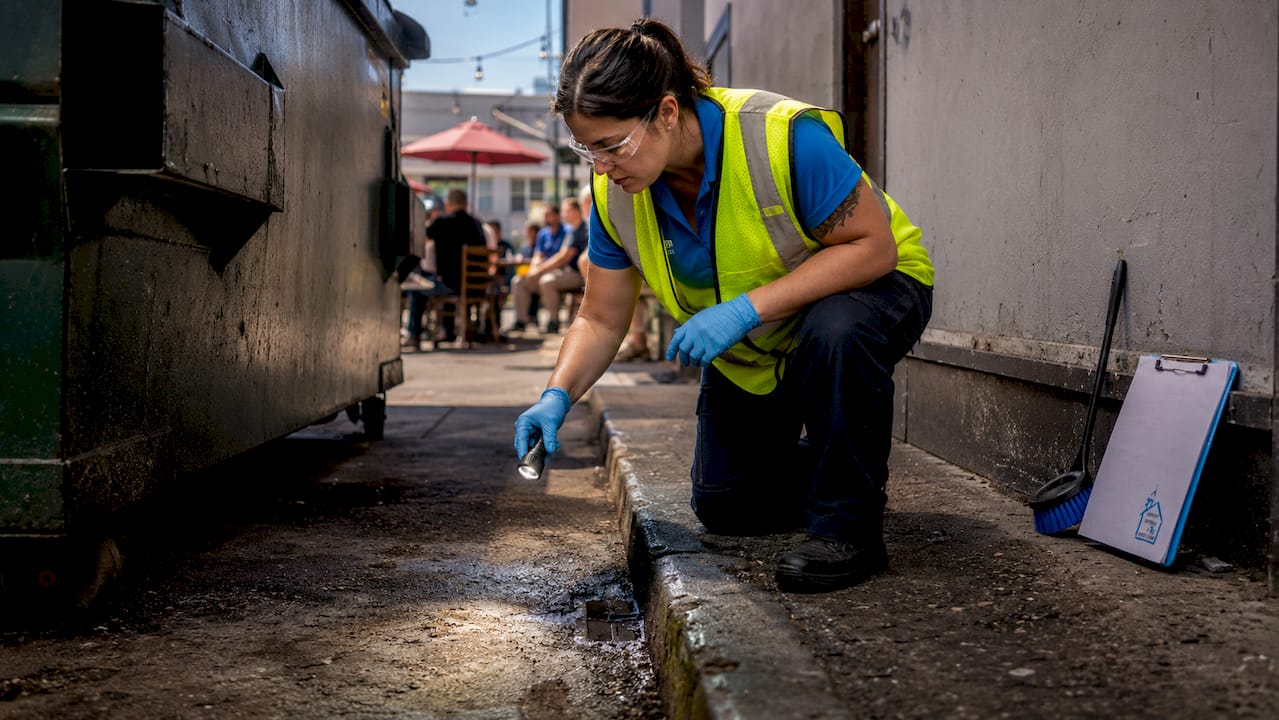
Dirty restaurant exteriors create direct safety hazards. Grease, food residue, and organic growth reduce surface traction and increase slip-and-fall incidents, which rank among the most costly liabilities in the food service industry. A single slip-and-fall claim can result in significant legal costs, insurance increases, and reputational damage. Regular pressure washing removes these hazards before they cause harm.
Health inspectors also evaluate exterior cleanliness as a direct indicator of overall facility sanitation. Health inspectors assess exterior grease buildup, dumpster contamination, and stained concrete during audits. Poor exterior condition frequently triggers red flags that can escalate into formal compliance issues. Inspectors reason that a poorly maintained exterior reflects the standards applied inside the kitchen.
The compliance risk extends beyond health inspections. Municipal bylaws across Southern Ontario and most Canadian jurisdictions require commercial properties to maintain clean, safe exteriors. Failure to meet these standards can result in fines or orders to remedy. Routine cleaning is the most reliable way to stay ahead of these requirements.
Restaurants also face unique exterior challenges that compound these risks. Grease overspray, food spills, gum, and oil stains attract pests, accelerate surface degradation, and create negative customer perceptions when left unaddressed. Each of these issues is preventable with a consistent cleaning schedule.
Pro Tip: Schedule a walk-around inspection of your exterior every two weeks. Look for grease trails near exhaust vents, staining near dumpster areas, and any slippery patches on entry pads. Catching problems early keeps cleaning costs low and compliance risks lower.
How often should restaurant exterior areas be cleaned?
Cleaning frequency depends on the specific zone, traffic volume, and local climate. The table below outlines evidence-based guidelines for the most common restaurant exterior areas.
| Exterior zone | Recommended frequency | Key reason |
|---|---|---|
| Storefront sidewalks and entry pads | Every 2–4 weeks | High foot traffic accelerates grease and grime buildup |
| Patios and outdoor dining areas | Monthly, more in peak seasons | Food and beverage spills accumulate rapidly |
| Service-side walkways | Quarterly | Grease overspray from kitchen exhaust is persistent |
| Dumpster areas | Quarterly or more often | Organic waste creates odour, pests, and staining |
| Parking lot touchpoints | Quarterly or as needed | Oil stains and debris build up over time |
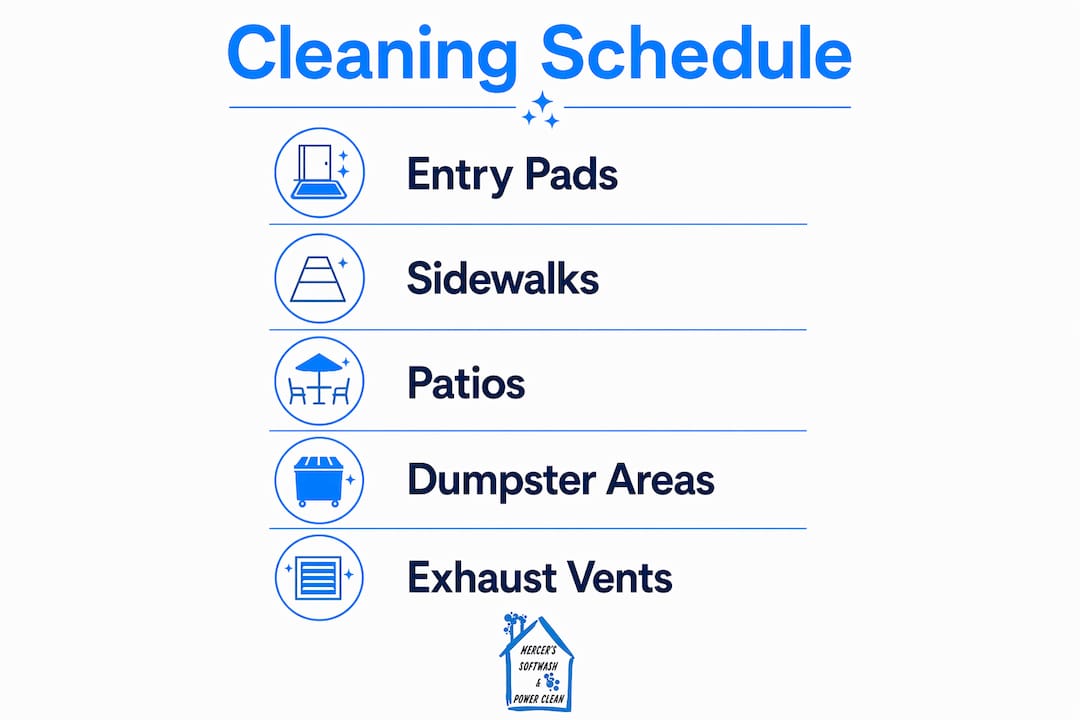
High-traffic storefront sidewalks and entry pads require cleaning every 2–4 weeks, with patios cleaned monthly and more frequently during busy seasons. This frequency is not arbitrary. Entry pads accumulate grease tracked from kitchen areas, and wet grease on concrete becomes a slip hazard within days of buildup. High-volume restaurants in urban centres often clean monthly across all zones to stay ahead of visible soiling.
Climate plays a significant role in setting your schedule. Southern Ontario restaurants face freeze-thaw cycles in winter that push grime into concrete pores, making spring cleaning especially critical. Summer patio season increases food and beverage spills dramatically. Adjusting your cleaning frequency to match these seasonal patterns prevents the kind of embedded staining that requires aggressive treatment to remove.
The benefit of a scheduled approach over reactive cleaning is consistency. Reactive cleaning means you only act when the problem is visible and often severe. Scheduled maintenance keeps surfaces in a condition that is easier and cheaper to clean each time. Routine maintenance is significantly cheaper than full surface replacements caused by years of neglect.
Pro Tip: Build your exterior cleaning schedule into your operational calendar at the start of each year. Align cleaning dates with your busiest seasons and any known inspection windows. A 12-month plan prevents last-minute scrambling and keeps your budget predictable.
Why does exterior cleanliness matter for brand image?
A restaurant’s exterior is its first marketing touchpoint. Clean storefronts and walkways signal a well-run, detail-oriented operation before a customer reads the menu or steps through the door. Exterior cleanliness directly influences customer trust and the decision to enter.
The reverse is equally true. A stained facade, grimy patio furniture, or a foul-smelling dumpster area tells a customer that standards are low. That impression is difficult to reverse once formed. Customers who turn away based on exterior appearance rarely return to give a second chance.
Clean exteriors also support your marketing efforts in practical ways. Restaurants invest in photography for social media, Google Business profiles, and review platforms. A clean, well-maintained exterior photographs well and reinforces the brand image you want to project. A dirty exterior undermines that investment entirely.
Consistent exterior maintenance builds the kind of trust that encourages repeat business. Customers who see a clean, well-kept exterior every time they visit associate that consistency with quality. That association extends to the food, the service, and the overall experience. You can learn more about exterior building maintenance as a year-round strategy to protect that perception.
The benefits of exterior cleanliness for restaurants include:
- Stronger first impressions that convert foot traffic into seated guests
- Reduced pest attraction by eliminating food residue and organic buildup
- Better photography for social media and review platforms
- Compliance with health and municipal standards that protect your licence
- Protection of concrete, masonry, and cladding from premature surface erosion
What are the best practices for restaurant exterior cleaning?
Professional cleaning produces better results than DIY approaches for most restaurant exteriors. Consumer-grade pressure washers often fail to remove deep grease stains and can damage surfaces by etching or stripping finishes if used incorrectly. Concrete etching from improper pressure application is a permanent and costly mistake. Professional crews use calibrated equipment and appropriate cleaning agents matched to each surface type.
The following practices define an effective restaurant exterior cleaning programme:
-
Schedule cleaning outside business hours. Cleaning during operating hours creates disruptions, access hazards, and a poor guest experience. Professional crews coordinate around your hours to avoid these issues entirely.
-
Avoid last-minute inspection cleaning. Scheduling cleaning only before inspections results in rushed work, limited service availability, and increased management stress. A 12-month maintenance plan ensures balanced budgeting and consistent inspection readiness.
-
Match cleaning methods to surface types. High-pressure washing suits concrete and pavers. Softer surfaces like painted cladding, wood trim, or signage require lower pressure or soft washing techniques to avoid damage. Using the wrong method strips finishes and accelerates surface wear.
-
Address dumpster areas separately. Dumpster zones accumulate the most concentrated organic waste and require dedicated cleaning with appropriate degreasers. Treating this area the same as a sidewalk produces inadequate results.
-
Implement a 12-month maintenance plan. A written annual schedule aligned with your inspection calendar and seasonal peaks removes guesswork and keeps your exterior consistently clean. Reviewing exterior cleaning compliance best practices for 2026 helps you align your plan with current standards.
The most common pitfalls are inconsistent cleaning, rushed last-minute efforts, and using improper equipment. Each of these mistakes compounds over time. Inconsistent cleaning allows biological growth like algae and mould to establish on surfaces, which requires more aggressive treatment to remove. Rushed cleaning misses problem areas. Improper equipment causes damage that costs far more to repair than professional cleaning would have cost in the first place. Knowing the signs your exterior needs deep cleaning helps you intervene before problems become expensive.
Key takeaways
Frequent restaurant exterior cleaning is an operational requirement that protects safety, compliance, brand image, and surface longevity simultaneously.
| Point | Details |
|---|---|
| Safety comes first | Grease and organic buildup reduce traction and create slip-and-fall liabilities that cost far more than prevention. |
| Compliance is ongoing | Health inspectors evaluate exterior cleanliness as a direct indicator of overall sanitation standards. |
| Frequency varies by zone | Entry pads need cleaning every 2–4 weeks; dumpster areas and service walkways need quarterly attention. |
| Brand image is at stake | A clean exterior builds customer trust and supports marketing efforts across all platforms. |
| Professional cleaning protects surfaces | Consumer-grade equipment can etch concrete and strip finishes; professional methods match pressure and chemistry to each surface. |
What I’ve learned from watching restaurants get exterior cleaning wrong
Most restaurant managers I speak with treat exterior cleaning as something they deal with when it becomes obvious. The grease trail near the exhaust vent gets ignored until it turns black. The patio concrete gets pressure washed the week before a health inspection. The dumpster area gets a hose-down when the smell becomes a complaint. This reactive approach costs more money, creates more stress, and produces worse results than a simple scheduled programme.
The insight that changes how managers think about this is straightforward: exterior cleaning is asset management, not housekeeping. The concrete, masonry, and cladding on your building are worth protecting. Biological growth and chemical contaminants erode surfaces over time, and the repair costs are significant. A scheduled cleaning programme is an investment in the building itself, not just its appearance.
Region-specific challenges matter too. Southern Ontario’s climate creates conditions that accelerate surface degradation. Freeze-thaw cycles in winter force moisture and contaminants into concrete pores. Summer humidity promotes algae and mould growth on shaded surfaces. A cleaning programme that ignores these seasonal realities will always be playing catch-up.
The restaurants that get this right treat their exterior cleaning programme the same way they treat their kitchen cleaning schedule: it is non-negotiable, it is documented, and it happens whether or not an inspection is coming. That discipline is what separates a consistently well-maintained property from one that looks clean only occasionally.
— Felix
How Mercerssoftwashpowerclean supports restaurant exterior maintenance
Mercerssoftwashpowerclean provides professional exterior cleaning services for commercial properties across Southern Ontario, including restaurants that need reliable, scheduled maintenance. The team specialises in pressure washing and soft washing techniques matched to each surface type, from concrete entry pads and patios to painted cladding and signage. Grease removal, biological growth treatment, and dumpster area cleaning are all part of a thorough service approach. If you are weighing your options, the guide on soft washing vs pressure washing explains which method suits each exterior surface. Mercerssoftwashpowerclean works around your operating hours and can help you build a 12-month maintenance plan that keeps your exterior inspection-ready year-round.
FAQ
Why do restaurant exteriors need cleaning more often than other buildings?
Restaurants produce grease overspray, food residue, and organic waste that accumulate on exterior surfaces far faster than typical commercial properties. These contaminants create slip hazards, attract pests, and trigger compliance issues during health inspections.
How often should a restaurant’s entry pad be cleaned?
High-traffic entry pads should be cleaned every 2–4 weeks. Grease tracked from kitchen areas makes these surfaces slippery quickly, and frequent cleaning prevents embedded staining.
Can restaurant managers pressure wash their own exteriors?
DIY pressure washing with consumer-grade equipment often fails to remove embedded grease and can permanently etch concrete if pressure settings are incorrect. Professional cleaning produces consistent results without surface damage.
What do health inspectors look for on restaurant exteriors?
Health inspectors evaluate grease buildup, dumpster contamination, and stained concrete as indicators of overall sanitation standards. Poor exterior condition frequently triggers formal compliance concerns during audits.
What is the difference between soft washing and pressure washing for restaurant exteriors?
Pressure washing uses high-pressure water to remove heavy soiling from hard surfaces like concrete and pavers. Soft washing uses lower pressure combined with cleaning solutions to treat sensitive surfaces like painted cladding, wood trim, and signage without causing damage.


