

Soft washing is a chemical cleaning method that kills algae by oxidizing and destroying its cellular structure, rather than simply blasting surface stains away. Where pressure washing leaves algae roots intact, soft washing applies a sodium hypochlorite solution at low pressure to penetrate the organism and eradicate it at the source. The result is a cleaner surface that stays clean far longer. This guide breaks down the science, the process, and the best practices so you can make an informed decision about algae removal on your property.
How soft washing kills algae at the cellular level
Soft washing kills algae chemically, not mechanically. The active agent is sodium hypochlorite, the same compound used in household bleach but applied at professional concentrations. When it contacts algae, it attacks the organism’s chromophores, which are the pigmented molecules responsible for the algae’s colour. This process is called oxidation, and it causes the visible colour change you see when algae turns from green or black to white or grey during treatment.
The oxidation process does more than strip colour. Sodium hypochlorite denatures proteins and disrupts the algae’s cell walls and DNA, stopping the organism from reproducing. This is the critical difference between soft washing and a surface scrub. Killing the reproductive capacity of the algae is what prevents rapid regrowth after treatment.
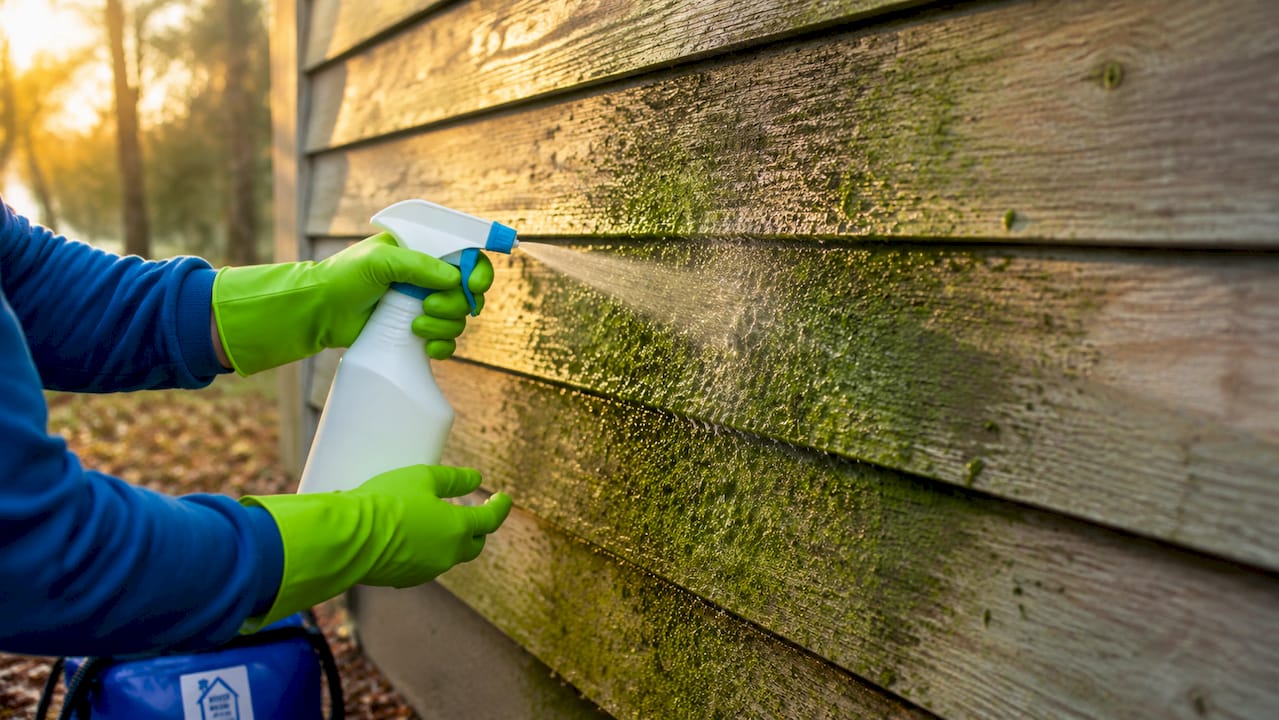
Surfactants play an equally important role in the soft wash process. A surfactant is a chemical additive that reduces surface tension in the solution, allowing it to cling to vertical and sloped surfaces longer than plain bleach would. On a pitched roof or a vertical wall, this extended contact time is what makes the chemical kill effective. Without a surfactant, the solution runs off before it can penetrate.
Visible results typically appear within 15–30 minutes of application. Temperature affects this timeline. In hot weather, the reaction accelerates, which means dwell time must be shortened to prevent the solution from flash drying on the surface and leaving residue. In cooler conditions, the chemical works more slowly and may need a longer contact period to achieve a complete kill.
Pro Tip: On overcast days with mild temperatures, the soft wash solution stays wet longer on the surface. This naturally extends dwell time and often produces a more thorough kill without any extra product.
Does pressure washing remove algae as effectively?
Pressure washing removes the visible layer of algae from a surface. It does not kill the organism. The roots and spores embedded in porous materials remain after a pressure wash, and regrowth begins within weeks. Soft washing, by contrast, kills algae roots and spores with chemical action, creating a hostile environment that prevents quick regrowth.
The pressure difference between the two methods is significant. Pressure washing operates at 1,500 to 4,400 PSI, which is enough force to strip ceramic granules from asphalt shingles and damage vinyl siding. Soft washing delivers solution at under 100 PSI, comparable to a garden hose. That low pressure protects the surface while the chemistry does the actual cleaning work.
Soft washing chemicals penetrate 3–5mm into porous surfaces, creating a residual biocidal effect that prevents algae regrowth for months after treatment. Pressure washing provides no such protection. The surface looks clean immediately after, but the biology underneath is untouched and ready to return.
Pressure washing also carries a risk that most homeowners do not consider. High-pressure water can aerosolize algae spores, spreading contamination to surrounding surfaces that were previously clean. Soft washing eliminates this risk because the chemical kills spores on contact rather than dispersing them.
Manufacturers and industry standards recognise soft washing as the only safe method for removing algae from roofs without voiding warranties. If your roof is under warranty, pressure washing it to remove algae could cost you that coverage. Soft washing is the method your shingle manufacturer expects you to use.
| Factor | Pressure washing | Soft washing |
|---|---|---|
| Operating pressure | 1,500–4,400 PSI | Under 100 PSI |
| Algae kill method | Mechanical removal | Chemical oxidation |
| Kills roots and spores | No | Yes |
| Risk of surface damage | High | Low |
| Warranty compliance | Often voids warranty | Industry recommended |
| Regrowth timeline | Weeks | Months to years |
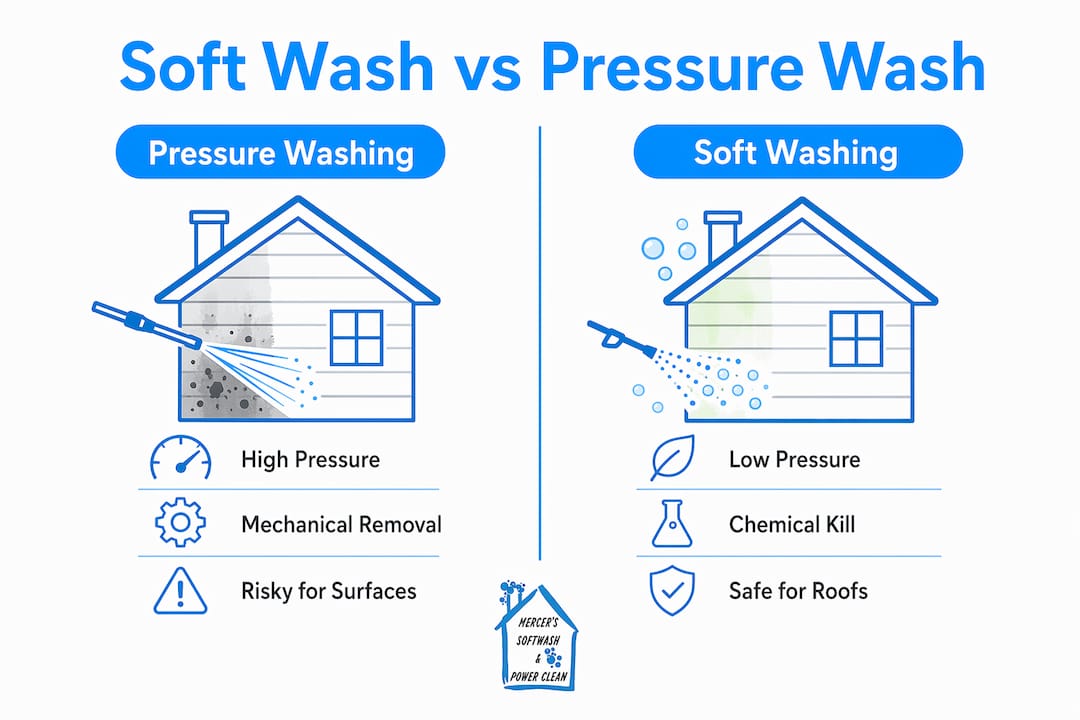
For a deeper look at how these two methods compare across different surfaces, the soft washing vs pressure washing guide from Mercerssoftwashpowerclean covers the full breakdown.
Best practices for safe algae removal with soft washing
Chemical concentration is the most important variable in a safe and effective soft wash. The right concentration depends on the surface material. Using too little means an incomplete kill. Using too much risks discolouration or surface damage.
Professional sodium hypochlorite concentrations follow material-specific guidelines:
- Asphalt shingle roofs require 3–5% sodium hypochlorite. Roofs carry the heaviest algae loads and need a stronger solution, but asphalt tolerates this range without granule loss at low pressure.
- Vinyl siding requires 0.5–1.5%. Vinyl is less porous and more chemically sensitive, so a lower concentration achieves a thorough kill without affecting the finish.
- Concrete and brick typically require 2–4%. These surfaces are dense and porous, and the higher concentration allows the solution to penetrate and kill embedded algae.
- Stucco requires under 1% to avoid discolouration. Always test an inconspicuous area first on stucco, as pigment variation makes it more vulnerable to chemical bleaching.
Protecting your landscaping is non-negotiable. Pre-wet all plants in the treatment zone before applying any solution. Saturated foliage absorbs less chemical runoff than dry foliage. After treatment, rinse all plant material and soil thoroughly with fresh water. Professional operators cover sensitive garden beds with plastic sheeting during application for added protection.
Never allow the soft wash solution to dry on a surface before rinsing. Letting solution dry leads to residue buildup and uneven kill zones. Time your rinse based on the dwell period and weather conditions. On a warm, sunny day, you may need to rinse sooner than the standard 15–30 minute window.
Pro Tip: Always test your solution on a small, hidden area before full application. This is the universal professional standard for preventing discolouration on painted, stained, or pigmented surfaces.
For guidance on which surfaces on your home are suitable for soft washing, the exterior surfaces safe for softwash guide from Mercerssoftwashpowerclean is a practical starting point.
How the soft wash process works in practice
A professional soft wash application follows a consistent sequence that maximises algae kill while protecting the surface and surrounding environment. Understanding this sequence helps you know what to expect when you hire a qualified crew.
The process begins with a site assessment and preparation. The crew identifies the algae type and surface material, then sets the appropriate sodium hypochlorite concentration. All nearby plants, furniture, and sensitive fixtures are pre-wetted or covered. Downspouts are checked to manage chemical runoff.
The solution is applied using a low-pressure agricultural or dedicated soft wash pump. These systems deliver solution at under 100 PSI with high volume, meaning they move a large amount of liquid gently rather than a small amount forcefully. The sodium hypochlorite and surfactant mixture is applied in overlapping passes to ensure full coverage without gaps.
The solution is then left to dwell. The standard dwell period is 15–30 minutes, adjusted for temperature and surface condition. During this time, the chemical oxidation process works through the algae colony, killing cells, disrupting DNA, and breaking down the organism’s structure. The surface will visibly change colour as the algae dies.
After the dwell period, the surface is rinsed gently with low-pressure water. The rinse removes dead algae material without disturbing the surface. Because the algae is already dead, the rinse does not need to be forceful. Some residual biocidal effect remains in porous surfaces after rinsing, which continues to suppress regrowth for months.
Clients sometimes expect the surface to look perfectly clean immediately after treatment. Chemical biocides can work over days or weeks, with dead algae washing away gradually through rain and weathering. This is normal and is actually a sign that the treatment penetrated deeply rather than just cleaning the surface layer.
Key takeaways
Soft washing kills algae permanently at the cellular level using sodium hypochlorite oxidation, making it the most durable and surface-safe algae removal method available.
| Point | Details |
|---|---|
| Chemical kill, not mechanical | Sodium hypochlorite oxidises algae cells and DNA, preventing regrowth from roots and spores. |
| Concentration matters | Use 3–5% on roofs, 0.5–1.5% on vinyl siding, and under 1% on stucco to avoid surface damage. |
| Pressure washing spreads spores | High-pressure water aerosolises algae spores and leaves roots intact, causing faster regrowth. |
| Dwell time is critical | Allow 15–30 minutes of contact time, adjusted for temperature, before rinsing the surface. |
| Protect your landscaping | Pre-wet plants before application and rinse soil thoroughly after treatment to prevent chemical damage. |
Why I trust chemistry over pressure every time
After seeing hundreds of properties across Southern Ontario, the pattern is consistent. Homeowners who pressure washed their roofs or siding to remove algae are back dealing with the same problem within a season. Homeowners who had soft washing done properly are still clean two or three years later. That gap is not luck. It is the difference between removing algae and killing it.
The misconception I hear most often is that soft washing is just “watered-down bleach.” That undersells the chemistry. The surfactant blend, the concentration calibration, and the dwell time management are what separate a professional result from a DIY attempt that damages your siding or kills your garden. Getting the concentration wrong on stucco or painted wood can cause permanent discolouration. Getting the dwell time wrong on a hot day can leave residue that is harder to remove than the original algae.
One thing I have seen go wrong with DIY soft washing is skipping the test patch. Professionals test every time, on every surface, without exception. It takes two minutes and prevents a repair bill. If you are considering handling algae removal yourself, that step is not optional.
Hiring a qualified professional also protects your roof warranty. Soft wash protects shingles in a way that pressure washing never can, and most shingle manufacturers specify low-pressure chemical cleaning as the only approved method. Pressure washing that warranty away to save a few dollars is a trade most homeowners regret.
— Felix
Algae removal services from Mercerssoftwashpowerclean
Mercerssoftwashpowerclean serves residential and commercial properties across Southern Ontario with professional soft washing services calibrated for each surface type. The crew applies material-specific sodium hypochlorite concentrations, manages dwell time precisely, and protects your landscaping throughout the process. The result is thorough algae removal that lasts, without surface damage or warranty concerns.
If you are dealing with algae on your roof, siding, concrete, or deck, the residential cleaning services page covers the full range of what Mercerssoftwashpowerclean offers. For homeowners who want to understand the method before booking, the soft washing homeowner guide is a thorough starting point. Contact Mercerssoftwashpowerclean directly to arrange a property evaluation and get the right treatment plan for your exterior.
FAQ
What chemical does soft washing use to kill algae?
Soft washing uses sodium hypochlorite, typically mixed with a surfactant, to kill algae through oxidation. The surfactant helps the solution cling to surfaces and penetrate porous materials for a complete kill.
How long does soft washing keep algae from coming back?
Soft washing chemicals penetrate 3–5mm into porous surfaces, creating a residual biocidal effect that suppresses algae regrowth for months after treatment. Results vary by surface type, climate, and shade exposure.
Is soft washing safe for asphalt shingles?
Soft washing is the industry-recommended method for roof algae removal and is safe for asphalt shingles when applied at the correct concentration of 3–5% sodium hypochlorite at under 100 PSI. Pressure washing, by contrast, can strip protective granules and void your roof warranty.
How is soft washing different from pressure washing for algae removal?
Pressure washing removes surface algae mechanically but leaves roots and spores intact, leading to rapid regrowth. Soft washing kills the entire organism chemically, including its reproductive structures, for longer-lasting results.
Can soft washing damage my plants or garden?
Chemical runoff can harm plants if precautions are not taken. Pre-wetting all foliage before application and rinsing plants and soil thoroughly after treatment prevents damage to your landscaping.


