

Commercial awning cleaning is defined as the professional removal of dirt, mildew, algae, staining, and environmental contaminants from fabric or metal awnings on commercial properties. The industry standard method is low-pressure soft washing, which preserves protective coatings and seam integrity that high-pressure washing destroys. For facility managers and property owners across Southern Ontario, understanding what is awning cleaning commercial means recognising it as a scheduled maintenance service, not a one-time fix. Well-maintained awnings reduce building cooling costs by up to 25% during summer by blocking solar heat gain. That figure alone makes awning care a financial decision, not just an aesthetic one.
What techniques are used in commercial awning cleaning?
Low-pressure soft washing is the industry standard for fabric awnings. High-pressure washing damages fabric awnings by stripping protective coatings and fraying threads, which shortens the awning’s usable life significantly. Soft washing uses biodegradable detergents applied at low pressure to lift contaminants without stressing the material. This method removes mildew, algae, bird droppings, and airborne grime safely and thoroughly.
Organic growth like mildew and algae requires targeted treatment with manufacturer-approved solutions. Applying a diluted, biodegradable cleaning agent directly to affected areas before rinsing gives the solution time to break down biological matter at the root. Scrubbing should be gentle and directional, following the weave of the fabric rather than working against it. Harsh scrubbing with stiff brushes is one of the most common mistakes facility managers make, and it causes irreversible pilling and surface degradation.
Electrical and lighting components mounted near or beneath awnings need protection during any cleaning process. Professionals use low-pressure techniques specifically to avoid driving moisture into wiring, junction boxes, or LED fixtures. Covering or taping off these components before washing is standard practice on commercial sites. This step protects both the building infrastructure and the cleaning crew’s liability.
- Apply biodegradable detergent and allow dwell time before rinsing
- Use soft-bristle brushes and follow the fabric weave direction
- Rinse thoroughly from top to bottom to prevent streaking
- Cover all electrical fixtures and wiring before washing begins
- Never use acid-based or citrus-strip cleaners on vinyl or coated fabrics
Pro Tip: Test any cleaning solution on a small, hidden section of the awning fabric before applying it to the full surface. Fabric dyes and coatings react differently to cleaning agents, and a patch test prevents costly, visible damage.
How often should commercial awnings be cleaned?
Professional awning cleaning is recommended on a semi-annual basis, with adjustments for location and environmental conditions. That means most commercial properties should schedule cleaning in spring and again in early autumn. This cadence removes the buildup from winter grime and prepares the awning before summer UV exposure accelerates staining and biological growth.
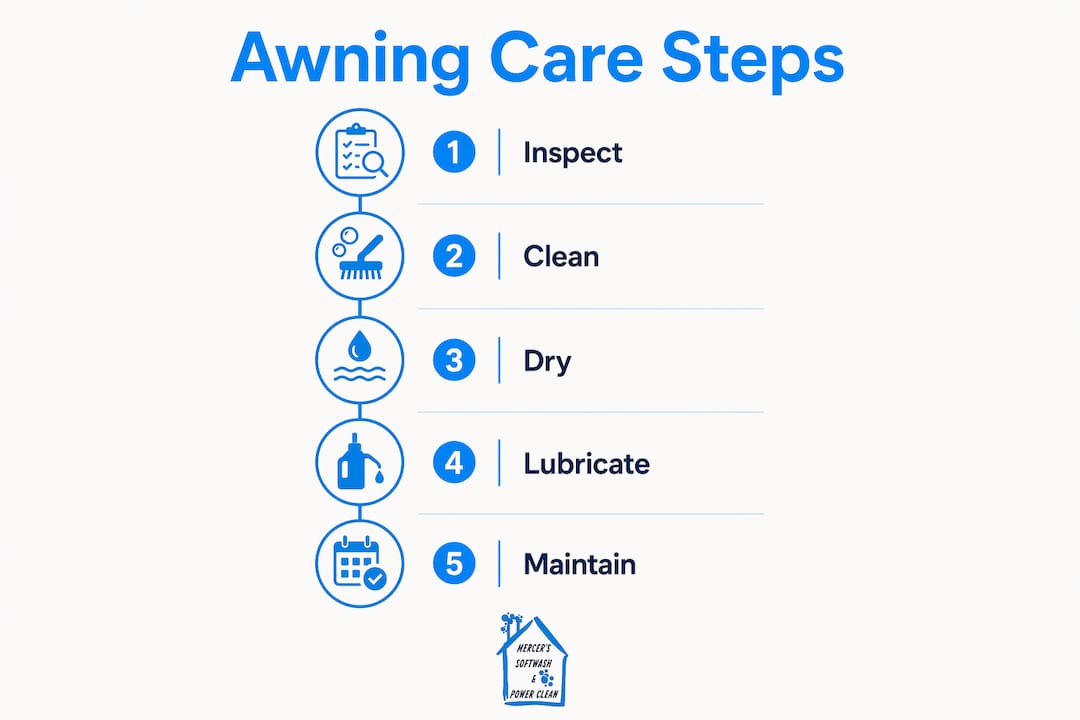
Certain conditions push that frequency higher. Properties near busy roads accumulate exhaust particulate faster than suburban locations. Buildings surrounded by mature trees deal with sap, pollen, and leaf tannins that stain fabric within weeks. High-foot-traffic retail entrances face grease, food residue, and cigarette smoke that embed into fabric fibres over time. In these environments, quarterly cleaning is a reasonable standard.
Regular maintenance also reduces long-term costs in a measurable way. Consistent care can double or triple awning lifespan, saving thousands in replacement costs. One documented case saved $12,000 through a structured maintenance programme. Replacing a commercial awning is a significant capital expense. Cleaning it twice a year is not.
Facility managers should also schedule professional inspections alongside cleaning visits. An experienced technician will identify early signs of seam separation, frame corrosion, or coating failure that are easy to miss during a routine walkthrough. Catching these issues early prevents minor repairs from becoming full replacements.
- Semi-annual cleaning for most commercial properties (spring and autumn)
- Quarterly cleaning for high-traffic, urban, or heavily treed locations
- Annual professional inspection of frame hardware, seams, and coatings
- Spot cleaning after major weather events or visible contamination
What routine maintenance extends commercial awning lifespan?
Drying is the most overlooked step in awning care. Retractable awnings must be fully air-dried before retraction to prevent mildew growth that permanently degrades fabric weave. Rolling up a damp awning traps moisture in the folds, creating the exact warm, dark, humid environment that mildew thrives in. Once mildew penetrates the weave, it cannot be fully removed without damaging the fabric.
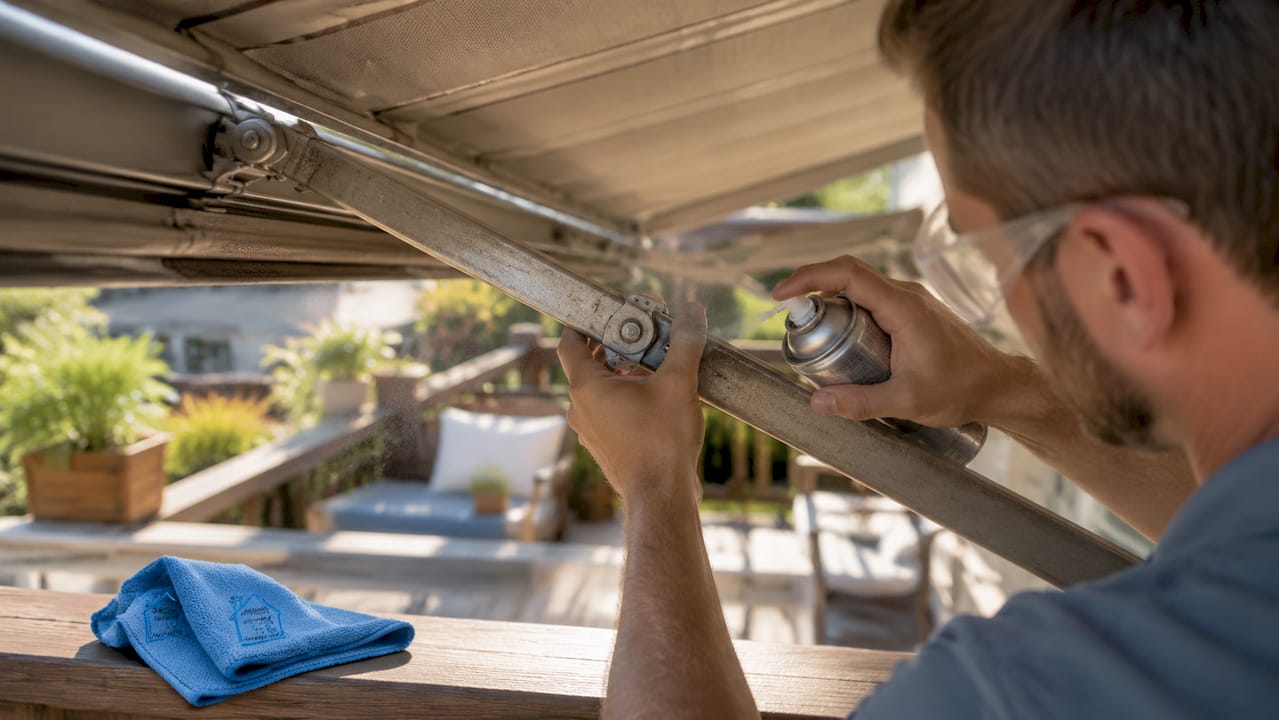
Mechanical components require lubrication, but the product choice matters enormously. Dry silicone sprays are the correct lubricant for awning arms, hinges, and pivot points. Oil-based products like WD-40 attract dust and debris, which forms an abrasive paste that accelerates wear on moving parts. Petroleum solvents, citrus strippers, and abrasive powders cause additional damage to vinyl and adhesives, and they void most manufacturer warranties.
Frame inspections should happen at least twice a year, ideally during each cleaning visit. Check mounting brackets for rust, tighten all visible hardware, and look for any bending or stress fractures in the arms. A loose bracket on a large commercial awning is a safety hazard, not just a maintenance issue. Addressing it during a scheduled visit costs far less than an emergency repair after a windstorm.
Spot treatments between scheduled cleanings keep minor staining from becoming permanent. A mild soap solution applied with a soft cloth handles most bird droppings, food splatter, and surface dust. The goal is to prevent contaminants from bonding to the fabric coating over time.
Pro Tip: Create a seasonal maintenance checklist for your facility team. Include tasks like checking retraction function, inspecting seams for separation, lubricating mechanical parts with dry silicone, and logging any visible damage with photos. A written record supports warranty claims and tracks the awning’s condition over time.
When should you hire professional awning cleaning services?
Height and access are the first reasons to call a professional. Commercial awnings on multi-storey buildings or above entrances with heavy foot traffic require ladders, lifts, or scaffolding to clean safely. Working at height without proper equipment and training creates real injury risk. Professional crews carry the appropriate safety gear and liability insurance for elevated work.
Material-specific cleaning is another area where professional knowledge matters. Acrylic fabrics, vinyl-coated polyester, and canvas all respond differently to cleaning agents and pressure levels. Using the wrong product on the wrong material strips protective coatings, fades colour, and voids the manufacturer’s warranty. A professional identifies the material before selecting a cleaning approach.
Facility managers should require vendors to provide verified material ID, cleaning chemical Safety Data Sheets (SDS), sealer specifications, and a documented cleaning plan before any work begins. This documentation protects the property owner if a warranty dispute arises and confirms the vendor is working to a professional standard. Vendors who cannot provide this paperwork are not operating at a commercial level.
The financial case for professional service is straightforward. Improper DIY cleaning that voids a warranty or damages fabric can result in a full replacement costing several thousand dollars. Professional cleaning costs a fraction of that and extends the asset’s life significantly. For facility managers overseeing multiple properties, centralised documentation and standardised cleaning scopes ensure consistent results across every location.
- Confirm the vendor can access the awning safely with proper equipment
- Request material identification and confirm the cleaning method matches the fabric type
- Ask for Safety Data Sheets for all cleaning chemicals to be used
- Review the vendor’s cleaning plan and confirm electrical components will be protected
- Obtain a written record of the work completed, including before and after photos
You can review what to expect from a professional vendor by reading Mercerssoftwashpowerclean’s commercial cleaning standards before requesting a quote.
Key takeaways
Commercial awning cleaning requires low-pressure soft washing, semi-annual scheduling, dry silicone lubrication, and professional documentation to protect fabric, frames, and warranties.
| Point | Details |
|---|---|
| Use soft washing only | Low-pressure washing with biodegradable detergents protects fabric coatings and seams. |
| Clean twice a year | Semi-annual cleaning is the standard; high-traffic or urban sites need quarterly service. |
| Dry before retracting | Rolling up a damp awning causes mildew that permanently ruins the fabric weave. |
| Use dry silicone lubricant | Oil-based products attract debris and create abrasive paste on mechanical components. |
| Require vendor documentation | Ask for material ID, SDS sheets, and a written cleaning plan before work begins. |
What I’ve learned from years of commercial awning care
Facility managers consistently treat awnings as “install and forget” assets. That mindset is the single biggest driver of premature awning failure I see in commercial properties. An awning that costs several thousand dollars to install and replace can last many years longer with two professional cleanings per year and basic mechanical upkeep. The maths are not complicated.
The other pattern I notice is that property managers wait until an awning looks visibly bad before acting. By that point, mildew has already penetrated the weave, coatings are compromised, and the cleaning bill is higher because the contamination is deeper. Proactive scheduling, even when the awning looks acceptable, is always the more cost-effective approach.
Partnering with an experienced exterior cleaning provider changes the dynamic. A good vendor does not just clean. They inspect, document, flag issues early, and advise on product-specific care. That relationship pays for itself over the life of the asset. For any facility manager overseeing multiple commercial properties, standardising your awning maintenance programme with a single trusted provider is the most practical step you can take.
— Felix
How Mercerssoftwashpowerclean supports commercial awning maintenance
Mercerssoftwashpowerclean provides professional exterior cleaning services for commercial properties across Southern Ontario, including soft washing and low-pressure cleaning suited to fabric and metal awnings. The team works to documented processes, protects electrical components during every job, and uses biodegradable cleaning agents appropriate to each material type. If you want to understand the method behind the service, the soft washing guide explains how low-pressure cleaning works and why it is the right choice for delicate exterior surfaces. For facility managers ready to schedule a commercial consultation, contact Mercerssoftwashpowerclean directly to discuss your property’s specific needs and get a cleaning plan in writing.
FAQ
What is commercial awning cleaning?
Commercial awning cleaning is the professional removal of dirt, mildew, algae, and staining from fabric or metal awnings using low-pressure soft washing and biodegradable detergents. It is a scheduled maintenance service designed to protect the awning’s coating, extend its lifespan, and maintain the property’s appearance.
How often should commercial awnings be professionally cleaned?
Most commercial awnings should be cleaned every six months, typically in spring and early autumn. Properties in urban areas, near heavy traffic, or under tree cover may require quarterly cleaning to prevent staining and biological growth from embedding in the fabric.
Can high-pressure washing damage a commercial awning?
High-pressure washing strips protective coatings, frays threads, and damages seams on fabric awnings. Low-pressure soft washing is the correct method and is the industry standard for all fabric awning types.
What lubricant should be used on retractable awning mechanisms?
Dry silicone spray is the correct lubricant for awning arms, hinges, and pivot points. Oil-based products attract dust and form an abrasive paste that accelerates wear on mechanical components.
What documentation should I request from an awning cleaning vendor?
Request verified material identification, Safety Data Sheets for all cleaning chemicals, sealer specifications, and a written cleaning plan before any work begins. This documentation protects your warranty and confirms the vendor is operating to a professional standard.


