

A roof warranty cleaning clause is a contractual standard written directly into your manufacturer’s warranty document. It defines which cleaning methods, chemical concentrations, and contractor qualifications are acceptable. Deviate from those terms and the manufacturer can deny any future claim, regardless of whether the shingles themselves are defective. The cleaning clause in roof warranties is not fine print you can ignore. It is the first thing a claims reviewer looks at when deciding whether to pay out.
Here is what a typical cleaning clause covers:
- Approved methods: Low-pressure soft washing only; pressure washing is explicitly prohibited on asphalt shingles.
- Chemical limits: Sodium hypochlorite solutions, typically in the 1%–3% range, applied at low pressure.
- Contractor qualifications: Many manufacturers require a certified or manufacturer-approved contractor to perform the work.
- Rinsing requirements: Solutions must be rinsed within a defined window to prevent surface damage.
- Exclusions: Algae and moss staining are generally not covered unless the shingle carries a specific Algae Resistance endorsement.
The Asphalt Roofing Manufacturers Association (ARMA), IKO, and BP Canada all publish guidance that reinforces these standards. Mercer’s Softwash & Power Clean works within these exact parameters on every residential and commercial roof cleaning job in Southern Ontario.
What cleaning methods will void your roof warranty?
High-pressure washing at levels typically used by consumer pressure washers is the single most common cause of warranty voidance on asphalt shingle roofs. The hydraulic force strips protective granules from the shingle surface, and once those granules are gone, the shingle’s fire rating, UV resistance, and weather protection go with them. Manufacturers treat this as physical damage caused by the homeowner, not a manufacturing defect.
The damage is not always visible right away. Pressure washing forces water under shingle tabs, creating hidden leaks that only surface months later. By then, the manufacturer can point directly to the cleaning method as the cause and deny the claim.
Common homeowner mistakes that trigger warranty voidance include:
- Using a rented pressure washer without checking the warranty document first.
- Hiring an uncertified contractor who uses high-PSI equipment.
- Applying undiluted bleach or unapproved chemical treatments directly to shingles.
- Scrubbing with stiff brushes or brooms, which abrades the granule layer.
- Failing to rinse cleaning solutions within the manufacturer’s specified time window.
Statistic callout: Pressure washing operates at pressures much higher than soft washing. Soft washing, the manufacturer-approved alternative, applies solution at low pressure. That gap is not a minor technical distinction. It is the boundary between a valid warranty and a voided one.
What does industry-approved roof cleaning actually look like?
ARMA recommends a gentle cleaning solution of liquid household bleach (sodium hypochlorite) and water, rinsed within a limited time window to prevent surface damage. This guidance forms the baseline that most Canadian manufacturers incorporate into their warranty terms. Soft washing follows this standard precisely.
Soft washing uses diluted sodium hypochlorite with surfactants, applied at pressures below 100 PSI, to kill biological growth at the root without mechanically abrading the granule surface. The organisms die at a cellular level and rinse away cleanly. No granule loss. No forced water ingress.
Approved techniques and compliance steps include:
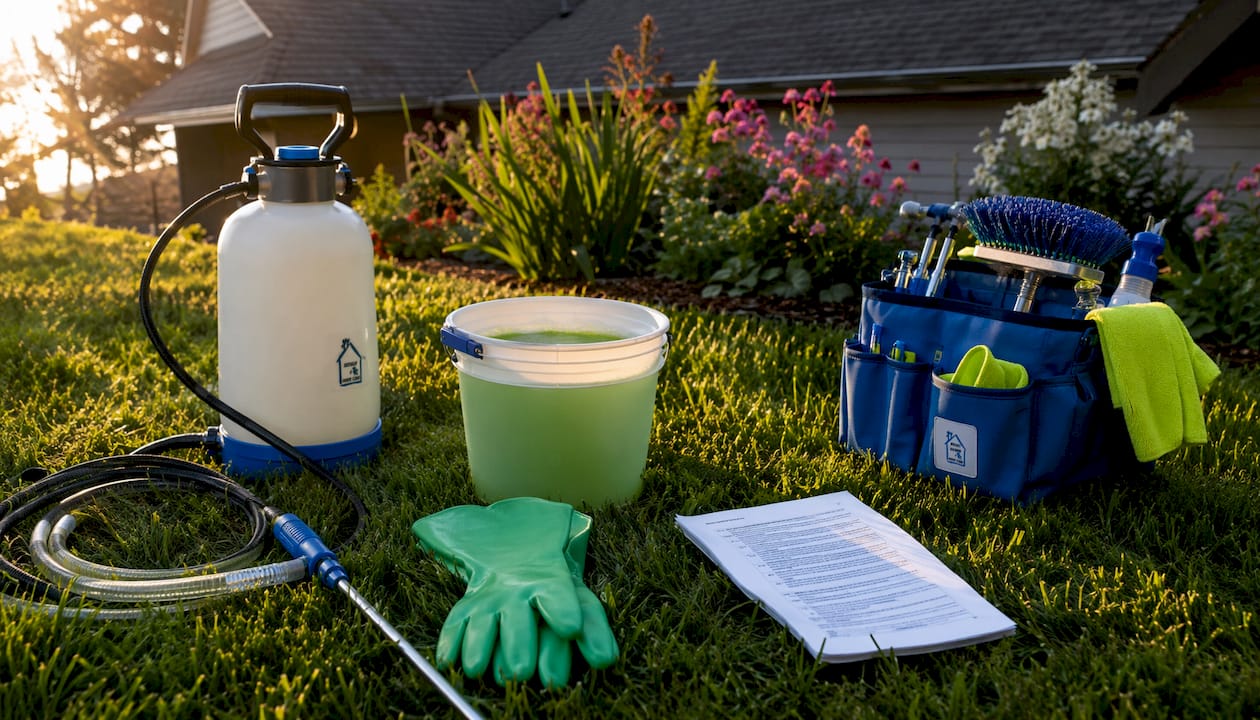
- Apply a manufacturer-approved sodium hypochlorite solution using a low-pressure soft wash system.
- Allow adequate dwell time so the solution kills algae, moss, and lichen at the root.
- Rinse thoroughly within the manufacturer’s specified window, typically 15–20 minutes.
- Use only surfactants and cleaning agents listed as compatible with asphalt shingles.
- Hire a certified contractor who can provide written confirmation of the method used.
Pro Tip: Ask your contractor for the Safety Data Sheet (SDS) for every product they apply. If they cannot produce it, that is a sign they may not be working within manufacturer-approved parameters.
What IKO and BP Canada say in their warranty documents
Both IKO and BP Canada publish explicit restrictions on cleaning methods as part of their Canadian warranty terms. IKO’s limited warranty covers algae discolouration on qualifying shingles, but the coverage is prorated and capped at $15 per square after the first year. That coverage disappears entirely if the shingles were cleaned using an unapproved method.
BP Canada’s warranty document is equally direct. It excludes coverage for any damage caused by “exposure to or application of paints or of any improper cleaning solutions, coatings, harsh airborne or liquid chemicals or modifications of any kinds.” That language covers a wide range of DIY cleaning products that homeowners might assume are safe.
Key restrictions from IKO and BP Canada warranty documents:
- Pressure washing and mechanical abrasion are treated as unauthorized physical alterations.
- Improper cleaning solutions, including undiluted bleach or acid-based products, void coverage.
- Work performed by uncertified contractors can void the warranty for the affected section or the entire roof system.
- Algae and moss discolouration are only covered under a specific Algae Resistance endorsement, not the standard warranty.
- Most manufacturers require cleaning to be performed by certified installers or approved contractors.
Why professional soft washing protects your warranty claim
Cleaning clauses are the first item reviewed when a manufacturer denies a warranty claim. A homeowner who pressure-washed their roof two years before a shingle failure will find the manufacturer pointing to that cleaning event as the cause, regardless of whether the shingles were defective. Soft washing is a defensive investment precisely because it removes that argument.
Pressure washing also causes damage that does not show up immediately. Granule loss accelerates UV degradation over months, not days. By the time the shingle surface shows visible wear, the warranty window for filing a claim may have narrowed considerably.
Benefits of professional soft washing for warranty compliance:
- Kills biological growth at the cellular level, preventing regrowth for years rather than months.
- Preserves the granule layer that protects shingle integrity and warranty validity.
- Provides written documentation of the method, chemicals, and pressure used.
- Aligns with ARMA guidelines and manufacturer-approved cleaning protocols.
- Shifts liability through a warranty-backstop clause, where the contractor assumes financial responsibility if their method triggers a denial.
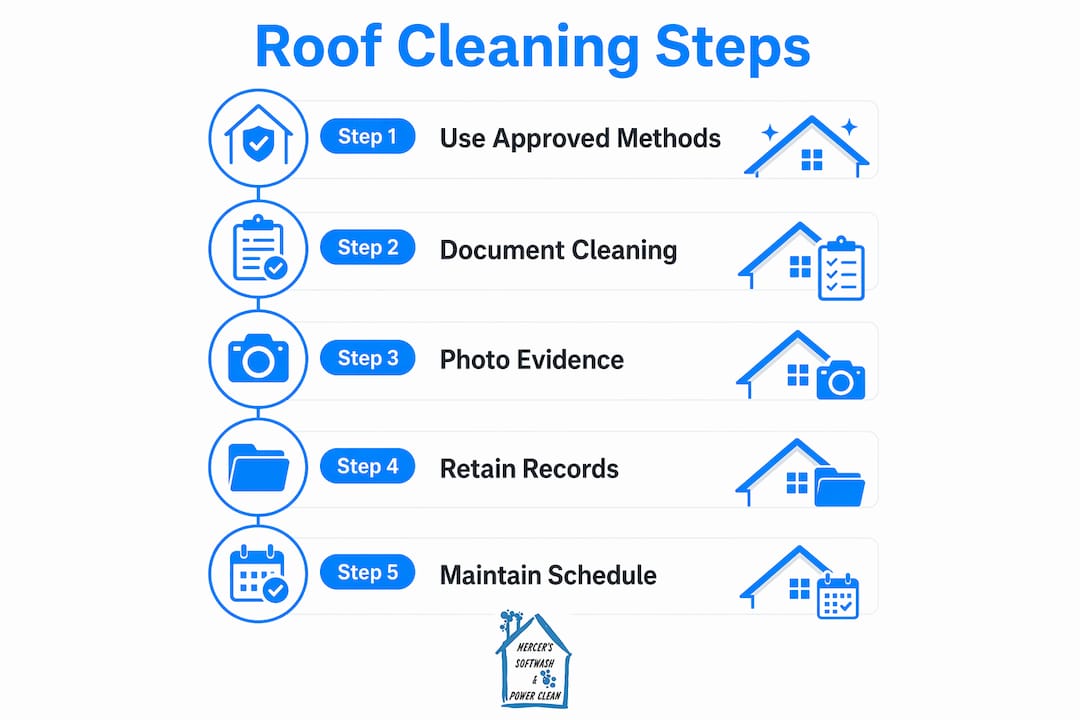
Pro Tip: Before any cleaning, take date-stamped photos of all roof slopes, valleys, and vents. After cleaning, photograph the same areas. Those images are your primary defence if a manufacturer later argues improper maintenance.
How often should you clean your roof under warranty terms?
Most warranty documents do not specify an exact cleaning interval, but general industry guidance recommends regular cleaning inspections in climates with high moisture or heavy tree cover. Southern Ontario’s humid summers and wet springs create ideal conditions for algae and moss growth, so annual inspections are reasonable. Leaving biological growth untreated for extended periods can itself constitute a failure to perform required maintenance, which BP Canada’s warranty explicitly lists as grounds for denying a claim.
The key is consistency. A documented cleaning history shows the manufacturer you met your maintenance obligations, which protects any future defect claim.
How to document cleaning activities for warranty compliance
Documentation is what separates a protected warranty from an unenforceable one. Every cleaning event should produce a written record that includes the date, the contractor’s name and certification, the products applied (with SDS sheets), the pressure range used, and a signed statement confirming the method complied with the manufacturer’s warranty terms.
Store those records with your original warranty document. If you ever file a claim, the manufacturer’s reviewer will ask for maintenance history. A gap in that record gives them grounds to deny coverage on maintenance-related arguments. Professional roof cleaning services that understand warranty compliance will provide this documentation as a standard part of the job.
What happens if your warranty is voided by improper cleaning?
A voided warranty means the manufacturer has no obligation to cover material defects, premature granule loss, or shingle failure. You bear the full cost of repair or replacement, which on a typical Canadian home can reach several thousand dollars depending on roof size and shingle type. There is no appeal process once a manufacturer documents that unapproved cleaning caused the damage.
The only practical remedy is prevention. If you suspect a previous cleaning may have compromised your coverage, have a certified roofing contractor inspect the shingles and provide a written assessment. Some manufacturers will reinstate partial coverage if you can demonstrate that subsequent maintenance has been fully compliant. For roof repair guidance after warranty issues arise, working with a qualified professional is the fastest path to understanding your options.
Roof type considerations for Canadian homeowners
Asphalt shingles are by far the most common roofing material in Canada, and the soft washing standard applies directly to them. Metal roofing can tolerate slightly higher pressures, but chemical compatibility is still a concern. Cedar shake roofs require gentler treatment still, as high-pressure water splits the wood fibres and accelerates decay. Flat membrane roofs, common on commercial properties, have their own manufacturer-specific cleaning protocols that typically prohibit any abrasive or high-pressure method.
Regardless of material, the principle holds: read the warranty document, confirm the approved cleaning method for your specific product line, and hire a contractor who can demonstrate compliance in writing. The preventative roof cleaning guide from Mercer’s Softwash & Power Clean covers material-specific considerations for Southern Ontario properties in detail.
Mercer’s Softwash & Power Clean keeps your warranty intact
Homeowners across Southern Ontario choose Mercerssoftwashpowerclean because every roof cleaning job is performed within ARMA guidelines and manufacturer-approved parameters. The team uses soft washing at below 100 PSI with properly diluted sodium hypochlorite solutions, and provides full written documentation of every cleaning event, including the products used, pressure applied, and contractor certification. That paper trail is what protects your warranty claim when it matters.
Whether you have IKO, BP Canada, or another manufacturer’s shingles on your roof, Mercers Softwash & Power Clean’s process is built around keeping your coverage valid. Learn what soft washing involves and get a quote for your property today.
Key takeaways
A roof warranty cleaning clause defines the exact maintenance standards you must follow to keep manufacturer coverage valid. Soft washing at below 100 PSI with a 1%–3% sodium hypochlorite solution is the only method that consistently meets those standards.
| Point | Details |
|---|---|
| Cleaning clause definition | Manufacturer-set maintenance standards that govern approved cleaning methods, chemicals, and contractor qualifications. |
| Pressure washing risk | Washing at high pressure strips granules and voids most asphalt shingle warranties. |
| Approved method | Soft washing below 100 PSI with 1%–3% sodium hypochlorite, rinsed within 15–20 minutes per ARMA guidance. |
| Documentation requirement | Written records of every cleaning event, including contractor certification and products used, protect future warranty claims. |
| Mercerssoftwashpowerclean | Provides ARMA-compliant soft washing with full written documentation for Southern Ontario homeowners and businesses. |


