

DIY pressure washing is defined as the use of consumer-grade or rented high-pressure water equipment by untrained homeowners to clean exterior surfaces. The risks are not minor. Water jets exceeding 3,000 PSI can puncture skin, strip paint, and force moisture into wall cavities within seconds. Most homeowners underestimate this power because the equipment looks simple to operate. The reality is that why DIY pressure washing risks exist comes down to three factors: the raw force of the water, the technical knowledge required to use it safely, and the legal and financial exposure that follows when things go wrong.
Why do DIY pressure washing risks exist in the first place?
The core problem is a mismatch between perceived simplicity and actual danger. A pressure washer looks like a garden hose with extra force. In practice, it is a piece of industrial equipment that can cause serious injury without proper training or protective gear. Consumer models routinely operate between 1,500 and 3,100 PSI, and rental units often exceed that range. The misconception that higher pressure produces a better clean leads many homeowners directly into costly mistakes.
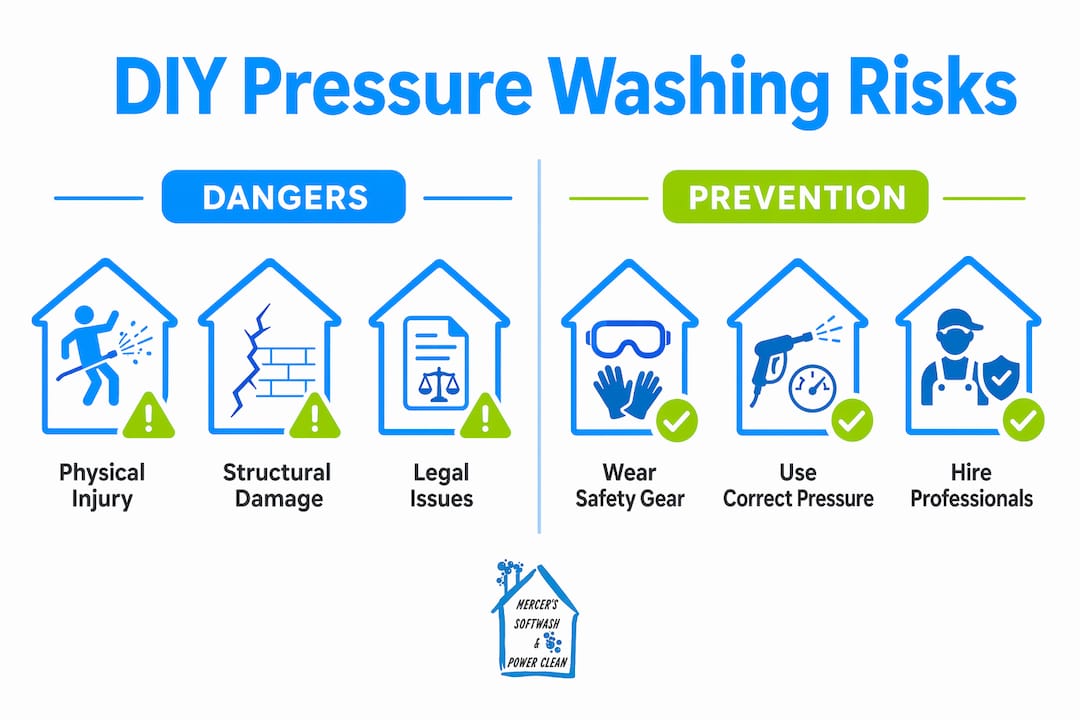
The risks fall into three clear categories: physical injury to the operator, structural damage to the property, and legal or financial liability. Each category carries consequences that are often not visible until weeks or months after the cleaning is done. Understanding all three is the first step toward making a safer decision for your home.
What are the main physical hazards of DIY pressure washing?
Physical injury is the most immediate risk. Pressure washer injuries in Canada account for approximately 120 reported cases annually, and that figure reflects only documented incidents. The actual number is higher because many injuries are treated at home or at walk-in clinics without formal reporting.
High-pressure water jets cause injuries that most people do not associate with a cleaning tool:
- Skin punctures and lacerations: A jet above 3,000 PSI can break skin at close range, introducing bacteria and causing wounds that require medical treatment.
- Eye damage: Water deflecting off hard surfaces at high velocity carries debris that causes corneal injuries.
- Electric shock: Consumer pressure washers are electric-powered. Using them near outlets, extension cords, or in wet conditions creates a genuine electrocution risk.
- Slip and fall: Wet surfaces, combined with the physical recoil of a high-pressure wand, are a leading cause of falls during cleaning tasks. Ladder falls rank among the top five household injuries during exterior maintenance work.
“Proper distance between nozzle and surface, typically 18–24 inches, and correct nozzle selection are critical controls to prevent both injury and surface damage during pressure washing. Most DIY operators skip both steps entirely.”
— OHSE, Pressure Washer Safety Best Practices
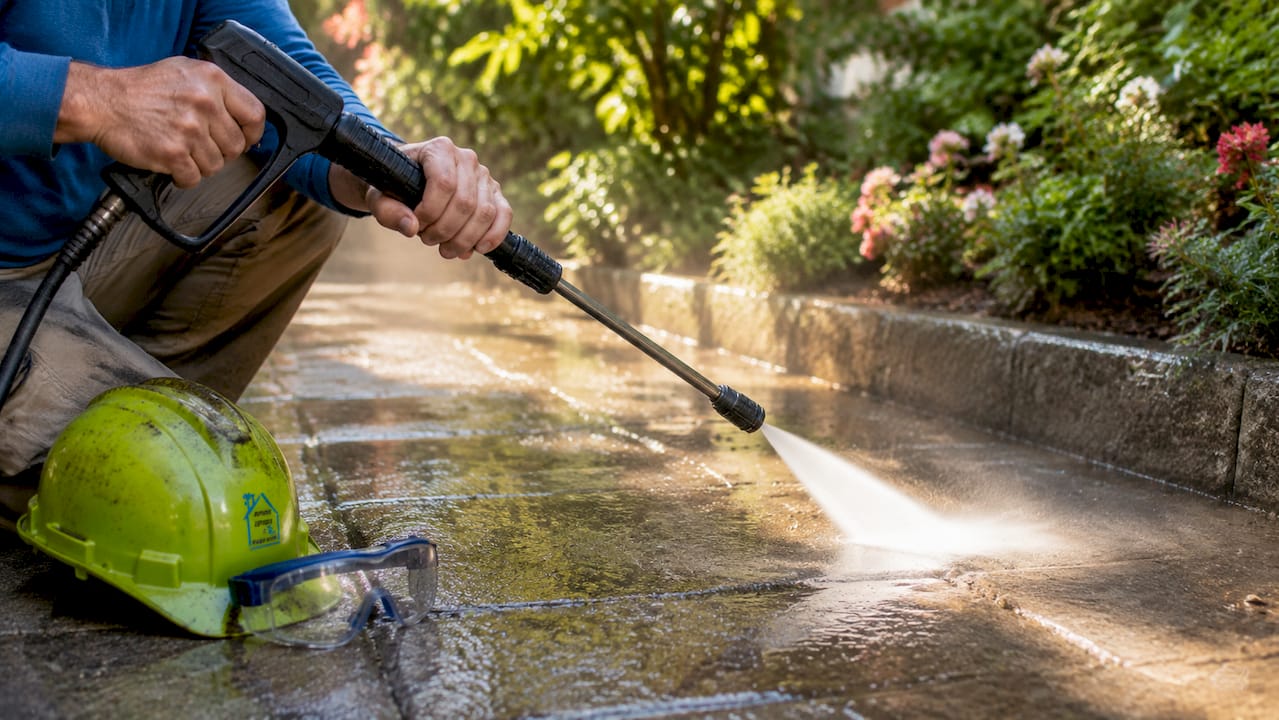
Pro Tip: Always wear safety glasses, closed-toe footwear, and waterproof gloves before operating any pressure washer. Never point the wand at another person, even briefly.
The equipment itself carries recall risks. A 2025 Ryobi pressure washer model saw 16,000 units recalled due to capacitor ejection hazards. That recall is a reminder that even brand-new consumer equipment is not automatically safe.
How does DIY pressure washing damage home exteriors?
Property damage from incorrect pressure washing is widespread, and much of it stays hidden for months. The most common surfaces affected are vinyl siding, stucco, asphalt shingles, and painted wood. Each of these materials has a pressure tolerance well below what most homeowners apply.
Vinyl siding cracks or warps when hit with a direct high-pressure stream. Stucco, which is a porous material, absorbs water that then freezes and expands in colder months, causing cracking from within. Asphalt shingles lose their protective granule coating when subjected to high-pressure washing, which shortens roof lifespan significantly. Repair costs for minor DIY pressure washing damage range from $200 to $700, and that figure climbs sharply when structural components are involved.
The more dangerous outcome is water intrusion. Improper technique forces water behind siding and into wall cavities, where it causes wood rot and mould growth that is invisible from the outside. Mould in wall cavities poses both respiratory health risks and structural risks. By the time the damage becomes visible, the repair bill is far larger than the original cleaning would have cost. Homeowner warranties on siding and roofing materials are frequently voided when damage results from improper cleaning methods.
| Surface | Common DIY damage | Typical repair cost |
|---|---|---|
| Vinyl siding | Cracking, warping, water intrusion | $200–$500 |
| Asphalt shingles | Granule loss, shortened lifespan | $400–$700+ |
| Stucco | Moisture absorption, freeze-crack | $300–$600 |
| Painted wood | Paint stripping, grain raising | $200–$500 |
| Window seals | Seal failure, fogging | $150–$400 per window |
Pro Tip: If you notice streaking or discolouration on your siding weeks after a DIY wash, check the wall cavity for moisture. A simple moisture metre reading at the baseboard can catch hidden water damage early.
A deceptive clean is another underappreciated risk. High-pressure washing can mask underlying mould and rot by blasting away surface staining while leaving the biological growth intact beneath the surface. The exterior looks clean. The damage continues.
What legal and financial risks come with DIY pressure washing?
The financial exposure from DIY pressure washing goes beyond repair costs. Three distinct liability areas affect Canadian homeowners:
- Insurance gaps: Most homeowners lack insurance coverage for damage caused by DIY pressure washing. Standard home insurance policies routinely exclude damage resulting from DIY projects involving heavy machinery. If you flood a wall cavity or crack a neighbour’s fence, you bear the full cost.
- Municipal wastewater bylaws: Canadian municipalities enforce wastewater management bylaws that prohibit chemical runoff from entering storm drains. Detergents, algae, and grime washed off a driveway or roof flow directly into the municipal system. Violations carry fines, and enforcement has increased post-2023.
- Third-party liability: If a visitor slips on a wet surface you created, or if runoff damages a neighbour’s property, you are personally liable without professional liability coverage.
Professional exterior cleaning companies carry liability policies. Mercerssoftwashpowerclean, for example, operates with professional liability insurance that protects both the property and the homeowner throughout the cleaning process. Professionals carry $5 million liability policies as standard practice in this industry. That coverage is not available to a homeowner renting equipment for the afternoon.
Water-damage repair costs in Canada have also risen. Basement water damage repair costs increased by approximately 20% between 2019 and 2024. That trend makes the financial argument for professional cleaning stronger each year.
Why do professionals choose soft washing over pressure washing?
Soft washing is defined as a cleaning method that uses low-pressure water delivery combined with commercial-grade detergents, such as Sodium Hypochlorite, to remove algae, mould, grime, and oxidation from exterior surfaces. The pressure used in soft washing typically falls below 500 PSI, compared to the 2,000–3,000+ PSI used in standard pressure washing. The detergents do the cleaning work. The water rinses the surface.
Professional operators use low-pressure soft washing specifically because high pressure damages materials. The “more pressure equals a better clean” belief is false and expensive. Soft washing reaches into porous surfaces and kills biological growth at the root, which means algae and mould take longer to return. High-pressure washing blasts the surface clean but leaves spores behind, so regrowth appears faster.
Surfaces that benefit most from soft washing over pressure washing include asphalt shingles, painted wood siding, stucco, cedar shake, and window frames. You can read more about which surfaces suit soft washing before making a decision about your property.
Mercerssoftwashpowerclean uses professional-grade equipment with 100% water recovery systems to meet municipal wastewater compliance requirements. That means no chemical runoff enters the storm drain, no bylaw violations occur, and no fines land on the homeowner. The difference between soft washing and pressure washing is not just technique. It is the difference between a method that protects your home and one that risks it.
Pro Tip: Ask any exterior cleaning company whether they carry professional liability insurance and use water recovery systems before booking. If they cannot answer both questions clearly, look elsewhere.
Key takeaways
DIY pressure washing risks exist because consumer equipment operates at pressures that cause injury and structural damage when used without professional training, proper technique, and compliance knowledge.
| Point | Details |
|---|---|
| Physical injury risk is real | Water jets above 3,000 PSI cause skin punctures, eye damage, and falls without protective equipment. |
| Hidden damage is the costliest risk | Water forced behind siding causes mould and rot that only appears months later, raising repair costs sharply. |
| Insurance rarely covers DIY damage | Standard home insurance excludes DIY machinery damage, leaving homeowners fully liable for repairs. |
| Municipal bylaws carry fines | Chemical runoff from DIY washing violates wastewater bylaws enforced by Canadian municipalities post-2023. |
| Soft washing is the safer method | Low-pressure soft washing with commercial detergents cleans more thoroughly and protects surfaces longer. |
What I’ve seen homeowners get wrong about pressure washing
The most common mistake I see is not the pressure setting. It is the confidence. Homeowners rent a unit, watch a short video, and assume the job is straightforward. The equipment looks manageable. The results look good for the first few weeks. Then the call comes in about mould behind the siding, or a cracked stucco panel, or a neighbour’s fence that got caught in the spray.
What surprises most people is how quickly the damage compounds. A small gap in the siding seal becomes a water intrusion point. That intrusion becomes rot. That rot becomes a repair bill that dwarfs the cost of a professional cleaning by a factor of five or more. I have seen homeowners spend $600 on a rental and equipment, then spend $3,000 fixing what went wrong.
The insurance gap is the part that genuinely catches people off guard. Most homeowners assume their home insurance covers everything that happens on their property. It does not. DIY project damage from heavy equipment is a standard exclusion. When I explain this to homeowners, the calculation changes immediately.
Hiring a professional is not about convenience. It is about protecting the investment you have already made in your home. Professionals bring the right technique, the right chemistry, the right equipment, and the coverage to back it all up. For most exterior surfaces, professional roof cleaning and soft washing deliver results that last longer and cost less over time than repeated DIY attempts. That is not an opinion. It is what the repair bills show.
— Felix
How Mercerssoftwashpowerclean protects your home and your wallet
Mercerssoftwashpowerclean provides professional exterior cleaning across Southern Ontario using soft washing techniques, commercial-grade detergents, and fully insured service. Every job includes professional liability coverage, wastewater compliance, and surface-appropriate pressure settings. Homeowners and property managers avoid the physical risks, the hidden damage, and the bylaw fines that come with DIY attempts. If you want to understand exactly what the process involves, the soft washing vs. pressure washing guide breaks down the methods, the surfaces, and the results in plain language. For homeowners ready to protect their property the right way, Mercerssoftwashpowerclean is the trusted choice across Southern Ontario.
FAQ
What PSI level makes pressure washing dangerous?
Water jets exceeding 3,000 PSI can puncture skin and cause severe lacerations. Most consumer and rental pressure washers operate within or above this range.
Does home insurance cover DIY pressure washing damage?
Standard homeowners insurance typically excludes damage caused by DIY projects involving heavy machinery. Homeowners bear the full cost of repairs in most cases.
What is soft washing and why is it safer?
Soft washing uses low-pressure water delivery below 500 PSI combined with commercial detergents to clean surfaces without causing structural damage. It is the method professional exterior cleaners use on delicate surfaces like shingles and stucco.
Can DIY pressure washing cause mould inside my walls?
Yes. Improper technique forces water behind siding and into wall cavities, where it causes wood rot and mould growth that is not visible from the outside for weeks or months.
Are there fines for DIY pressure washing in Canada?
Canadian municipalities enforce wastewater management bylaws that prohibit chemical runoff from entering storm drains. DIY washing without proper water recovery systems can result in bylaw violations and fines.


