

Gutter cleaning safety is defined as the practice of using proper equipment, stable ladder techniques, and cautious procedures to protect yourself from falls, cuts, and contamination during routine gutter maintenance. For homeowners across Southern Ontario, this task carries real physical risk if approached without preparation. The right gutter cleaning safety tips for homeowners cover everything from choosing the correct ladder to recognising when a job is better left to a professional. Safety in gutter cleaning requires planning, conditions awareness, and readiness to call for help when needed. Getting these fundamentals right protects both you and your home.
What safety gear and tools do you need for gutter cleaning?
The right equipment is the foundation of safe gutter maintenance. Without it, even a short ladder climb becomes a hazard. Every homeowner should assemble a core set of tools before stepping outside.
Ladder selection and placement are the first priorities. Use a fibreglass or aluminium extension ladder rated for your weight plus the weight of your tools. A four-legged stepladder works for single-storey homes, while a multi-storey property requires an extension ladder with a stabiliser bar. Ladders must rest on walls or rooflines using stabilisers, never on the gutters themselves. Placing a ladder on a gutter damages the channel and causes the ladder to slip sideways.

Protective gear prevents the injuries most homeowners overlook. Thick rubber or leather gloves protect your hands from sharp metal edges, decomposing debris, and animal waste. Safety glasses or goggles stop debris from flicking into your eyes when you scoop or flush. Wear rubber-soled footwear with ankle support. Soft-soled shoes grip ladder rungs far better than smooth-soled boots.
Cleaning tools determine how efficiently and safely you work at height. A gutter scoop removes packed debris without scratching the channel. A bucket with a hook attaches to the ladder rung, keeping both hands free for climbing and scooping. A garden hose with a pistol-grip nozzle flushes loosened material toward the downspout. For stubborn blockages in downspouts, a plumber’s snake clears the clog without requiring you to dismantle fittings.
| Tool | Purpose | Safety benefit |
|---|---|---|
| Ladder stabiliser | Keeps ladder off gutters | Prevents slippage and gutter damage |
| Rubber gloves | Hand protection | Guards against cuts and contamination |
| Safety glasses | Eye protection | Stops debris and splash injuries |
| Bucket with hook | Hands-free debris collection | Maintains three points of contact |
| Gutter scoop | Debris removal | Reduces awkward reaching |
Pro Tip: Buy a ladder standoff stabiliser before your first cleaning. It costs very little and eliminates the single most common cause of ladder slippage during gutter work.
How do you clean gutters safely, step by step?
Safe gutter cleaning follows a clear sequence. Skipping steps is where most accidents happen.
Step 1: Check the weather. Seasonal timing within the spring and fall windows is critical for both safety and thoroughness. Never clean gutters on wet, icy, or windy days. Wet surfaces make ladder feet and rungs slippery, and wind destabilises your balance at height.
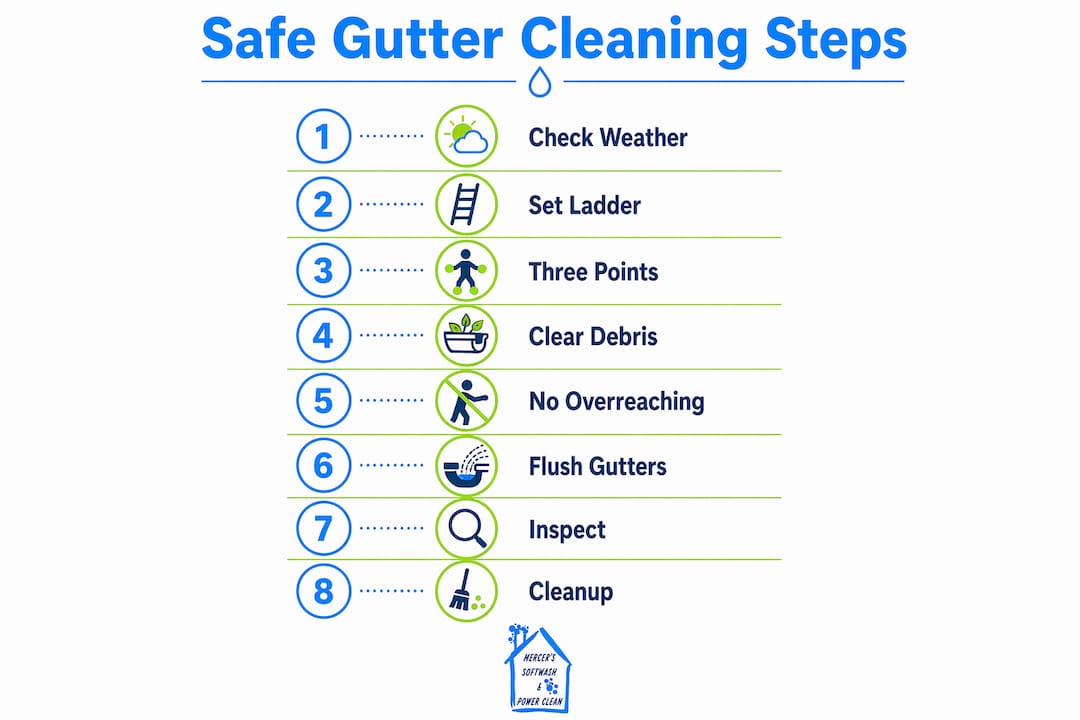
Step 2: Set up the ladder correctly. Follow the 4-to-1 rule: for every four feet of height, the base of the ladder should sit one foot away from the wall. This angle gives the ladder its maximum stability. Ask a spotter to stand at the base and hold the rails. A spotter does not need to grip tightly. Their presence alone steadies the ladder and provides help if something goes wrong.
Step 3: Maintain three points of contact. Three points of contact means two feet and one hand, or two hands and one foot, are always on the ladder. Never let go with both hands at once. Hook your bucket to the rung at chest height so your hands stay free for climbing and scooping.
Step 4: Clear debris from the downspout outward. Start at the downspout end and work away from it. Scoop debris into your bucket rather than dropping it onto the ground below, where it creates a slip hazard. Work in short sections and reposition the ladder frequently rather than reaching sideways.
Step 5: Never overreach. Your belt buckle should never pass beyond the ladder’s side rails. If you need to reach further, climb down and move the ladder. Overreaching shifts your centre of gravity and is the leading cause of ladder falls during gutter work.
Step 6: Flush the gutters and downspouts. Once debris is cleared, run a garden hose from the far end of the gutter toward the downspout. Watch for standing water after flushing. Proper gutter pitch is a drop of about 0.25 inches per 10 linear feet. If water pools, the gutter may need re-pitching.
Step 7: Inspect while you work. Look for cracks, rust spots, separated joints, and sagging sections. Catching these early prevents costly repairs and reduces the risk of water damage to your foundation and siding.
Pro Tip: Place a tarp on the ground below your work area before you start. It catches falling debris and makes cleanup faster, and it clearly marks the zone below the ladder for anyone walking nearby.
What are the most common gutter cleaning hazards to avoid?
Most gutter cleaning injuries come from a small number of repeated mistakes. Knowing them in advance keeps you off the injury list.
Walking on the roof is the most dangerous habit homeowners develop. Roof walking is a leading cause of fatal falls during home maintenance. Roof surfaces are uneven, often slippery, and offer no secure footing near the edge. Always use a properly stabilised ladder positioned at the gutter line instead.
Cleaning in poor conditions multiplies every other risk. Wet decking, icy rungs, and gusting wind each reduce your margin for error. Schedule gutter work only on dry, calm days with good visibility.
Using gutters as ladder support is a structural mistake that causes accidents. Gutters are designed to carry water weight, not a person’s body weight plus a ladder. Placing a ladder against a gutter crushes the channel, breaks the hangers, and causes sudden sideways movement.
Skipping protective gear leads to the injuries homeowners underestimate most. Decomposing leaves harbour bacteria and mould. Bird and rodent droppings carry pathogens. Bare hands and unprotected eyes are exposed to all of it during a standard cleaning.
Recognising when a job exceeds your skill or equipment is a safety decision, not a defeat. Sagging gutters, extensive rust, steep roof pitches, or multi-storey heights are clear signals to contact a professional. The cost of a service call is always less than the cost of a fall.
Ignoring damage signs turns a maintenance task into a repair bill. Gutters that sag, pull away from the fascia, or show visible rust need attention before the next cleaning cycle. Cleaning damaged gutters without addressing the underlying issue puts stress on already weakened fittings.
How can you reduce how often gutters need cleaning?
Reducing cleaning frequency lowers the number of times you need to climb a ladder. That alone reduces your annual risk exposure significantly.
Gutter guards and screens are the most practical investment for this purpose. Installing gutter guards reduces ladder work frequency, though annual inspections remain necessary to confirm guards are seated properly and not harbouring debris on top.
Tree trimming makes a measurable difference in debris volume. Trim tree branches 6–10 feet from the roofline to reduce leaf volume and discourage rodents from using branches as access routes to your roof. This single step can cut your gutter debris load by half for properties with heavy canopy coverage.
Seasonal scheduling keeps cleaning manageable and safe. Clean gutters at least twice a year, in late spring after tree pollination and in late fall after leaves have dropped. Homes with heavy tree coverage benefit from quarterly cleaning. Cleaning too early in fall means a second round is needed after the remaining leaves drop.
Downspout discharge and slope monitoring prevent structural problems between cleanings. Downspouts should discharge water at least 1.5 metres from the foundation. Check that the gutter slope has not shifted after winter frost heave. A gutter that no longer drains properly creates standing water, which accelerates rust and adds weight stress to the hangers.
| Preventive measure | Benefit | Frequency |
|---|---|---|
| Gutter guards | Reduces debris accumulation | Install once; inspect annually |
| Tree trimming | Cuts leaf and pest access | Every 1–2 years |
| Biannual cleaning | Clears seasonal buildup | Late spring and late fall |
| Downspout check | Prevents foundation water damage | Each cleaning visit |
Pro Tip: After every cleaning, pour a bucket of water into the far end of each gutter run. If it drains within 30 seconds, your pitch and downspout are clear. If it pools, address the slope before the next rainfall.
For a localised schedule based on Southern Ontario’s specific seasonal patterns, the gutter cleaning season checklist from Mercerssoftwashpowerclean is a practical reference.
Key takeaways
Safe gutter cleaning requires proper ladder setup, full protective gear, and a systematic process that prioritises repositioning over overreaching.
| Point | Details |
|---|---|
| Ladder placement is critical | Use the 4-to-1 rule and rest the ladder on walls, never on gutters. |
| Three points of contact | Keep two feet and one hand, or two hands and one foot, on the ladder at all times. |
| Gear up before climbing | Wear rubber gloves, safety glasses, and rubber-soled footwear on every job. |
| Schedule for dry conditions | Clean in late spring and late fall on calm, dry days to minimise slip risk. |
| Know when to call a professional | Sagging gutters, steep pitches, and multi-storey heights warrant professional service. |
What I’ve learned from watching homeowners skip the basics
After years of working on exterior home maintenance across Southern Ontario, the pattern is consistent. Homeowners who get hurt during gutter cleaning are rarely careless people. They are experienced people who got comfortable. Comfort is where the risk lives.
The most common scenario I see is a homeowner who has cleaned gutters a dozen times without incident. On the thirteenth time, they skip the spotter, reach a little further than they should, and the ladder shifts. The injury is not from ignorance. It is from familiarity breeding complacency.
The discipline of treating every cleaning like the first one, checking the ladder angle, putting on the gloves, asking someone to stand at the base, is what separates a safe routine from a dangerous habit. Safety is not a checklist you complete once. It is a standard you hold every single time.
The other thing I would tell any homeowner directly: there is no shame in recognising a job that has moved beyond DIY territory. A two-storey home with a steep roofline and damaged gutters is not a weekend project. Calling a professional is the right call, and it is a safety decision, not a failure.
— Felix
When professional gutter cleaning makes more sense
Some gutter jobs are straightforward DIY tasks. Others carry enough risk that professional service is the safer and more cost-effective choice. Mercerssoftwashpowerclean provides professional gutter cleaning for residential properties across Southern Ontario, using proper equipment and safety protocols on every job. For homeowners dealing with multi-storey heights, damaged gutters, or heavy debris buildup, professional service removes the ladder risk entirely. Mercerssoftwashpowerclean also offers a full range of residential exterior cleaning services, including soft washing, roof cleaning, and window cleaning, so your entire property gets the attention it needs without you taking on unnecessary risk.
FAQ
How often should homeowners clean their gutters?
Clean gutters at least twice a year, in late spring and late fall. Homes with heavy tree coverage benefit from quarterly cleaning to prevent blockages and overflow.
What is the safest ladder type for gutter cleaning?
A fibreglass or aluminium extension ladder with a stabiliser bar is the safest choice. The stabiliser rests on the wall or roofline, not on the gutter, preventing slippage and channel damage.
Can you clean gutters without a spotter?
You can, but a spotter significantly reduces fall risk by stabilising the ladder base and providing immediate assistance if something shifts. For any job above single-storey height, a spotter is strongly recommended.
What are the signs that gutters need professional cleaning?
Sagging gutters, gutters pulling away from the fascia, visible rust, or a home with a steep roof pitch or multi-storey height are all signs that professional service is the safer option.
Do gutter guards eliminate the need for cleaning?
Gutter guards reduce how often cleaning is needed but do not eliminate it. Annual inspections are still necessary to confirm guards are seated correctly and that debris has not accumulated on top of them.


