

A gutter cleaning season checklist is a structured set of tasks that homeowners complete each season to keep gutters clear, properly sloped, and free of damage. For Southern Ontario properties, following this checklist is the most reliable way to prevent ice dams, foundation moisture, and fascia board rot before they become expensive repairs. Most homes require at least two cleanings per year, with spring and fall being the two critical windows. The right tools for each session include a sturdy extendable ladder, heavy-duty gloves, a plastic scoop, and a garden hose with a high-pressure nozzle. Resources like This Old House provide solid DIY guidance, but the checklist itself is what keeps you consistent year after year.
1. What does a gutter cleaning season checklist include?
A complete seasonal gutter inspection covers debris removal, structural checks, and drainage confirmation. Each of these tasks serves a specific purpose, and skipping one can leave you with a problem that only shows up months later during a heavy rain or the first hard freeze.
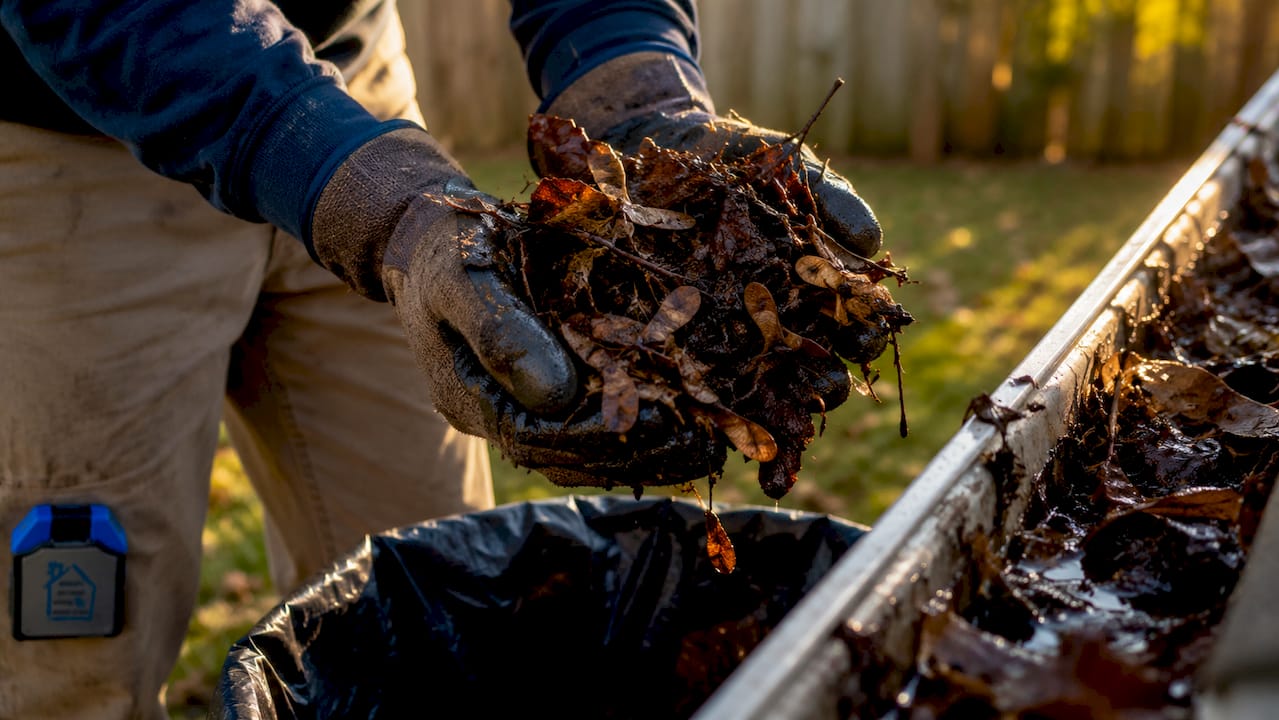
Debris removal is the starting point. Clear all leaves, twigs, maple seeds, and compacted organic matter from the gutter channels by hand or with a plastic scoop. Work from the end of the gutter toward the downspout. Once the channel is clear, flush the entire run with a garden hose to push remaining material through the downspout.
Downspout inspection comes next. A blocked downspout is the most common cause of overflow. Feed the hose directly into the downspout opening and run it at full pressure. If water backs up, use a plumber’s snake to break the clog loose. Downspout extensions should discharge water at least 4–6 feet from the foundation to prevent soil saturation and basement moisture.
Structural inspection is where most homeowners stop short. Check every hanger bracket and joint for looseness or separation. Look for rust spots, cracks, and sagging sections. Dark vertical streaks called “tiger stripes” on the outside of gutters indicate long-term overflow and oxidation, which signals that the gutter has been running at capacity for some time.
Fascia board check rounds out the inspection. Probe the wood behind the gutter with a screwdriver. Soft or spongy wood means water has been sitting against it. Catching this early saves a costly fascia replacement.
Pro Tip: Trim any tree branches hanging directly over your roofline before your fall cleaning. Fewer branches mean less debris in the channel and a longer window between cleanings.
Apply seasonal differences deliberately. Spring cleaning targets maple seeds and pollen, which compact into a paste that blocks downspouts faster than leaves. Fall cleaning focuses on leaf removal before the first freeze. Clearing gutters before the first freeze prevents ice dams, which are the leading cause of roof water damage in cold climates like Southern Ontario’s.
2. How often should gutters be cleaned in Southern Ontario?
Cleaning frequency depends directly on tree coverage and proximity to deciduous trees. Homes with heavy tree coverage need 3–4 cleanings per year, while most properties with moderate exposure manage well with two. That said, the timing of those cleanings matters as much as the frequency.
For Southern Ontario, the two most effective cleaning windows are:
- Late april to mid-may. Clean after the maple seed drop and peak pollen season. Cleaning too early means you will be back again in two weeks once the seeds fall.
- Late october to mid-november. The ideal fall window is after most leaves have dropped but before the first hard freeze. Cleaning too early in october leaves you with a second wave of leaves sitting in the gutter all winter.
Homes near mature maples, oaks, or willows often need a third cleaning in late june or early july when summer seed and organic matter accumulate. A fourth pass in late february or early march helps clear any debris that washed down during winter thaw cycles.
Pro Tip: Walk around your property after the first significant rain of the season. If you see water spilling over the front edge of the gutter, that is your sign the channel is blocked and needs immediate attention.
Micro-mesh gutter guards reduce cleaning frequency from four times per year down to one or two, but they are not maintenance-free. Shingle grit, pollen, and fine organic material still accumulate on the mesh surface and need to be brushed off annually. Screen-style guards are less effective because smaller debris passes through and compacts at the bottom of the channel.
3. What tools and safety measures belong on the checklist?
Safe gutter cleaning starts with the right equipment. Essential DIY tools include a sturdy ladder with a spotter, heavy-duty gloves, a plastic scoop, and a garden hose with a high-pressure nozzle. Each item on that list serves a specific function, and substituting a lesser version creates real risk.
The ladder is your most critical piece of equipment. Use an extendable aluminium ladder rated for your weight plus the weight of your tools. Place it on firm, level ground and never lean it against the gutter itself. The gutter is not designed to bear that load and will bend or pull away from the fascia. Always have a second person on the ground as a spotter.
Gloves protect your hands from sharp metal edges, decomposing organic matter, and bird droppings, all of which carry bacteria. Heavy-duty rubber or leather gloves are preferable to thin garden gloves. A plastic scoop is safer than a metal one because it will not scratch or gouge the gutter lining.
Homeowners who are uncomfortable working on ladders should hire a professional. Ladder falls are among the most common causes of serious home maintenance injuries, and no gutter cleaning task is worth that risk.
Never clean gutters in wet or icy conditions. Wet rungs and wet shoes are a dangerous combination. Schedule your cleaning for a dry day with at least 24 hours of no rain in the forecast. If you are working on a two-storey or higher property, the risk increases significantly, and professional cleaning becomes the more sensible choice.
4. How to maintain gutters year-round beyond seasonal cleaning
Year-round gutter upkeep extends the life of your system and prevents small issues from becoming structural problems. The tasks between your two major cleanings take less than 30 minutes and protect thousands of dollars in roofing and foundation investment.
Inspect gutters after every major storm for loosened hangers, separated joints, and debris accumulation. Wind and ice can shift brackets out of position, which changes the slope of the channel and causes water to pool. Standing water in a gutter is a reliable sign that the slope has shifted or a hanger has failed.
Gutters should slope approximately 1/4 inch for every 10 feet toward the downspout. If you notice water sitting in the channel after a rain, check the hanger positions and re-secure any that have pulled away from the fascia. This is a straightforward fix with a drill and replacement screws.
Seal small leaks at joints with butyl rubber caulk before they widen. A pinhole leak at a seam will grow with freeze-thaw cycles and eventually separate the joint entirely. Apply caulk to the inside of the joint on a dry day and allow it to cure fully before the next rain.
The table below summarises the key year-round maintenance tasks and their recommended timing.
| Task | Recommended timing | Purpose |
|---|---|---|
| Post-storm inspection | After every significant storm | Catch loosened hangers and debris early |
| Slope and bracket check | Spring and fall | Prevent standing water and joint stress |
| Joint sealing with butyl caulk | As needed, dry conditions | Stop small leaks before freeze-thaw worsens them |
| Downspout extension check | Spring | Confirm 4–6 foot discharge from foundation |
| Tree trimming | Late summer or early fall | Reduce debris volume in fall cleaning |
| Gutter guard cleaning | Once annually | Clear shingle grit and pollen from mesh surface |
Moss and algae growth inside gutters is a sign of chronic moisture retention. If you see green or black biological growth, the channel is not draining properly. Address the slope issue first, then clean the biological matter with a diluted cleaning solution before it traps further debris. Mercerssoftwashpowerclean handles this type of exterior biological cleaning as part of its seasonal exterior cleaning services for Southern Ontario properties.
Key takeaways
A complete gutter cleaning season checklist, followed twice a year with post-storm checks in between, is the most cost-effective way to protect a Southern Ontario home from water damage.
| Point | Details |
|---|---|
| Clean at least twice annually | Spring and fall cleanings are the minimum for most Southern Ontario homes. |
| Time fall cleaning carefully | Clean after most leaves drop but before the first hard freeze to prevent ice dams. |
| Check slope after every storm | Gutters need a 1/4-inch drop per 10 feet to drain properly and avoid standing water. |
| Discharge water 4–6 feet out | Downspout extensions must move water well away from the foundation to prevent moisture issues. |
| Hire a professional when in doubt | Ladder risk is real; professional cleaners reduce injury risk and catch damage you may miss. |
What I have learned after years of watching gutters fail
Working with Southern Ontario homeowners across the region, the pattern is consistent. The properties that suffer the worst water damage are not the ones with the oldest gutters. They are the ones where the fall cleaning was skipped once, then twice, and then became a habit of neglect.
The regional timing challenge here is real. Southern Ontario’s fall leaf drop is unpredictable. Some years the maples are bare by late october. Other years, leaves are still falling in mid-november. Cleaning too early means you are back on the ladder in two weeks. Cleaning too late means the first freeze locks debris into the channel and the ice dam season begins before you have had a chance to clear it.
The checklist solves this by giving you a decision framework, not just a task list. You are not cleaning on a fixed date. You are watching the trees, checking the forecast, and acting in the right window. That distinction is what separates homeowners who stay ahead of the problem from those who call for repairs every spring.
On the DIY versus professional question, I lean toward professional help for any property above one storey or with complex rooflines. The risk of ladder-related injury is not abstract. A thorough professional cleaning also catches structural issues that are easy to miss from ground level. Keeping a simple log of each cleaning date, what was found, and what was repaired gives you a maintenance record that is genuinely useful when selling the property or making an insurance claim.
— Felix
Professional gutter cleaning services in Southern Ontario
Mercerssoftwashpowerclean provides professional gutter cleaning services for residential and commercial properties across Southern Ontario. The team handles debris removal, downspout flushing, and structural inspection in a single visit, which means you get a thorough clean without the ladder risk. Booking during the peak fall and spring windows fills quickly, so scheduling in advance is the reliable approach. Mercerssoftwashpowerclean also offers house washing, roof cleaning, and exterior building cleaning that pairs well with seasonal gutter maintenance. If you are unsure whether your exterior needs attention beyond the gutters, the signs your exterior needs deep cleaning guide is a practical starting point.
FAQ
How often should gutters be cleaned in Southern Ontario?
Most homes need at least two cleanings per year, in spring and fall. Homes with heavy tree coverage benefit from 3–4 cleanings annually.
When is the best time for fall gutter cleaning?
The best window is late october to mid-november, after most leaves have dropped but before the first hard freeze. Cleaning in this window prevents ice dams from forming over blocked channels.
What is the correct slope for a gutter to drain properly?
Gutters should slope 1/4 inch for every 10 feet toward the downspout. If water pools after rain, a hanger has likely shifted and needs to be re-secured.
Do gutter guards eliminate the need for cleaning?
Micro-mesh gutter guards reduce cleaning frequency but do not eliminate it. Shingle grit and pollen still accumulate on the surface and require annual maintenance.
Is it safe to clean gutters yourself?
DIY cleaning is safe on single-storey homes with a stable ladder and a spotter. Homeowners uncomfortable on ladders should hire a professional, particularly on multi-level properties or in wet conditions.


