

Pressure washing damages wood by forcing high-pressure water into the cellular structure of the wood, tearing fibres, stripping protective finishes, and driving moisture into joints where it causes hidden rot. The industry term for this type of surface harm is “mechanical abrasion,” and it occurs the moment water pressure exceeds what the wood can safely absorb. Softwoods like cedar and pine are especially vulnerable. Protective stains and sealants are stripped away in seconds at the wrong pressure setting, leaving bare wood exposed to UV rays, moisture, and organic growth. Understanding why pressure washing damages wood is the first step to protecting your deck, fence, or siding from costly, preventable harm.
Why pressure washing damages wood at the fibre level
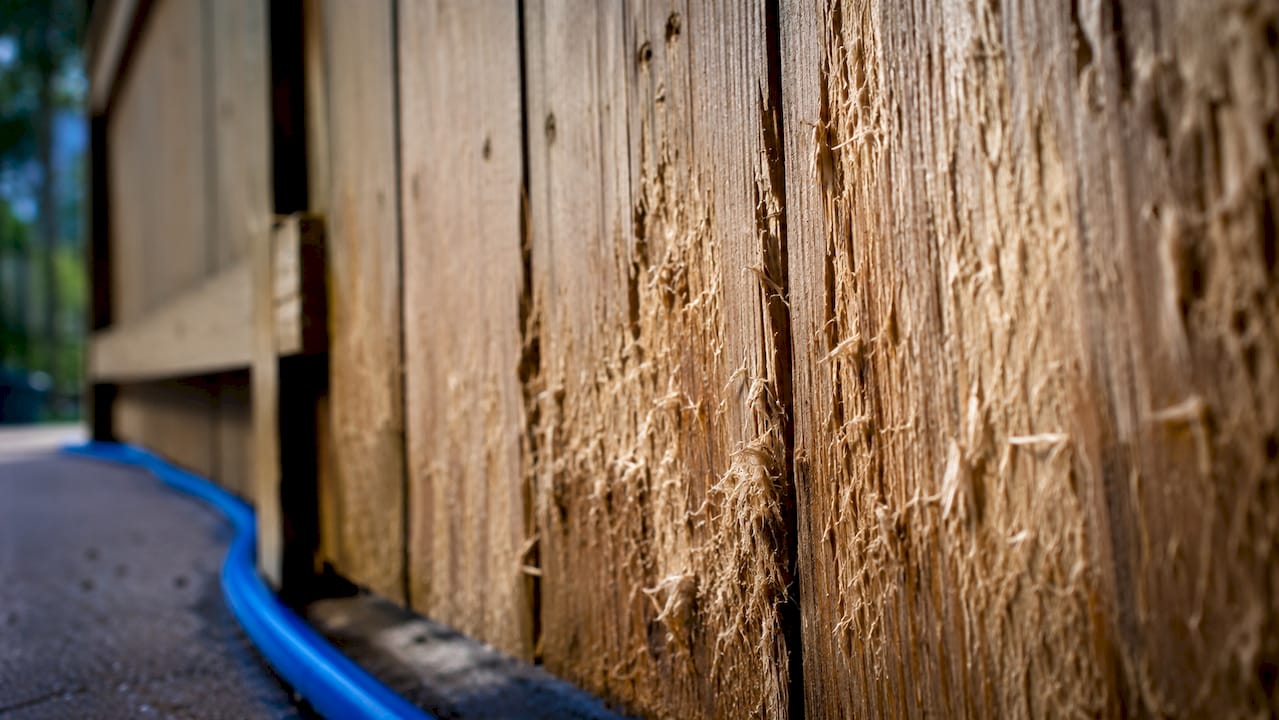
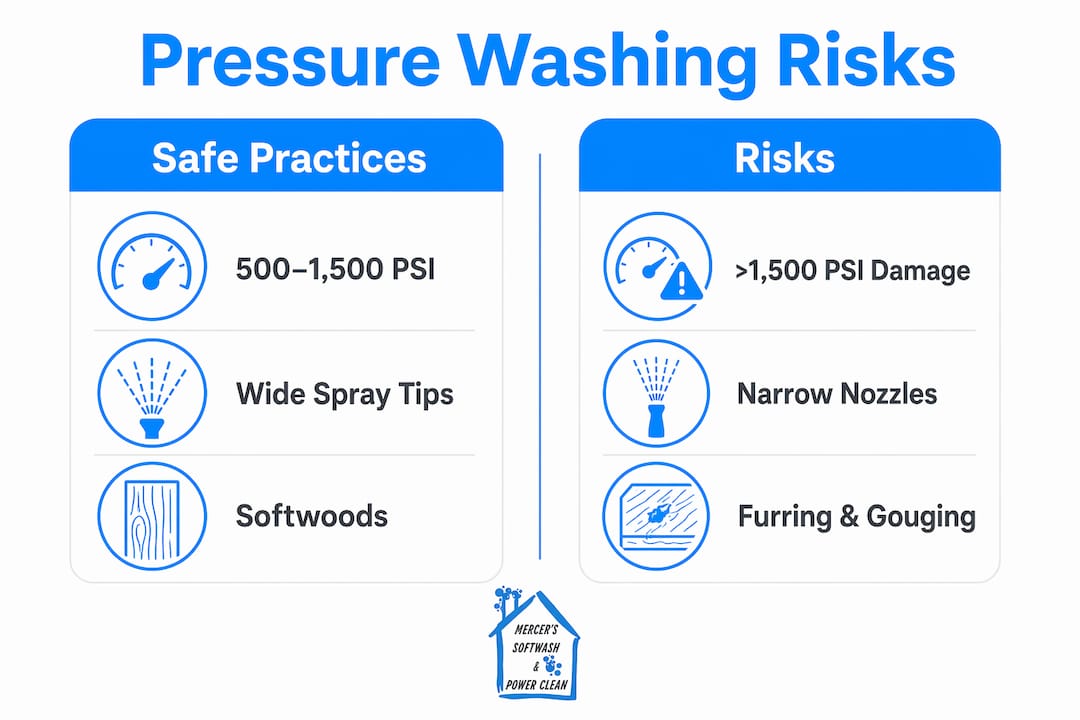
High water pressure physically tears wood fibres apart. Softwood decking requires 500–1,500 PSI for safe cleaning, and exceeding 2,500 PSI strips stains and sealants from the surface entirely. That means a standard residential pressure washer running at 3,000 PSI or more can gouge visible channels into a cedar or pine deck within seconds.
The damage goes beyond the surface you can see. Excessive pressure strips surface cellulose, leaving a fuzzy, raised texture called “furring.” This damaged fibre structure absorbs dust and moisture at a higher rate, which causes stain to apply unevenly and finish to fail prematurely. A deck that looked clean after washing can look patchy and grey within a single season.
The table below shows how PSI levels correspond to the type of damage wood sustains.
| PSI range | Effect on wood |
|---|---|
| 500–1,500 PSI | Safe range for most softwoods; removes surface dirt |
| 1,500–2,500 PSI | Risk of stain and sealant stripping; use with caution |
| Above 2,500 PSI | Strips finishes; causes furring and surface damage |
| Above 3,000 PSI | Gouges fibres; causes permanent structural damage |
Pro Tip: Always test your pressure washer on a hidden section of the deck before cleaning the full surface. If you see raised fibres or a fuzzy texture after one pass, reduce the PSI immediately.
How does nozzle choice affect wood damage?
The spray tip you choose determines how concentrated the water force is at the point of contact. Narrow 0° and 15° tips cause permanent wood gouging because they focus the full pressure of the machine onto a tiny surface area. Wider fan tips at 25° or 40° spread that force across a broader area, reducing the risk of concentrated damage to wood grain.
Technique matters just as much as tip selection. Holding the wand 12–16 inches from the surface and moving it steadily with the grain prevents uneven cleaning. Moving across the grain, or pausing mid-stroke, creates the “zebra striping” pattern that many homeowners notice after a DIY wash. Those dark and light stripes are not just cosmetic. They indicate that some areas received far more pressure than others, meaning the wood surface is now uneven in texture and finish absorption.
Common technique mistakes that cause pressure washing wood damage include:
- Using a 0° or 15° tip on any wood surface
- Holding the wand closer than 12 inches to the deck boards
- Spraying across the grain rather than along it
- Pausing the wand in one spot while the machine is running
- Skipping a test patch before cleaning the full surface
Pro Tip: Use a 25° or 40° fan tip for all wood surfaces. If you are unsure which tip is installed, check the colour code on the nozzle. Yellow is 15°, green is 25°, and white is 40°.
Which wood types are most at risk?
Not all wood responds to pressure washing the same way. Softwoods like cedar, pine, and spruce have an open, porous grain structure that absorbs water and pressure more readily than hardwoods. Low pressure and proper chemicals clean softwoods more effectively and avoid fibre damage entirely. Hardwoods like ipe and teak tolerate slightly higher pressure, but they are not immune to damage from poor technique.
The condition of the wood before washing changes the risk profile significantly. Consider these four scenarios where the consequences of pressure washing wood are most severe:
- Newly installed decking. Fresh lumber has not yet cured fully. High pressure can raise the grain and cause warping before the wood has stabilised.
- Weathered or greyed decking. UV exposure breaks down surface fibres over time. Weathered wood is already weakened, so even moderate pressure causes additional furring.
- Rotting or soft sections. Any board with soft spots will absorb pressure washing damage at an accelerated rate. Pressure washing a rotting board does not clean it. It destroys it.
- End grain and joints. Cold-water pressure washing forces moisture deep into joints and end grain, causing hidden rot and structural damage that remains undetected until it is advanced. End grain is the most porous part of any board and the most vulnerable to water intrusion.
Inspecting your deck for soft spots, rot, and damaged joints before washing is not optional. Pressure washing over compromised wood accelerates deterioration rather than reversing it.
What are the safest ways to clean wood surfaces?
The safest approach to cleaning wood combines low pressure with the right cleaning chemistry. Soft washing uses low-pressure water plus biodegradable chemicals to kill mould and mildew without damaging wood fibres or stripping finishes. This method, which Mercerssoftwashpowerclean specialises in, preserves both the structural integrity and the appearance of the wood far better than high-pressure methods alone.
Pressure washing alone does not kill organic growth. It removes visible dirt and oxidation from the surface, but leaves mould and algae root systems inside the wood pores. Those roots cause re-infestation within weeks. A chemical deck cleaner applied at low pressure kills the organic matter at the root, producing a result that lasts significantly longer.
The comparison below shows how the two approaches differ in practice.
| Method | PSI used | Kills organic growth | Risk to wood |
|---|---|---|---|
| High-pressure washing | 2,000–3,500 PSI | No | High |
| Soft washing | Under 500 PSI | Yes | Very low |
| Chemical cleaner plus low-pressure rinse | 500–1,000 PSI | Yes | Low |
Post-wash care is where most homeowners lose the benefit of a good clean. Stripped wood must be brightened and sealed within 3–7 days to prevent UV graying and moisture rot. A wood brightener restores the natural pH of the wood after cleaning and opens the grain for even stain absorption. Skipping this step means the wood begins to grey and deteriorate almost immediately after washing.
For homeowners who want to pressure wash their own decks, the practical guidelines are straightforward. Use a 25° or 40° fan tip, stay at or below 1,500 PSI for softwoods, keep the wand 12–16 inches from the surface, and move with the grain at a steady pace. Apply a wood brightener within 24 hours of washing, and seal or stain within the 3–7 day window. You can find a full breakdown of safe deck washing technique on the Mercerssoftwashpowerclean website.
When the wood is weathered, rotting in sections, or has not been sealed in several years, professional service is the lower-risk option. A trained technician can assess the wood condition before washing, select the correct pressure and chemistry, and apply post-wash treatment in a single visit. Understanding soft washing vs pressure washing helps you decide which method fits your property before any work begins.
Key takeaways
Pressure washing damages wood when PSI exceeds safe thresholds, incorrect nozzles concentrate force on the grain, and post-wash treatment is skipped, leaving bare fibres exposed to moisture and UV.
| Point | Details |
|---|---|
| Safe PSI for softwoods | Stay at or below 1,500 PSI to avoid fibre damage and finish stripping. |
| Nozzle selection matters | Use 25° or 40° fan tips on all wood surfaces; never use 0° or 15° tips. |
| Soft washing kills organic growth | Low-pressure chemical washing removes mould roots; pressure washing alone does not. |
| Post-wash treatment is required | Apply a brightener and sealant within 3–7 days to prevent UV graying and rot. |
| Wood condition changes the risk | Rotting boards, end grain, and weathered wood require lower pressure or professional assessment. |
What I have learned from years of cleaning wood surfaces
Homeowners consistently underestimate how quickly pressure washing wood damage occurs. I have seen cedar decks develop permanent furring after a single pass with a 15° tip at 2,500 PSI. The homeowner thought the fuzzy texture would brush off. It did not. That surface texture is permanent, and it changes how every future coat of stain absorbs.
The mistake I see most often is not the pressure setting itself. It is the assumption that cleaning and restoring are the same thing. Pressure washing cleans the surface. It does not restore the wood. If you wash without brightening and sealing, you have removed the protection the wood had and replaced it with nothing. The wood is now more exposed than before you started.
Soft washing is the method I recommend for most residential wood surfaces in Southern Ontario. The chemistry does the work, not the pressure. That distinction matters enormously for decks that have not been maintained in two or three seasons. You can learn more about which surfaces suit soft washing before deciding on an approach.
The practical tip most homeowners miss is the brightener step. Washing raises the pH of the wood surface, which closes the grain and prevents stain from penetrating evenly. A wood brightener lowers the pH back to neutral and opens the grain. Skipping it is the single most common reason a freshly washed deck looks patchy after staining.
— Felix
Wood cleaning done right with Mercerssoftwashpowerclean
Mercerssoftwashpowerclean provides professional soft washing and low-pressure deck cleaning services across Southern Ontario, using biodegradable cleaning solutions that remove mould, algae, and grime without harming wood fibres or stripping finishes. If your deck, fence, or wood siding has not been cleaned and sealed in the past two seasons, a professional assessment prevents the kind of damage that requires full board replacement. Read the full soft washing guide for homeowners to understand how the process works, or review the safe deck washing guide for detailed technique guidance before your next cleaning project.
FAQ
What PSI is safe for pressure washing a wood deck?
Professional standards advise staying below 1,500 PSI for softwood decking like cedar and pine. Exceeding 2,500 PSI strips stains and sealants, and pressures above 3,000 PSI cause permanent fibre gouging.
Can pressure washing ruin a wood deck permanently?
Yes. Using a narrow tip, excessive PSI, or incorrect technique causes furring, gouging, and zebra striping that cannot be sanded away entirely. Damaged fibre structure prevents even stain absorption and leads to premature finish failure.
Does pressure washing remove mould from wood?
Pressure washing removes visible mould from the surface but leaves the root system inside the wood pores. Pressure washing alone does not kill organic growth, which is why mould and algae return within weeks after a pressure wash without chemical treatment.
What should I do after pressure washing a wood deck?
Apply a wood brightener within 24 hours of washing to restore the wood’s natural pH and open the grain. Seal or stain the wood within 3–7 days to prevent UV graying and moisture rot from setting in on the stripped surface.
Is soft washing better than pressure washing for wood?
Soft washing is the safer method for most wood surfaces. Soft washing uses low-pressure water with biodegradable chemicals to kill mould and mildew at the root without damaging wood fibres or stripping protective finishes.


