
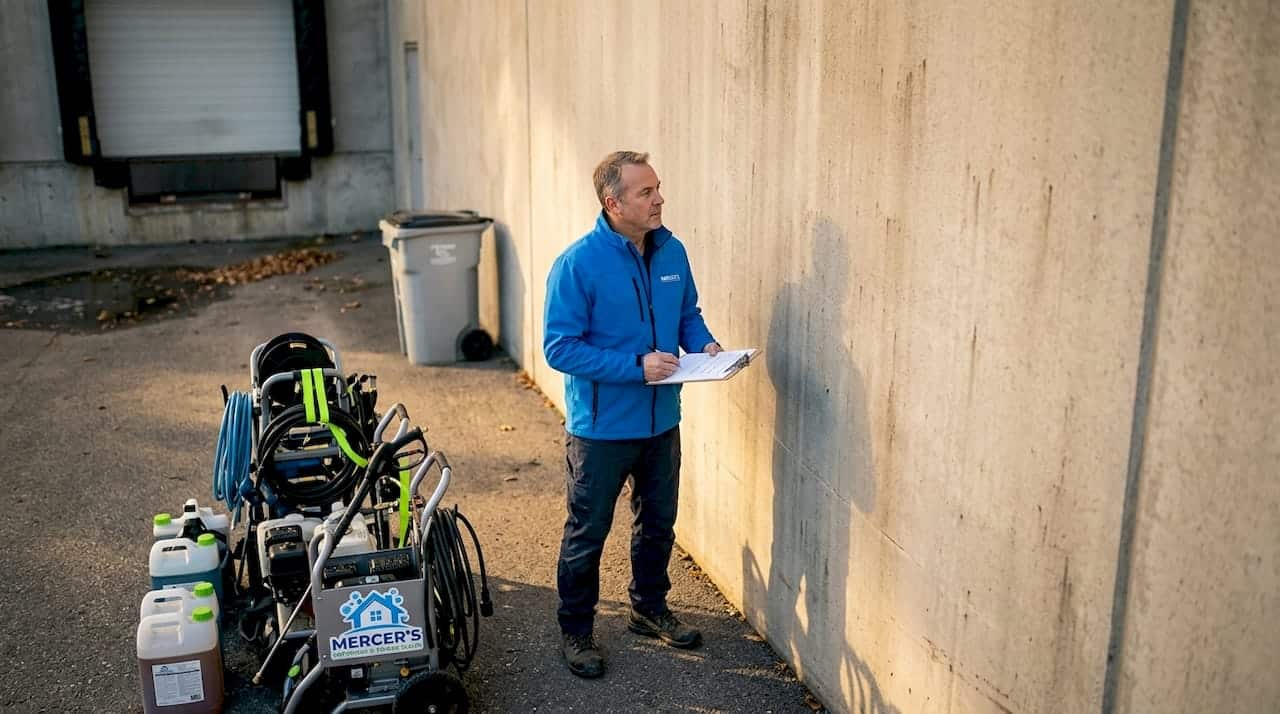
Most facility managers and property owners think of exterior cleaning as a visual concern. Something you do before a site visit or when the building starts looking neglected. That framing undersells what industrial exterior cleaning actually is. In practice, it is a structural protection activity that prevents contaminants like mold, exhaust residue, algae, and mineral deposits from degrading building materials over time. The difference between treating cleaning as cosmetic upkeep versus preventative maintenance is often the difference between a manageable service cost and a significant repair bill.
Key takeaways
| Point | Details |
|---|---|
| More than cosmetics | Facade cleaning protects building materials from biological and chemical degradation, not just visual buildup. |
| Method must match material | Using the wrong cleaning technique on the wrong surface causes abrasion, etching, or corrosion. |
| Regular cycles prevent costly repairs | A 6 to 12 month cleaning schedule interrupts contaminant buildup before it causes structural damage. |
| Regulatory compliance matters | Cleaning runoff is subject to stormwater permit requirements that facility operators must plan for. |
| Start with a site assessment | Every effective cleaning programme begins with surveying the building before selecting any method. |
What is industrial exterior cleaning?
Industrial exterior cleaning, also known as facade cleaning or commercial exterior cleaning, is the professional process of removing accumulated contaminants from the outside surfaces of large-scale commercial and industrial buildings. This includes dirt, mold, mildew, algae, exhaust residue, mineral deposits, biological growth, and atmospheric soiling. The contaminants vary by material, age, and condition, which is what separates this from a simple wash-down.
The scope goes well beyond what most people picture. Industrial exterior cleaning covers the full envelope of a building, including the following surface types:
- Concrete and masonry walls
- Metal cladding and composite panels
- Glass curtain walls and window systems
- Painted or coated surfaces
- Brick, stone, and render
- Roofing substrates and parapet walls
This is distinct from residential exterior cleaning in both scale and complexity. A residential soft wash uses different equipment, different solution concentrations, and involves far less surface variability than a multi-storey warehouse or office complex. Industrial cleaning services are designed around the specific demands of large structures, heavy contamination loads, and the need to protect materials that are expensive to repair or replace.
The terminology you encounter will vary depending on where you are or who you hire. “Facade cleaning,” “building washing,” and “commercial exterior maintenance” are all terms used to describe this same category of work. Regardless of the label, the underlying purpose is consistent: remove harmful buildup and protect the asset.
Cleaning methods and surface matching
The most consequential decision in any industrial exterior cleaning project is choosing the right cleaning method for each surface type. Incorrect methods cause abrasion, corrosion, or etching on delicate materials, and the damage is often irreversible without costly remediation.
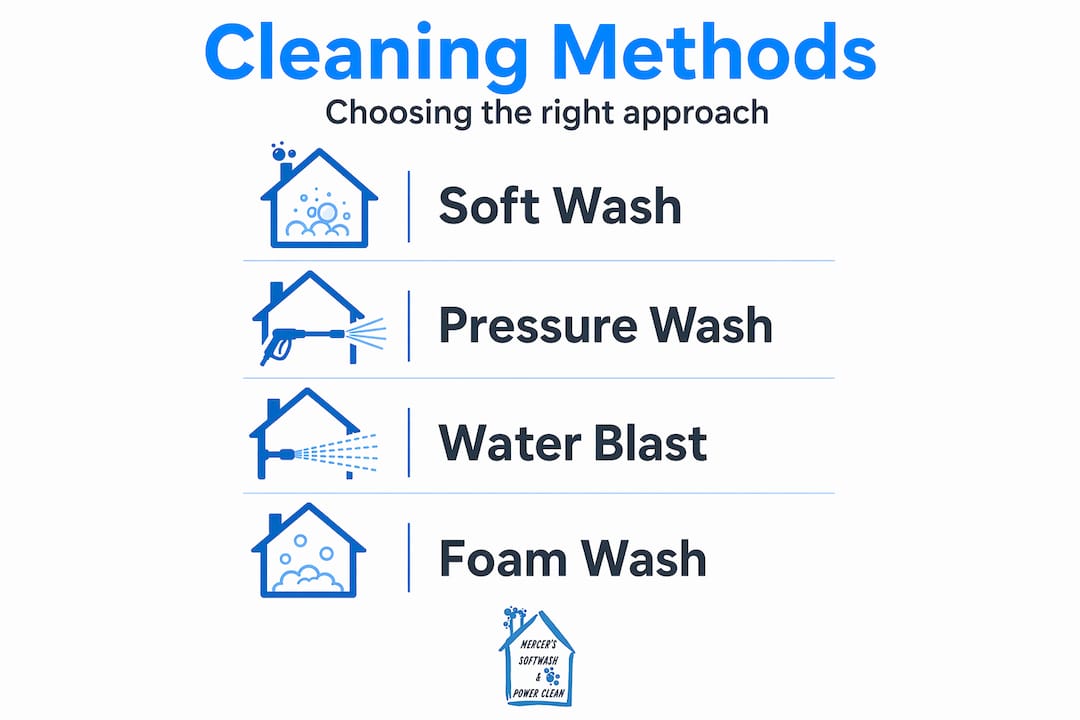
The four primary methods used in commercial and industrial settings are as follows.
Soft washing uses low pressure combined with a chemical solution, typically containing Sodium Hypochlorite and surfactants, to break down organic growth at the biological level. This is the correct method for painted surfaces, older masonry, render, and any substrate where high pressure would cause surface damage.
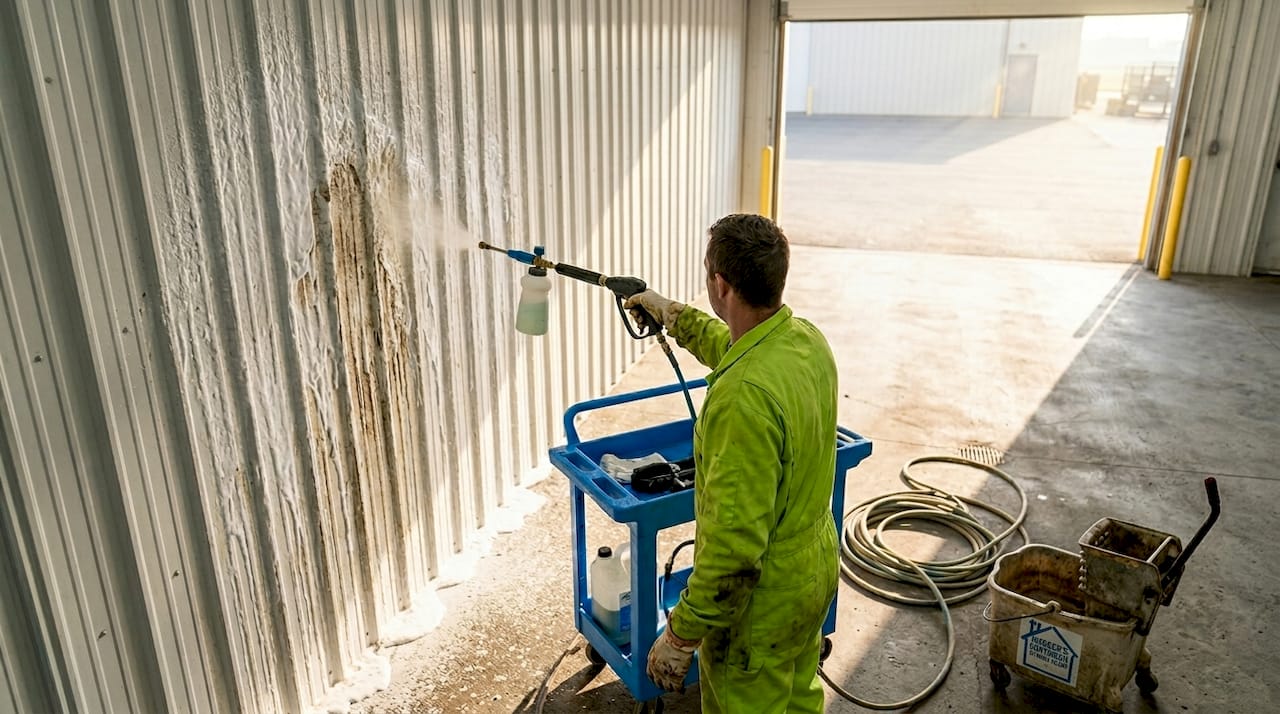
Pressure washing uses elevated water pressure to physically remove contamination from durable surfaces. It is well suited to concrete, pavers, and robust metal cladding, but should never be applied to surfaces where the pressure could force water behind cladding or strip coatings.
Water blasting operates at a much higher pressure than standard pressure washing and is used for heavy industrial contamination, including graffiti, thick mineral scale, and industrial grease. The material-specific approach is critical here, as water blasting on the wrong surface causes immediate and visible damage.
Foam washing involves applying a foam detergent agent that clings to vertical surfaces, extending the dwell time of the chemical and improving soil removal on lightly soiled facades without any abrasive pressure.
Understanding how to clean industrial exteriors correctly also requires knowing what type of contamination you are dealing with. Biological growth like algae and mold responds to chemical treatment. Mineral deposits and efflorescence need an acid wash approach. Carbon fouling from vehicle exhaust or manufacturing processes often needs a combination of alkaline detergents and mechanical action.
Pro Tip: Never select a cleaning method based on the contamination type alone. Always assess the substrate first. The surface being cleaned determines the safe pressure range and chemical compatibility, and that takes priority over how stubborn the staining appears.
Benefits of regular exterior maintenance
The benefits of industrial cleaning go well beyond a cleaner-looking building. When you understand what contaminants do to building materials over time, regular cleaning becomes a straightforward investment decision rather than a discretionary expense.
Here is what a structured maintenance cleaning programme actually protects against:
-
Material degradation. Mold, algae, and biological growth produce acids as byproducts of their metabolism. Left on masonry, render, or painted surfaces, these acids slowly break down the substrate. Contaminants like mold weaken materials if left untreated for extended periods.
-
Premature paint and coating failure. Pollutants and moisture trapped beneath contamination cause paint to blister, crack, and peel ahead of its expected lifespan. Regular cleaning extends the longevity of exterior paintwork and coatings significantly.
-
Indoor air quality issues. Mold colonies on exterior cladding and around window frames can migrate indoors through ventilation systems and gaps in the building envelope, affecting air quality for occupants.
-
Reputational and commercial impact. A clean facade signals quality and professionalism to clients, tenants, and visitors. For commercial properties especially, first impressions carry real financial weight.
-
Accumulated gutter and drainage blockages. Organic buildup and debris from dirty facades collect in gutters and drains, creating overflow risks and water ingress damage to the building structure.
For most commercial and industrial properties, cleaning every 6 to 12 months is the standard recommendation to keep contamination from reaching the point where it causes damage. Properties in high-pollution environments, near industrial activity, or surrounded by significant vegetation may benefit from a shorter cycle.
Pro Tip: Do not apply the same cleaning interval to every surface on your building. Roofing substrates and north-facing walls accumulate biological growth faster than south-facing cladding. A tailored maintenance schedule, broken down by surface zone, will give you better protection for the same budget.
Environmental and regulatory considerations
Exterior cleaning operations generate wastewater. On industrial and commercial properties, that runoff can carry detergents, biocides, heavy metals, and biological material off-site through stormwater drains. This is a compliance exposure that many facility operators underestimate.
The EPA’s proposed 2026 Multi-Sector General Permit introduces updated stormwater discharge requirements that directly affect how industrial cleaning operations are planned and documented. In practical terms, this means cleaning contractors cannot simply wash contaminants into the nearest drain and leave.
The following considerations apply when planning a compliant cleaning programme:
- Assess whether your site discharges to a municipal stormwater system, a natural waterway, or a contained drainage system
- Confirm which detergents and biocides your contractor uses and whether they are approved for use near waterways
- Establish containment measures such as drain plugs, berms, and collection pumps before cleaning begins
- Require your contractor to use water reclamation equipment where discharge cannot be adequately contained
- Document cleaning schedules and compliance efforts as part of your facility’s stormwater pollution prevention plan
The table below summarises key compliance actions for facility managers coordinating industrial cleaning projects.
| Compliance area | Facility manager responsibility |
|---|---|
| Permit awareness | Know whether your site falls under a general or individual stormwater permit |
| Contractor screening | Verify contractors use compliant chemicals and containment practices |
| Runoff management | Confirm containment and collection is planned prior to work commencing |
| Recordkeeping | Maintain records of cleaning dates, methods, and any incident reports |
| Post-cleaning inspection | Document surface condition and drainage status after each cleaning event |
Planning and managing cleaning projects
Practical execution is where industrial exterior maintenance plans succeed or fail. Having a general understanding of cleaning methods is useful, but translating that into a well-managed project requires a structured approach from the start.
Begin with a thorough assessment of your property’s contamination sources. A building near a busy road will carry heavy carbon fouling on lower facades. A property surrounded by trees will accumulate biological growth faster and will need roof cleaning prioritised, since organic contamination migrates from roofs downward along the facade. If you clean the walls before the roof, you are not solving the problem, you are delaying it.
When selecting a contractor, look for these indicators of capability.
- Demonstrated experience with the specific surface types on your building
- Use of pre-cleaning survey and written method statements
- Appropriate equipment for your contamination type and building height
- Familiarity with stormwater compliance and containment procedures
- Customised plans that adapt to site conditions rather than a single-method approach for every job
Coordinate cleaning schedules to minimise operational disruption. On occupied commercial properties, early morning starts, weekend scheduling, or phased cleaning by building section can keep business activity uninterrupted. Also confirm that your contractor carries appropriate liability coverage for working at height and with chemical agents.
From a cost perspective, treating exterior cleaning as a maintenance line item protects your broader capital budget. Remediation of mold-damaged cladding, failed coatings, or water ingress from blocked drainage consistently costs far more than a scheduled cleaning programme over the same period.
My perspective on facade cleaning in facility management
I have seen the same mistake made repeatedly on commercial properties across Southern Ontario. The exterior cleaning budget gets cut during lean years, the building accumulates two or three seasons of biological growth, and then the remediation cost dwarfs what the cleaning programme would have run over the same period.
Facade cleaning is the most undervalued line in a facility maintenance budget. In my experience working with commercial and industrial properties, the facilities that do it well treat the building envelope the same way they treat the mechanical systems. They schedule it, document it, and assign it a maintenance owner.
What I have also learned is that generic pressure washing is rarely the right answer. I have seen well-intentioned cleaning projects strip coatings from metal cladding, force moisture behind brick veneer, and etch decorative concrete, all because the contractor defaulted to high pressure without assessing the substrate first. A survey-led approach, where you examine surface condition, contamination type, and material compatibility before committing to a method, is what separates a cleaning project that protects the building from one that damages it.
The trend I expect to see more of is integrated exterior maintenance planning, where cleaning, coating inspection, and sealant condition reviews happen in the same scheduled visit. That is how you get real asset protection, not just a cleaner facade.
— Felix
How Mercerssoftwashpowerclean can help
At Mercerssoftwashpowerclean, we work with commercial property owners and facility managers across Southern Ontario who need exterior cleaning done properly, not just quickly. Our commercial cleaning services cover everything from soft washing and pressure washing to roof washing, graffiti removal, and window cleaning, all delivered with a survey-led approach that matches the method to your building’s materials and contamination profile.
For properties where roof-sourced biological growth is the recurring problem, our roof washing service addresses the contamination at its source before it migrates down your facades. We also help clients understand the difference between soft washing and pressure washing so they can make informed decisions about what their building actually needs. If you are ready to build a maintenance cleaning schedule or want a site assessment, contact us directly for a customised quote.
FAQ
What does industrial exterior cleaning actually include?
Industrial exterior cleaning covers the removal of dirt, mold, algae, exhaust residue, biological growth, and mineral deposits from the full exterior envelope of commercial and industrial buildings, including walls, roofing, cladding, glass, and drainage systems.
How often should commercial buildings be cleaned externally?
Most commercial and industrial properties benefit from exterior cleaning every 6 to 12 months, though buildings in high-pollution or high-vegetation environments may require more frequent attention to prevent material damage.
What cleaning method is best for industrial buildings?
The correct method depends on the surface material and contamination type. Soft washing suits delicate or coated surfaces, pressure washing handles durable materials like concrete, and water blasting is reserved for heavy industrial soiling. A site assessment determines which is appropriate.
Is stormwater compliance required for exterior cleaning?
Yes. Cleaning runoff on industrial properties is subject to stormwater regulations. Facility operators should confirm that their contractor uses compliant chemicals, containment measures, and maintains records as required under applicable permits.
Why is roof cleaning part of facade maintenance?
Organic contamination typically originates on rooftops and travels down building surfaces over time. Cleaning the roof first prevents rapid recontamination of freshly cleaned walls and extends the overall effectiveness of the maintenance programme.
Recommended
- Why home exterior cleaning matters for your property
- Commercial Services – Mercer’s Softwash & Power Clean Inc. | Pressure Washing Service
- Gallery – Mercer’s Softwash & Power Clean Inc. | Pressure Washing Service
- How Often Should You Wash Your House Exterior In Port Hope? – Mercer’s Softwash & Power Clean Inc. | Pressure Washing Service


