
Your roof is one of the largest and most expensive components of your home, yet it’s often the last thing homeowners think about maintaining. Many people assume a mossy or darkened roof is simply cosmetic, or that cleaning it carries too much risk or cost. The truth is, the benefits of professional roof cleaning extend well beyond appearances. Regular maintenance by trained technicians can extend the life of your roof, reduce energy bills, protect your property’s value, and prevent the kind of damage that leads to very expensive repairs. This article breaks down exactly why professional cleaning is worth your attention.
Key takeaways
| Point | Details |
|---|---|
| Roof lifespan protection | Moss and algae trap moisture that degrades shingles; professional cleaning prevents premature deterioration. |
| Property value improvement | A clean roof boosts curb appeal and supports stronger resale value and compliance with standards. |
| Energy cost reduction | Algae and soiling cause significant heat retention that raises cooling costs and reduces solar panel output. |
| Safety and warranty preservation | Professionals use manufacturer-approved methods that protect warranties and avoid structural damage from DIY errors. |
| Hidden issue detection | Trained technicians spot cracked flashing, damaged pipe boots, and other problems during the cleaning process. |
1. The real benefits of professional roof cleaning start with lifespan
The most significant return you get from professional roof cleaning is a longer-lasting roof. Moss and algae retain moisture against shingle surfaces, which accelerates material breakdown and leads to leaks, rot, and premature aging. Left untreated, biological growth works its way under shingles and lifts them from the surface, compromising the waterproofing layer below.
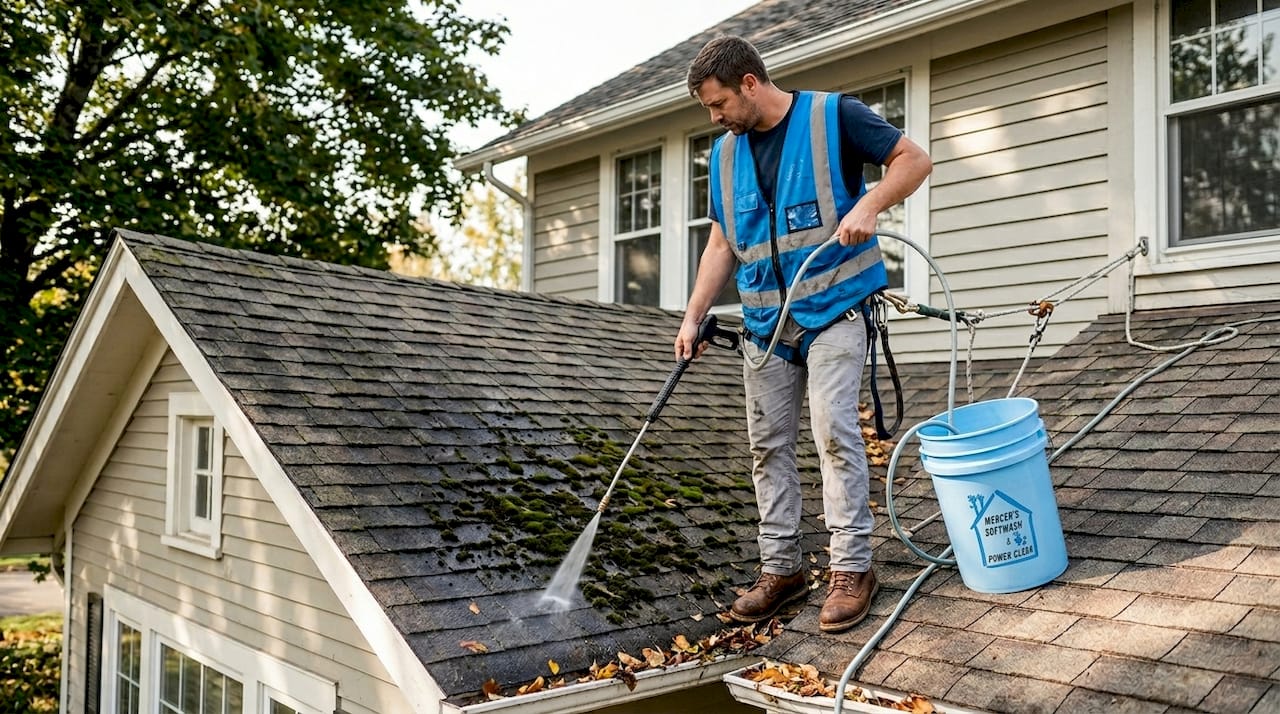
Debris such as leaves, pine needles, and dirt compounds the problem. When wet organic matter sits on a roof for extended periods, it creates sustained moisture exposure that no shingle was designed to tolerate. Water pools in areas where drainage is blocked, and that standing moisture accelerates oxidation in metal components like flashing and fasteners.
Professional cleaning removes these threats before they cause structural damage. It also supports roof warranty validity. Most manufacturers specify approved cleaning methods in their warranty documentation, and failing to follow those methods can void your coverage entirely.
Pro Tip: Soft washing, which uses low-pressure water combined with sodium hypochlorite, is the industry standard for asphalt shingles. It kills biological growth at the root without stripping protective granules the way pressure washing does.
Understanding soft washing versus pressure washing is the first step toward making a cleaning decision that protects rather than damages your roof.
2. Curb appeal and property value
A roof covered in black streaking, green moss, or lichen growth does visible damage to your home’s overall appearance. Those dark streaks are caused by Gloeocapsa magma, a form of cyanobacteria that feeds on the limestone filler in asphalt shingles. Once it takes hold, it spreads across the roof surface and makes even a structurally sound roof look neglected and aged.
From a property value perspective, curb appeal matters. Buyers and appraisers form their first impressions based on what they see from the street, and a stained or moss-covered roof signals deferred maintenance regardless of what’s underneath. Regular upkeep aligns your property with neighbourhood standards and, in many cases, with homeowners’ association requirements.
Professional cleaning restores the roof to a condition that reflects the actual quality of your home. That restoration supports market attractiveness and long-term value preservation. A clean roof also makes the entire exterior look more cohesive, which benefits the presentation of every other feature, from the siding to the windows to the landscaping.
Knowing when your roof needs attention is straightforward once you understand the visible signs that indicate biological growth or heavy soiling has reached the point where professional intervention is appropriate.
3. Energy efficiency and lower utility bills
This benefit surprises most homeowners. Algae growth and accumulated soiling on a roof surface absorb heat rather than reflecting it, which raises attic temperatures and forces your HVAC system to work harder. The result is measurably higher cooling costs during warm months, particularly in regions with direct sun exposure.
The impact is even more pronounced on homes with solar panels. Dirty panels lose between 15% and 25% of their energy output due to soiling, and in cases involving heavy bird droppings or soot accumulation, losses can exceed 30%. That’s a significant reduction in the return you’re getting from a substantial investment.
Cleaning your roof and solar panels at the right time of year maximises the efficiency gains. Late spring or early autumn are typically the best windows in Southern Ontario, once pollen and winter debris have settled but before peak summer heat arrives.
Pro Tip: If you have solar panels, monitor your monthly output data before and after a professional cleaning. A measurable increase in kilowatt production confirms the cleaning was overdue and helps you set an optimal maintenance schedule going forward.
4. Professional cleaning reveals hidden damage early
One benefit that rarely gets discussed is the secondary inspection value of a professional roof cleaning. When trained technicians work across your roof surface, they encounter components that homeowners almost never see up close, including pipe boots, flashing seals, ridge caps, and valley materials.
Professionals identify problems like cracked pipe boots, lifting shingles, and damaged flashing during the cleaning process. A cracked pipe boot, for example, is a common source of slow interior leaks that can go undetected for months. Catching it during a scheduled cleaning costs very little to repair. Ignoring it until water damage appears in your ceiling costs considerably more.
This is one of the reasons why home exterior cleaning serves a purpose beyond aesthetics. Regular professional attention keeps qualified eyes on your roof at intervals that match the natural pace of wear and biological growth.
5. Safety and risk reduction by hiring professionals
Working on a roof without proper training and equipment is genuinely dangerous. The risk of falls is the most obvious concern, but it’s not the only one. Homeowners who attempt DIY roof cleaning frequently use high-pressure washers, which cause granule loss that shortens the service life of asphalt shingles considerably. Most homeowners lack the safety gear, the technical knowledge, and the familiarity with manufacturer cleaning guidelines that professionals bring to every job.
The comparison between DIY and professional cleaning is worth laying out clearly:
| Factor | DIY cleaning | Professional cleaning |
|---|---|---|
| Safety equipment | Typically absent or improvised | Full fall protection, harnesses, non-slip footwear |
| Cleaning method | Often high-pressure washing | Soft washing with calibrated sodium hypochlorite |
| Warranty impact | High risk of voiding coverage | Manufacturer-compliant methods preserved |
| Damage risk | Granule loss, shingle lifting, leaks | Minimal; technicians trained to protect surfaces |
| Hidden issue detection | Unlikely | Routine part of service |
| Cost of mistakes | Potentially thousands in repairs | Covered by service guarantee |
The safety and preservation benefits of hiring professionals extend beyond the cleaning day itself. Properly cleaned surfaces dry faster, resist regrowth longer, and maintain their structural integrity in ways that a DIY job simply cannot replicate. And unlike a DIY approach, professionally applied soft wash treatments include biocidal residuals that slow the return of moss and algae for months after the initial cleaning.
Understanding the structural risks associated with non-professional methods puts the cost of professional cleaning into proper perspective. The price of a professional service is far lower than the cost of fixing the damage an incorrect method can cause.
6. Cost perspective: what professional cleaning actually costs
Many homeowners avoid professional roof cleaning because they assume it’s expensive. The actual cost range for a single-family home sits between $600 and $1,200, with larger or complex properties running up to $2,000 or more. That range is context-dependent, factoring in roof pitch, square footage, access difficulty, and the degree of biological growth present.
What’s worth noting is the low end of the market. Prices advertised as low as $99 almost always involve high-pressure washing rather than soft washing. That method strips granules from shingles and can void manufacturer warranties. Paying less up front and shortening your roof’s lifespan by several years is not a saving.
When you measure professional cleaning costs against the price of a full roof replacement, which regularly runs between $8,000 and $20,000 or more for an average Canadian home, the investment in preventive maintenance becomes straightforward to justify. Cleaning once every one to three years, depending on your local tree cover and climate conditions, is a modest expense relative to what it protects.
7. Roof maintenance benefits that compound over time
The roof maintenance benefits of professional cleaning are not a one-time gain. They build on each other with every service cycle. A roof that is cleaned before moss establishes deep rhizoids into shingle material is far easier and less expensive to restore than one that has been neglected for five or more years.
Biological growth follows predictable patterns. Algae appear first as faint dark streaking. Moss follows in shaded areas where moisture lingers. Lichen, which is the hardest to remove, arrives last and bonds directly to shingle granules. The earlier you intervene in that cycle, the less aggressive the treatment needs to be, and the less wear the cleaning process places on your materials.
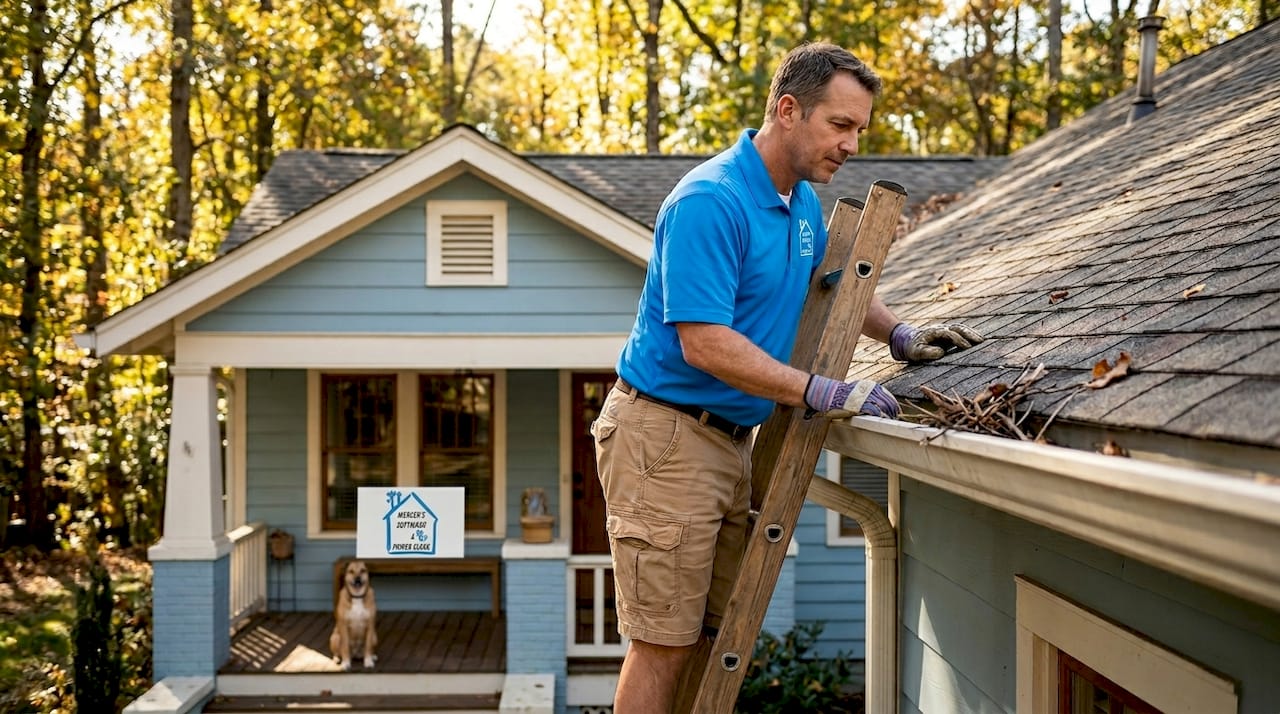
Pairing roof cleaning with gutter maintenance amplifies these benefits. Clogged gutters force water back against the roof edge, which creates exactly the moist conditions that promote moss and algae growth in the first place. Addressing both in the same service visit closes that loop efficiently.
My honest take on roof cleaning as a long-term investment
I’ve seen a lot of homeowners treat their roof the same way they treat their furnace filter: they know they should deal with it, but they wait until something goes wrong. By that point, the repair bill is always larger than it needed to be.
What I’ve found, working with property owners across Southern Ontario, is that the hesitation usually comes from uncertainty rather than indifference. People aren’t sure whether soft washing will damage their shingles, whether the cost is justified, or whether the dark streaks they’re seeing are actually a problem. Those are fair questions, and the honest answers consistently point in the same direction: professional cleaning, done with the right method, protects your investment and pays for itself over time.
The misconception that pressure washing is an acceptable roof cleaning method is the one I encounter most often. It’s not. It removes the granules that give asphalt shingles their weather resistance, and it does so every time it’s used. Soft washing eliminates biological growth at the cellular level without that tradeoff.
My recommendation is to schedule a professional inspection and cleaning every one to three years, adjust based on your property’s exposure to shade and moisture, and never wait until the moss is visibly thick before taking action. The roof that gets regular attention is the roof that lasts.
— Felix
Protect your roof with Mercerssoftwashpowerclean
At Mercerssoftwashpowerclean, we specialise in professional soft washing for residential and commercial roofs across Southern Ontario. Our approach uses low-pressure sodium hypochlorite application to eliminate algae, moss, lichen, and biological staining without touching your shingles’ protective granules. Every job includes a surface assessment so you know what we’re treating and why.
If you’ve been putting off roof maintenance or you’re unsure what condition your roof is actually in, our roof washing service is a practical starting point. We also offer bundled exterior cleaning packages that pair roof washing with gutter cleaning and house washing for a complete property refresh. Reach out to Mercerssoftwashpowerclean today for a quote, and find out what the right cleaning method can do for your property’s longevity and appearance.
FAQ
What are the main benefits of professional roof cleaning?
Professional roof cleaning extends shingle lifespan, improves curb appeal, reduces energy costs, and allows trained technicians to spot hidden damage early. It also preserves manufacturer warranties by using approved soft washing methods rather than damaging high-pressure techniques.
How often should a roof be professionally cleaned?
Most homes benefit from professional cleaning every one to three years. Properties with heavy tree cover, north-facing slopes, or persistent shading may need more frequent attention because those conditions accelerate moss and algae growth.
Is soft washing safe for asphalt shingles?
Yes. Soft washing is the recommended method for asphalt shingles. It uses low water pressure combined with sodium hypochlorite to kill biological growth at the root without stripping the granules that protect shingle surfaces from UV and weather exposure.
Does a dirty roof actually affect energy bills?
It does. Algae and soiling increase heat absorption on the roof surface, raising attic temperatures and increasing HVAC load. For homes with solar panels, dirty surfaces can reduce energy output by 15% to 25% or more.
What does professional roof cleaning cost in Canada?
Professional cleaning for a single-family home typically costs between $600 and $1,200, with larger or steeply pitched roofs running higher. That cost is significantly lower than the repair or replacement expenses that result from deferred maintenance.


