

Commercial walkway pressure washing is defined as the application of high-pressure water, typically between 2,000 and 4,000 PSI, to remove dirt, algae, grease, and biological growth from hard exterior surfaces. This commercial pressure wash walkway guide is written specifically for property owners and facility managers in Southern Ontario who need to maintain safe, clean, and legally compliant pedestrian surfaces. Slips, trips, and falls are the leading cause of workplace lost-time injuries in Ontario. That fact alone makes walkway cleaning a safety obligation, not a cosmetic choice. Mercerssoftwashpowerclean works with commercial clients across Southern Ontario to deliver compliant, detail-focused cleaning that meets both the Occupiers’ Liability Act and the Ontario Water Resources Act.
What equipment and products do you need for commercial walkway pressure washing?
Selecting the right equipment is the first decision in any walkway cleaning project. Concrete and interlock surfaces generally require a machine rated between 2,500 and 4,000 PSI with a flow rate of at least 4 gallons per minute. Lower-rated consumer units lack the volume to clean large commercial areas efficiently.
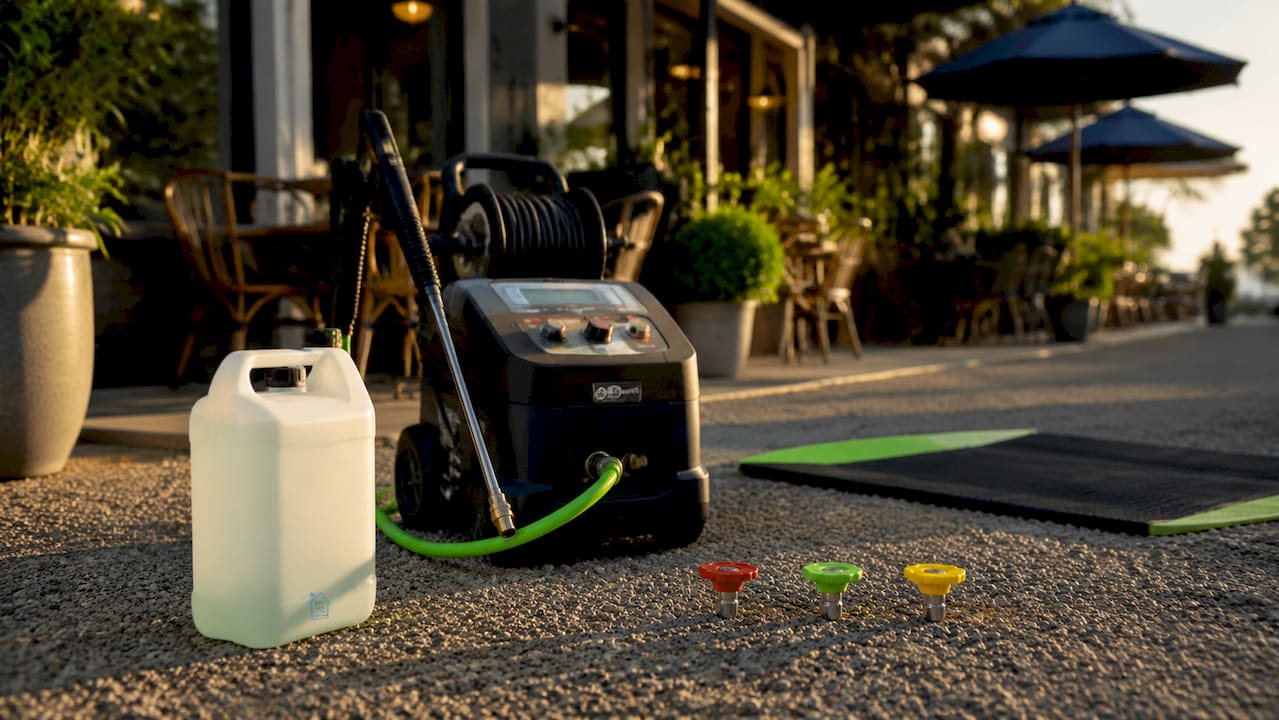
The nozzle you choose controls both cleaning power and surface safety. A 25-degree (green) nozzle works well for general concrete cleaning. A 15-degree (yellow) nozzle handles stubborn staining but requires careful handling to avoid surface etching. A rotary surface cleaner attachment distributes pressure evenly across wide walkway sections, which eliminates the streaking that a wand alone tends to leave.
Pressure washing requires rigorous drain protection due to high runoff volumes on commercial sites. Storm drain covers, water-absorbent booms, and portable containment berms are the standard tools for blocking runoff before it reaches municipal storm systems. Ontario classifies wash water as sewage works when discharge exceeds 10,000 litres per day, which means MECP approval is required for larger projects. Property managers frequently underestimate how quickly runoff volumes accumulate on expansive commercial paving.
When a cleaning agent is needed, choose a biodegradable, phosphate-free detergent rated for exterior hard surfaces. Sodium Hypochlorite dilutions are effective against algae and mould on concrete, but they must be applied and collected in compliance with local discharge rules.
Pro Tip: Select a detergent that carries an Environmental Choice (EcoLogo) certification. These products meet Canadian environmental standards and reduce your compliance risk when wash water cannot be fully contained.
| Equipment or product | Purpose | Compliance consideration |
|---|---|---|
| 2,500–4,000 PSI pressure washer | Removes embedded dirt and biological growth | Match flow rate to surface area |
| 25-degree or 15-degree nozzle | Controls spray pattern and cleaning intensity | Avoid 0-degree on concrete; causes etching |
| Rotary surface cleaner | Even pressure distribution, no streaking | Reduces operator fatigue on large areas |
| Storm drain covers or booms | Blocks runoff from reaching storm systems | Required before washing begins |
| Portable containment berm | Collects wash water for proper disposal | Needed when discharge exceeds thresholds |
| Biodegradable detergent | Breaks down grease, algae, and oxidation | Must meet Ontario discharge standards |
How do you prepare a commercial site before pressure washing walkways?
Site preparation reduces risk to pedestrians, nearby vegetation, and the surfaces being cleaned. Skipping this phase is the most common reason commercial pressure washing projects create liability rather than reduce it.
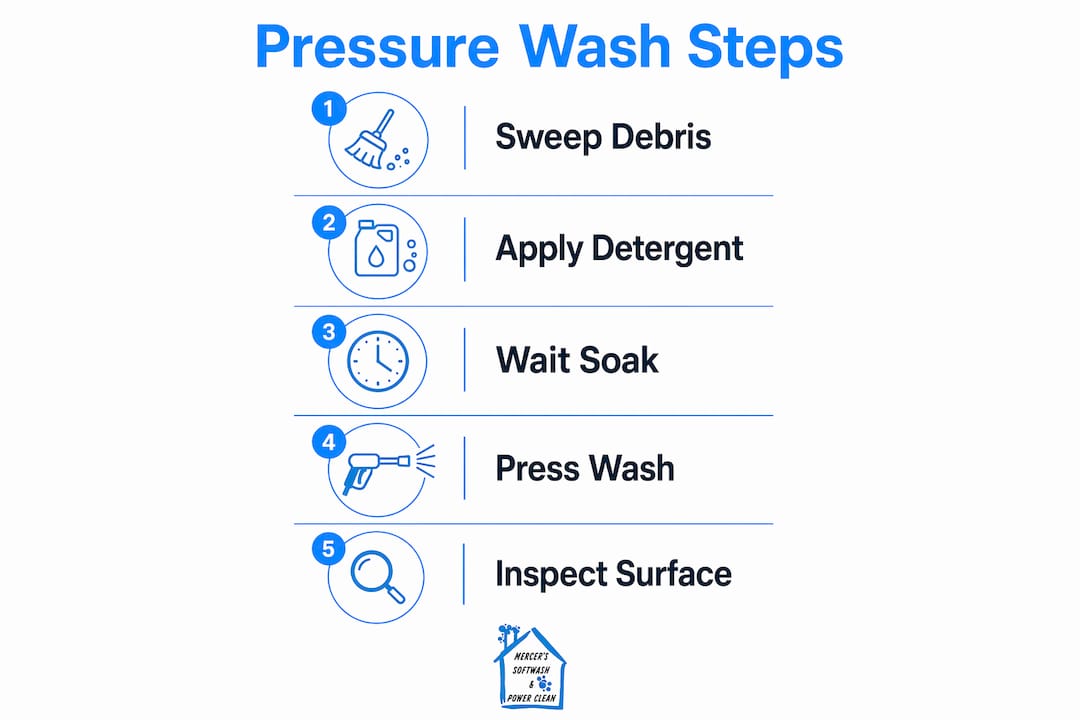
Start with dry cleaning. Sweep the entire walkway to remove loose debris, leaves, and grit. This prevents debris from becoming projectiles under high pressure and reduces the organic load that wash water must carry. Inspect the surface carefully for cracks, spalling, or loose interlock pavers. Cleaning over damaged areas can worsen the damage and create trip hazards after the water dries.
Protect adjacent vegetation by covering planters and garden beds with plastic sheeting. Even biodegradable detergents can stress plants when applied in concentrated runoff. Rinse any exposed vegetation with clean water immediately after washing if contact occurs.
Set up pedestrian barricades and wet floor signage before the first drop of water hits the surface. The Occupiers’ Liability Act places a duty of care on property owners to warn pedestrians of hazards. Barricades must remain in place until the surface is fully dry.
- Sweep and remove all loose debris from the walkway.
- Inspect the surface for cracks, spalling, or damaged pavers.
- Cover nearby vegetation and sensitive surfaces with plastic sheeting.
- Place storm drain covers or containment booms over all nearby drains.
- Erect pedestrian barricades and post wet surface signage at all access points.
- Check the weather forecast. Avoid washing when rain is forecast within four hours, as runoff becomes uncontrollable and surfaces stay wet longer.
How do you pressure wash commercial walkways safely and effectively?
Effective execution follows a consistent sequence. Deviating from that sequence is where most surface damage and compliance failures occur.
Begin by applying your chosen detergent at low pressure using a downstream injector or a soap nozzle. Allow the detergent to dwell on the surface for three to five minutes. This dwell time breaks down biological growth and loosens embedded grease before high-pressure water is applied. Do not allow the detergent to dry on the surface, as dried chemical residue can cause staining.
Switch to your surface cleaner or appropriate nozzle and work in overlapping passes from one end of the walkway to the other. Maintain a consistent distance of 6 to 12 inches between the nozzle and the surface. Closer distances increase cleaning power but also increase the risk of etching concrete or dislodging interlock sand. Work with the slope of the surface so wash water flows toward your containment area rather than spreading outward.
Wash water must be collected and disposed of properly to avoid environmental liabilities under Ontario’s Environmental Protection Act. Use a wet vacuum or a sump pump to transfer collected water to an approved sanitary sewer access point. Never direct wash water into a storm drain, even when using biodegradable detergents.
Pro Tip: On large commercial walkways, divide the area into 10-metre sections and complete each section fully before moving to the next. This keeps your containment setup manageable and maintains consistent cleaning quality across the entire surface.
- Apply detergent at low pressure and allow a three to five minute dwell time.
- Attach the surface cleaner or correct nozzle for the surface type.
- Work in overlapping passes, maintaining a 6 to 12 inch standoff distance.
- Direct wash water toward containment berms or collection points continuously.
- Collect wash water using a wet vacuum or sump pump.
- Rinse the surface with clean water to remove detergent residue.
- Transfer collected wash water to an approved sanitary sewer access point.
| Step | Action | Key risk to avoid |
|---|---|---|
| Detergent application | Low pressure, even coverage | Allowing detergent to dry on surface |
| Surface cleaning | Overlapping passes, consistent standoff | Etching from nozzle held too close |
| Water collection | Continuous pump or vacuum operation | Runoff reaching storm drains |
| Final rinse | Clean water flush from top to bottom | Detergent residue causing staining |
| Drain protection removal | Only after all wash water is collected | Premature removal causes non-compliance |
How do you manage post-wash inspection, documentation, and compliance?
The cleaning itself is only half the job. What you document after the wash determines your legal protection if an incident occurs later.
Maintenance logs with dates, times, and actions are legally required to demonstrate due diligence under the Occupiers’ Liability Act. Courts request these logs as the first document in slip-and-fall litigation. A log that shows consistent, scheduled cleaning is your strongest defence. Photograph the walkway before and after each cleaning session and store those images with the corresponding log entry.
GPS-tracked service verification adds another layer of credibility to your records. Maintenance logs verified with GPS tracking reduce liability exposure by proving that cleaning occurred at the documented location and time. Professional cleaning services like Mercerssoftwashpowerclean can provide this documentation as part of a commercial service agreement.
Post-wash steps to complete before reopening the walkway:
- Inspect the surface for any new damage caused during cleaning, including dislodged pavers or surface etching.
- Confirm all wash water has been collected and disposed of through an approved sanitary connection.
- Remove storm drain covers and containment booms only after the surface is fully rinsed and water flow has stopped.
- Remove pedestrian barricades and wet surface signage once the walkway is dry to the touch.
- Record the date, time, technician name, equipment used, and any surface observations in your maintenance log.
- Schedule the next cleaning based on surface condition and foot traffic volume, not on a fixed calendar date alone.
Sealing concrete after cleaning prevents chloride and chemical ingress that accelerates cracking from freeze-thaw cycles. Southern Ontario winters make this step particularly important for extending walkway longevity.
What are the common challenges in commercial walkway pressure washing?
Even well-planned pressure washing projects encounter problems. Knowing what to expect reduces downtime and prevents costly mistakes.
Streaking and uneven cleaning result from inconsistent nozzle distance or skipping the surface cleaner attachment on wide walkways. The fix is straightforward: use a rotary surface cleaner and maintain a steady walking pace. Rushing the pass leaves bands of uncleaned surface that become visible once the concrete dries.
Lingering stains from oil or grease do not respond to water pressure alone. These require a degreaser applied during the dwell phase. Sodium Hypochlorite is effective against biological staining such as algae and mould, but it does not break down petroleum-based grease. Use a dedicated alkaline degreaser for those situations.
Surface damage on older properties is a serious concern. High-pressure washing can dislodge lead-based paint on buildings constructed before 1978, creating hazardous runoff that requires abatement protocols. If your property dates to before 1978, test for lead paint before scheduling any pressure washing work.
Facility managers often treat walkway cleaning as an aesthetic task rather than a safety imperative. A clean surface is foundational to risk management. Grease, moss, and debris are the direct causes of slips, and cleaning prevents those hazards before they injure someone.
Preventive measures that reduce the frequency and difficulty of future cleaning include applying a penetrating concrete sealer after each wash, scheduling cleaning before visible soiling accumulates, and trimming vegetation that overhangs walkways to reduce organic debris and moisture retention.
Key takeaways
Commercial walkway pressure washing is a safety, compliance, and maintenance practice that requires proper equipment, documented execution, and regulated wash water disposal to protect both people and property.
| Point | Details |
|---|---|
| Safety is the primary driver | Slips, trips, and falls are the leading cause of lost-time injuries in Ontario; clean walkways reduce that risk directly. |
| Drain protection is non-negotiable | Cover all storm drains before washing begins and remove covers only after all wash water is collected. |
| Documentation protects you legally | Maintenance logs with dates, photos, and GPS verification are the first documents requested in slip-and-fall litigation. |
| PSI and nozzle choice matter | Use 2,500–4,000 PSI with a surface cleaner attachment to avoid etching and achieve consistent results. |
| Seal after cleaning | Applying a penetrating sealer after each wash prevents freeze-thaw cracking and extends walkway lifespan. |
What I have learned from years of commercial walkway cleaning
After working on commercial exterior cleaning across Southern Ontario, the pattern I see most often is this: property managers invest in cleaning but underinvest in documentation. They clean the walkway, they do it properly, and then they have nothing on paper to prove it when a slip-and-fall claim arrives six months later. A cleaning plan is insufficient without consistent, documented execution. That gap between doing the work and proving the work is where liability lives.
The second thing I have seen repeatedly is the drain protection problem. Teams set up containment correctly at the start of a job, then remove it too early because they think the heavy washing is done. Wash water keeps flowing for longer than most people expect, especially on sloped commercial paving. Removing drain protection before the surface is fully rinsed is the single fastest way to create an environmental compliance violation.
My honest recommendation is to treat every commercial walkway cleaning as a three-part job: preparation, execution, and documentation. All three carry equal weight. If you are managing a large commercial property with high foot traffic, the compliance requirements for commercial cleaning in Ontario are detailed enough that professional service is the lower-risk option. Mercerssoftwashpowerclean handles the equipment, the wash water management, and the paperwork. That combination is what actually protects you.
— Felix
Professional walkway cleaning services from Mercerssoftwashpowerclean
Mercerssoftwashpowerclean provides commercial pressure washing services across Southern Ontario, with a specific focus on Ontario MECP compliance, wash water containment, and post-service documentation. Every commercial walkway project includes proper drain protection setup, regulated wash water disposal, and a signed maintenance record you can use for liability purposes. The team works with property managers and facility teams to build scheduled cleaning programmes that keep walkways safe year-round. For properties where pressure washing is not the right fit for every surface, the soft washing vs pressure washing guide explains which method protects which surface type. To learn more about what professional service includes for your property, visit the commercial pressure washing page for full details.
FAQ
What PSI is recommended for commercial concrete walkways?
A pressure washer rated between 2,500 and 4,000 PSI is suitable for commercial concrete and interlock walkways. Use a rotary surface cleaner attachment to distribute pressure evenly and avoid etching.
Does Ontario law require wash water containment during pressure washing?
Yes. Ontario’s Environmental Protection Act and the Ontario Water Resources Act classify commercial wash water as sewage. Projects generating more than 10,000 litres per day require Ministry of the Environment, Conservation and Parks approval.
How often should commercial walkways be pressure washed?
Cleaning frequency depends on foot traffic, surface type, and local conditions. High-traffic commercial walkways in Southern Ontario typically require cleaning two to four times per year, with additional sessions after winter to remove salt and sand residue.
Why are maintenance logs required after walkway cleaning?
Maintenance logs with dates, times, and actions are the primary document courts request in slip-and-fall litigation under the Occupiers’ Liability Act. Consistent, detailed records demonstrate that a property owner met their duty of care.
Can pressure washing damage interlock or concrete surfaces?
Yes, if the wrong nozzle or excessive pressure is used. A 0-degree nozzle and standoff distances under 6 inches can etch concrete and dislodge interlock joint sand. Using a 25-degree nozzle or a surface cleaner attachment at the correct distance prevents surface damage.


