

Gutter flushing is defined as running water through your gutter system after debris removal to clear fine sediment, confirm water flow through downspouts, and identify leaks or blockages. This step goes beyond scooping out leaves. Typical gutter maintenance includes flushing as a flow test to verify that water moves correctly from the trough through the downspout and away from your foundation. Without this step, hidden clogs and slow leaks can go unnoticed for months. Canadian seasonal conditions, including freeze-thaw cycles and heavy leaf drop, make gutter flushing a non-negotiable part of property care.
How does gutter flushing work and why does it matter for drainage?
Gutter flushing works by directing a steady stream of water through the full length of the gutter channel, starting from the end farthest from the downspout and working toward it. This replicates the path rainwater takes during a storm. Running water through gutters after debris removal flushes out fine sediment, grit, and organic matter that a scoop or brush cannot reach.
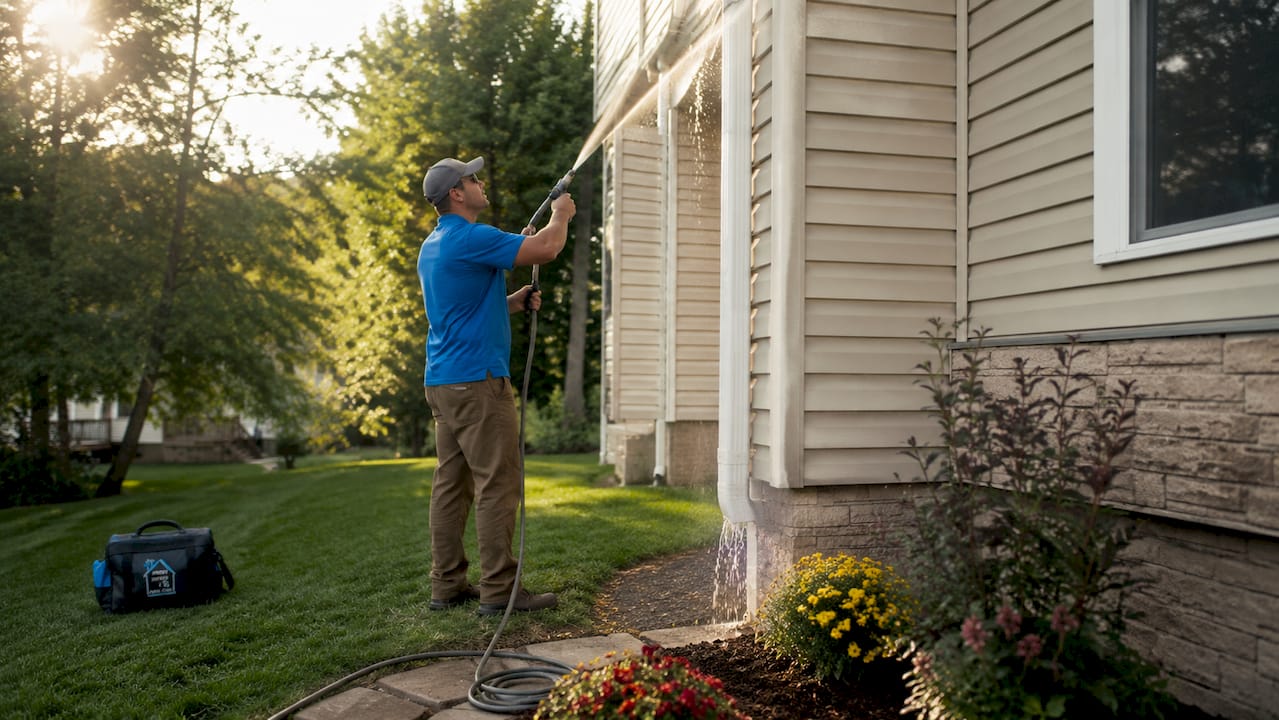
The flushing process also acts as a pass/fail flow test. If water pools in the trough instead of moving steadily toward the downspout, the gutter pitch may be off or a partial clog is restricting flow. Irregular water flow during flushing can indicate pitch problems or hidden damage that requires repair before the next heavy rain.
Downspout outlets are the most telling checkpoint during a flush. Weak discharge or pooling at the base of the downspout points directly to a blockage, often located at an elbow bend several feet below the trough opening. Blockages at downspout bends are a common cause of overflow because the trough itself can look completely clean while water backs up silently below.
Flushing also reveals leaks at seams, end caps, and joints that only show up under running water. A dry inspection misses these entirely. Confirming that water exits well away from your foundation is the final checkpoint. Proper discharge distance protects your foundation from water infiltration, which is one of the most costly home repairs a property owner can face.
Pro Tip: Watch the downspout outlet from ground level while a helper runs the hose. Strong, steady flow means the system is clear. Slow drips or no discharge at all means you have a blockage that needs attention before the next rain.
What are the benefits of regular gutter flushing compared to debris removal alone?
Debris removal clears what you can see. Gutter flushing confirms whether the system actually works. These are two different things, and skipping the flush is where most homeowners leave problems behind.
The key benefits of regular flushing include:
- Detecting hidden blockages. Clogs can form several feet down the downspout, well below the visible trough. Flushing is the only way to find them without dismantling the system.
- Identifying leaks at seams and joints. Water pressure during flushing exposes gaps that a dry inspection cannot reveal.
- Verifying downspout discharge. Flushing confirms water exits far enough from the foundation to prevent soil saturation and basement moisture.
- Spotting loose or damaged sections. Running water highlights sagging troughs, separated joints, and failing hangers before they cause overflow.
- Preventing overflow and water damage. Water backing up during flushing signals a blockage that, left unaddressed, will overflow onto siding, fascia boards, and the foundation below.
Flushing is not just rinsing. It is an active diagnostic step that reveals issues hidden beneath surface debris. A clean-looking trough is not the same as a functioning drainage system. Treating flushing as a flow test, rather than a rinse, is what separates a complete gutter service from a partial one.
Canadian best practices recommend flushing twice yearly as a minimum. Homes surrounded by mature trees benefit from flushing every 3–4 months to stay ahead of compacting debris and downspout blockages.
When should gutters be flushed for optimal maintenance?
Timing matters as much as technique. The two most important flush dates align with Canadian seasonal patterns: once in spring after winter debris has accumulated, and once in fall after the bulk of leaf drop is complete.
The spring flush clears grit, shingle granules, and organic matter that settled over winter. It also confirms the system is ready to handle spring runoff and heavy April and May rains. The fall flush removes leaf debris before temperatures drop, which is critical for preventing ice dams and freeze-thaw blockages that can crack downspouts and pull gutters away from the fascia.
| Timing | Trigger | Frequency |
|---|---|---|
| Spring (april to may) | Post-winter debris and runoff season | Once per year minimum |
| Fall (october to november) | After peak leaf drop | Once per year minimum |
| Heavy tree cover | Ongoing debris from overhanging branches | Every 3–4 months |
| After major storms | Wind-driven debris and branch material | As needed |
| Before winter | Pre-freeze check to prevent ice dams | Recommended annually |
Seasonal flushing routines align with Canadian climates to reduce the risk of winter ice dams and spring runoff blockages. For Southern Ontario homeowners, the gutter cleaning season checklist provides a regionally specific schedule that accounts for local tree species and weather patterns.
Signs that an unscheduled flush is needed include water spilling over the front edge of the trough during rain, visible plant growth in the gutter channel, or staining on siding below the gutter line. Any of these signals a blockage that flushing will locate.
How can homeowners safely flush their gutters themselves?
Safe DIY gutter flushing is achievable with the right preparation. Rushing the process or skipping safety steps is where injuries and property damage happen.
Before you start, gather the following:
- Heavy-duty rubber gloves and eye protection
- A stable, properly rated ladder positioned on level ground
- A garden hose with an adjustable spray nozzle
- A plumber’s snake or drain auger for stubborn downspout clogs
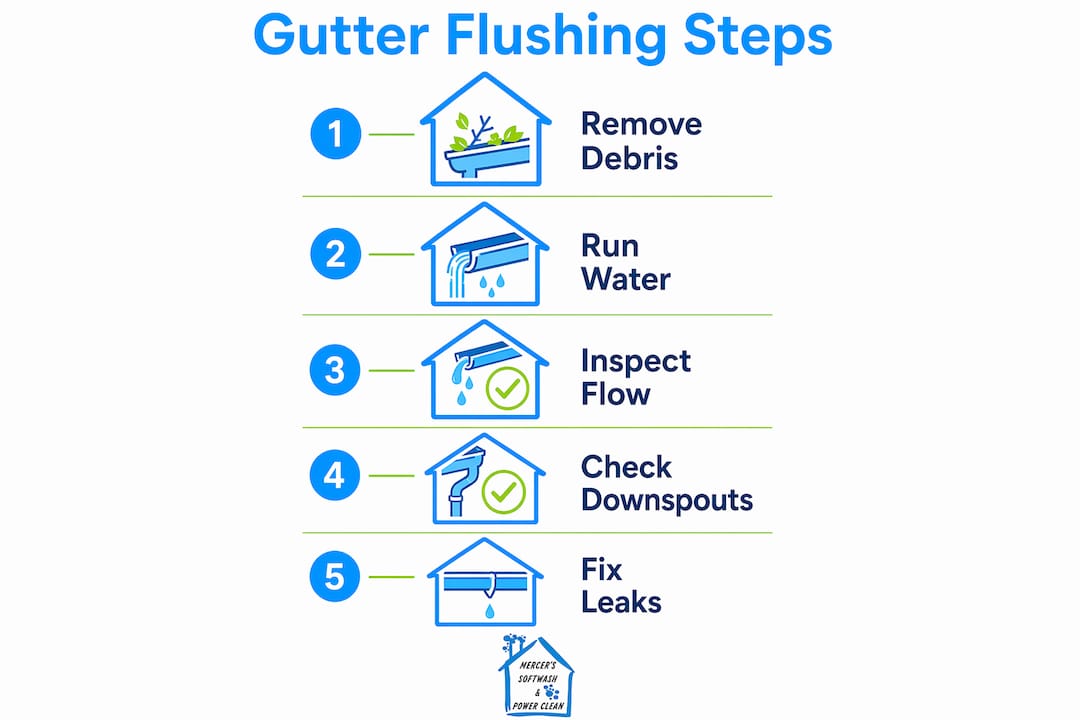
Follow these steps for a complete flush:
- Remove large debris first. Scoop out leaves, twigs, and compacted material by hand or with a gutter scoop. Flushing over heavy debris just pushes it into the downspout and worsens the clog.
- Start at the far end. Position the hose at the end of the trough farthest from the downspout. This mimics natural water flow and pushes debris toward the outlet.
- Run the hose at moderate pressure. Basic safety during DIY flushing includes keeping both hands on the ladder when repositioning. Never lean out to reach further; move the ladder instead.
- Watch the downspout outlet. Strong, steady discharge means the path is clear. Slow or no flow means a blockage is present, typically at an elbow bend.
- Address downspout clogs. Feed a plumber’s snake down from the top of the downspout to break up compacted debris. Follow with another flush to confirm the clog is cleared.
- Check discharge distance. Water should exit at least 1.5 metres from the foundation. If it pools near the base, a downspout extension or splash block is needed.
Pro Tip: Flush the downspout from the bottom up using a hose with a pressure nozzle. The upward pressure often dislodges compacted clogs at elbow bends faster than flushing from the top down.
Review the gutter cleaning safety tips before working at height. Ladder falls are the leading cause of DIY home maintenance injuries, and gutters on two-storey homes or steep rooflines are best left to professionals.
What do professional gutter flushing services include?
Professional gutter flushing services cover the full scope of what a DIY flush often misses. A trained technician brings the right tools, works safely at height, and documents what they find.
A standard professional service typically includes:
- Debris removal from the full trough length, including compacted material at corners and downspout openings
- Full-length flushing from the far end to the downspout to confirm flow and pitch
- Downspout clearing using pressure nozzles or plumber’s snakes to break up deep clogs
- Leak and damage inspection at seams, end caps, joints, and hangers while water is running
- Discharge verification to confirm water exits well away from the foundation
- Condition reporting with notes or photos on any damage, sagging sections, or repairs needed
Professional services include flushing downspouts and inspecting for leaks. When flushing is omitted from a service, hidden clogs several feet down the downspout go undetected. That is the difference between a complete service and a surface clean.
Hire a professional when gutters are on a two-storey or higher roofline, when DIY flushing has not resolved a recurring overflow problem, or when you suspect damage to the trough, fascia, or downspout connections. Professionals also carry liability insurance, which matters when working at height on your property.
The exterior building cleaning schedule for Ontario properties shows how gutter flushing fits into a broader seasonal maintenance plan that keeps all exterior surfaces in good condition year-round.
Key takeaways
Gutter flushing is the only reliable way to confirm your drainage system is fully clear, correctly pitched, and directing water safely away from your foundation.
| Point | Details |
|---|---|
| Flushing is a flow test | Running water through gutters confirms drainage works, not just that visible debris is gone. |
| Twice-yearly minimum | Flush in spring and fall; increase to every 3–4 months for homes with heavy tree cover. |
| Downspouts are the critical checkpoint | Weak discharge at the outlet signals a hidden blockage, often at an elbow bend. |
| Discharge distance protects foundations | Water must exit well away from the foundation to prevent soil saturation and basement moisture. |
| Professionals catch what DIY misses | Trained technicians clear deep clogs, inspect for leaks, and document system condition. |
What I have learned from watching gutters fail
Most homeowners treat gutter cleaning as a one-step job: remove the debris, done. The flush gets skipped because the trough looks clean. That is exactly when problems hide.
The downspout elbow is the spot that catches everyone off guard. I have seen troughs that were spotless, not a leaf in sight, but the downspout was packed solid two feet below the opening. The homeowner had no idea until water was pouring over the front edge during a moderate rain. A two-minute flush would have found it months earlier.
Targeted flushing at downspout bends is more effective than rinsing the visible trough repeatedly. The trough is just the collection channel. The downspout is where drainage actually happens, and it is where blockages compact under their own weight over time.
The other thing I consistently see overlooked is discharge distance. Homeowners confirm the downspout is flowing and call it done. But if that water is pooling 30 centimetres from the foundation wall, the gutter system is technically working and still causing foundation damage. Watching where the water goes after it exits the downspout is as important as confirming it exits at all.
My honest advice: treat every flush as an inspection, not a rinse. Watch the flow, check the outlet, and walk the discharge path. That habit catches problems early and keeps repair costs manageable.
— Felix
Professional gutter flushing from Mercerssoftwashpowerclean
Mercerssoftwashpowerclean provides professional gutter cleaning and flushing for residential and commercial properties across Southern Ontario. Every service includes full debris removal, end-to-end flushing to verify flow, downspout clearing, and a condition report so you know exactly what was found. The team uses pressure nozzles and drain tools to clear deep blockages that a garden hose cannot reach. If your gutters are overflowing, draining slowly, or have not been serviced this season, a professional flush will confirm whether your drainage system is protecting your property the way it should. Contact Mercerssoftwashpowerclean to schedule a service before the next heavy rain or freeze cycle.
FAQ
What is gutter flushing in simple terms?
Gutter flushing is the process of running water through your gutters after debris removal to clear sediment, confirm water flow, and detect blockages or leaks. It functions as a pass/fail test for your entire drainage system.
How often should gutters be flushed?
Gutters should be flushed at least twice a year, in spring and fall. Homes with heavy tree cover benefit from flushing every 3–4 months to prevent compacting debris from blocking downspouts.
Can I flush gutters myself or do I need a professional?
Single-storey gutters can be flushed safely with a garden hose, gloves, eye protection, and a stable ladder. Two-storey or higher gutters, persistent clogs, or suspected damage are best handled by a professional with the right tools and insurance.
Why does my gutter overflow if the trough looks clean?
A clean trough does not mean a clear downspout. Blockages commonly form at elbow bends several feet below the trough opening, where debris compacts under its own weight. Flushing the downspout directly is the only way to confirm it is clear.
What happens if I skip gutter flushing?
Skipping the flush leaves hidden blockages, pitch problems, and leaks undetected. Over time, these cause overflow, fascia rot, siding staining, and foundation water infiltration, all of which cost significantly more to repair than a seasonal flush.


