

Hot water pressure washing is the process of using pressurised water, heated to around 200°F (93°C), combined with detergents to dissolve and remove grease, oil, and stubborn grime more effectively than cold water alone. The technique is formally known as hot water high-pressure washing, and it relies on heat to lower water surface tension and break molecular bonds in contaminants. For homeowners and property managers across Southern Ontario, understanding when and why to use this method means the difference between a surface that looks clean and one that actually is. This guide covers how it works, where it excels, and what you need to know before using it.
What is hot water pressure washing and how does it differ from cold water?
Hot water pressure washing is a cleaning method that combines mechanical force with thermal energy to lift and remove bonded contaminants from exterior surfaces. Where a standard cold water pressure washer relies entirely on water volume and PSI to dislodge dirt, a hot water unit adds a burner system that heats water passing through steel coils before it exits the nozzle. Hot water units are primarily designed for commercial cleaning but deliver real advantages for homeowners dealing with oil stains, mould, and road film. The result is a cleaning process that is faster, more thorough, and less dependent on harsh chemical concentrations.
The temperature difference is significant. Cold water washers operate at ambient temperature, typically between 10°C and 20°C depending on the season. Hot water units reach 93°C and, in heavy-duty configurations, can produce wet steam between 120°C and 150°C for the most demanding industrial applications. That thermal gap changes how contaminants behave on contact with the water stream.
How does hot water pressure washing work to clean surfaces more effectively?
The cleaning power of hot water comes down to chemistry and physics working together. Heat reduces water’s surface tension, which allows it to penetrate porous surfaces and the microscopic gaps within grease and oil deposits more effectively than cold water can. When detergent is introduced, heat improves penetration and accelerates the chemical reaction between the cleaning agent and the contaminant, meaning you need less product to achieve the same or better result.
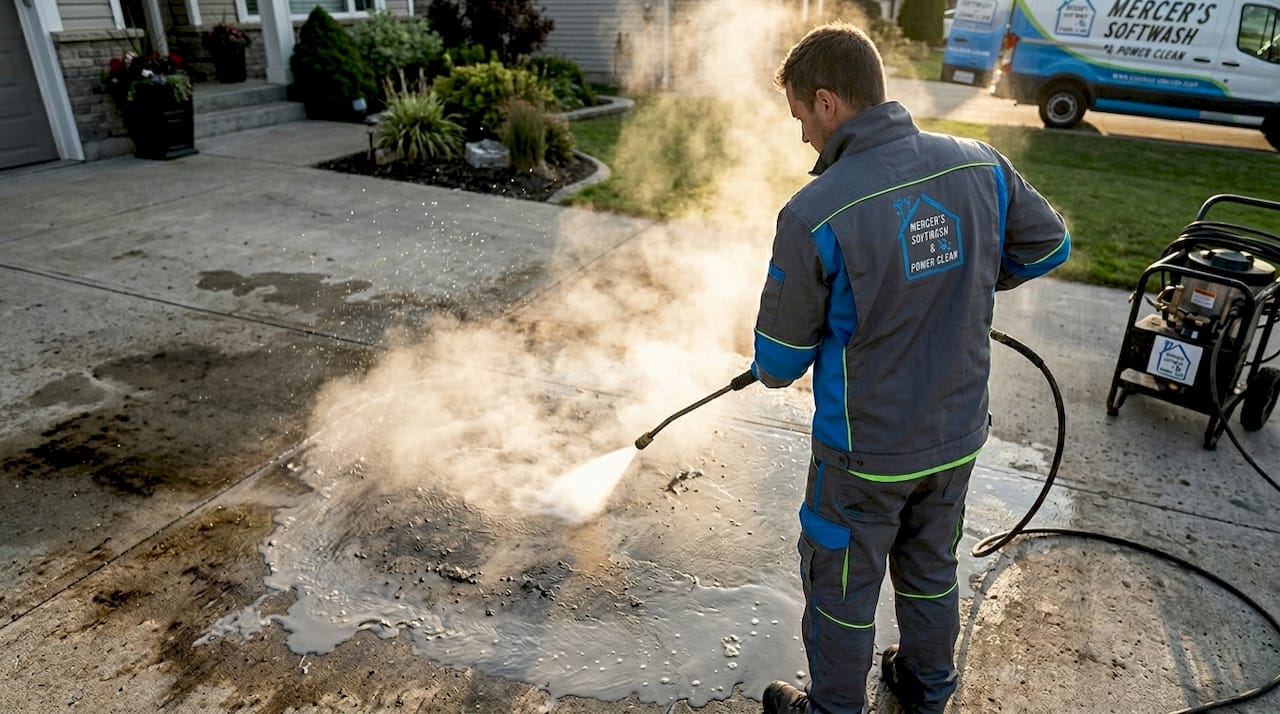
The burner system inside a hot water pressure washer uses a diesel or kerosene-fired coil to heat water on demand as it passes through. Safety features like temperature limit switches and flow sensors prevent overheating and protect the pump. Gas-powered engines from manufacturers like Honda and KOHLER are common in professional-grade units because they provide the sustained power output needed to run both the pump and the burner simultaneously.
Here is what happens at the molecular level when hot water contacts grease or oil:
- Heat agitates the molecules in oil and grease deposits, weakening the bonds that hold them to the surface.
- Reduced surface tension allows water to spread across and underneath the contaminant rather than beading on top of it.
- Detergent molecules, activated more quickly by heat, surround and lift the loosened contaminant particles.
- High-pressure water then flushes the emulsified residue away cleanly.
Pro Tip: When using a hot water unit with detergent, apply the soap on a low-pressure setting first and allow 2 to 3 minutes of dwell time before rinsing. Heat accelerates the detergent’s work, so you will use less product and get a cleaner result.
What are the main benefits of hot water pressure washing compared to cold water?
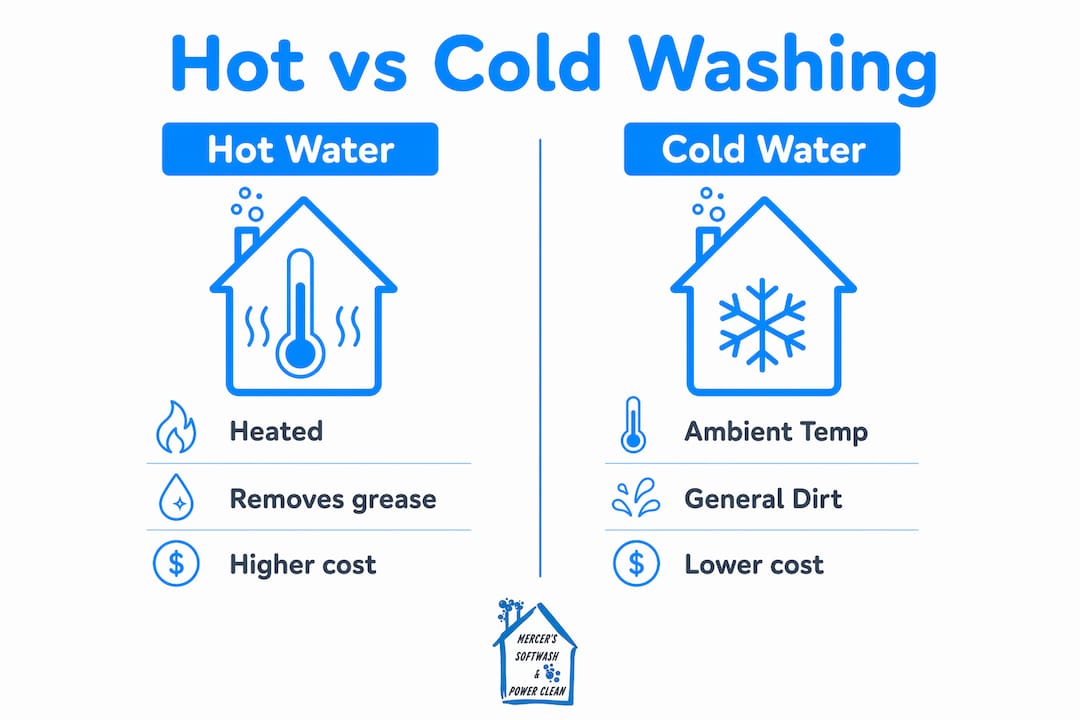
The practical advantages of hot water pressure washing are most visible on the jobs where cold water simply stalls. Grease-stained driveways, oil-soaked parking lots, mould-covered siding, and salt-encrusted walkways all respond significantly better to heated water. Heat reduces reliance on harsh chemicals and increases cleaning speed, which translates directly into lower chemical costs and shorter job times for property managers overseeing multiple buildings.
The benefits break down into four clear categories:
-
Superior degreasing. Hot water dissolves grease and oil at a molecular level, where cold water can only push the surface layer around. This matters on driveways, garage floors, and commercial parking areas where petroleum-based staining is common.
-
Sanitisation and disinfection. Hot water pressure washing kills bacteria, viruses, mould, and algae on contact, making it the right choice for surfaces where hygiene matters, including food preparation areas, garbage enclosures, and heavily shaded siding prone to biological growth.
-
Reduced chemical dependency. Because heat acts as a catalyst that boosts cleaning chemistry, you can achieve the same cleaning outcome with a lower concentration of detergent. This is both a cost saving and an environmental benefit, particularly relevant for properties near gardens, water features, or storm drains.
-
Faster cleaning cycles. Hot water pressure washers provide faster cleaning cycles and operational reliability that property managers and municipal cleaning crews depend on. For a homeowner, this means a driveway cleaned in one pass rather than three.
Hot water pressure washing also excels at removing road film and salt from driveways, parking lots, and house siding. In Southern Ontario, where road salt is applied heavily from November through March, this application alone makes hot water washing a worthwhile consideration for spring property maintenance.
When should homeowners and property managers choose hot water pressure washing?
The right time to use hot water pressure washing is when the contaminant you are dealing with is bonded to the surface rather than simply sitting on top of it. Cold water washers handle loose dirt, dust, pollen, and light surface grime without difficulty. Hot water becomes the better choice when the job involves any of the following:
- Oil and grease stains on driveways, garage pads, or parking surfaces.
- Mould, mildew, and algae growth on siding, decking, or concrete.
- Road salt and calcium chloride residue on walkways and foundations.
- Heavily soiled commercial surfaces like loading docks, dumpster pads, and fleet vehicles.
- Surfaces requiring sanitisation rather than just visual cleaning.
Surface type also matters when deciding whether hot water is appropriate. Concrete, brick, interlock, and metal surfaces handle high-temperature washing well. Softer materials like wood decking, painted surfaces, and certain vinyl sidings require more care. For those surfaces, a soft wash approach using low pressure and targeted cleaning solutions is often the safer and more effective method.
Pro Tip: Matching pressure washer temperature to soil type is the single most important variable in exterior cleaning. If you are unsure whether a surface needs hot water or soft washing, consult a professional before applying heat to a material you are not familiar with.
Hot water units also require more maintenance than cold water machines and are heavier and more expensive to operate. For most homeowners, hiring a professional service for hot water jobs is more practical than owning and maintaining the equipment themselves.
What safety precautions are essential when using hot water pressure washing?
Hot water pressure washing introduces risks that cold water washing does not. The most common and serious mistake is running hot water through a cold water pressure washer. Cold water machines lack heat-resistant seals, hoses, and plumbing, meaning hot water will cause pump failure and potential injury from burst hoses or steam release. Hot water units use Viton or EPDM seals, brass or stainless steel plumbing, and hoses rated for both high temperature and high pressure. Using the wrong equipment is not a shortcut. It is a liability.
Personal protective equipment is non-negotiable when operating any pressure washer, and hot water units add thermal risk to the standard pressure hazards:
- Insulated, waterproof gloves rated for heat exposure.
- Safety goggles or a full face shield to protect against steam and high-pressure spray.
- Steel-toed, waterproof boots with non-slip soles.
- Long trousers and a long-sleeved shirt to protect skin from steam and deflected spray.
Routine maintenance on hot water units includes regular oil changes on the engine, cleaning or replacing fuel filters, inspecting burner components for carbon build-up, and checking hose fittings for wear. Neglecting maintenance on a hot water unit does not just shorten equipment life. It creates safety hazards. Always follow the manufacturer’s guidelines, and never leave a running hot water unit unattended.
How does hot water pressure washing compare to soft washing and cold pressure washing?
Understanding the difference between hot water pressure washing, cold water pressure washing, and soft washing helps you choose the right method for each surface and soil type.
| Method | Best for | Pressure level | Chemical use | Surface risk |
|---|---|---|---|---|
| Hot water pressure washing | Grease, oil, mould, salt, sanitisation | High | Low to moderate | Moderate on soft materials |
| Cold water pressure washing | Loose dirt, dust, light grime | High | Moderate to high | Moderate |
| Soft washing | Algae, mould, delicate surfaces | Very low | Higher concentration | Low |
Cold water pressure washing is the most common method for general exterior cleaning and works well for surfaces that are dirty but not contaminated with bonded or biological soils. Soft washing, by contrast, uses very low pressure combined with a surfactant and biocide solution, typically containing Sodium Hypochlorite, to treat and kill organic growth at the source rather than blasting it off. You can read more about soft washing vs pressure washing to understand which approach suits your property.
Hot water pressure washing and soft washing are not competing methods. They are complementary. A professional exterior cleaning programme for a residential property in Southern Ontario might use soft washing on the roof and siding, and hot water pressure washing on the driveway, interlock, and garage pad.
Key takeaways
Hot water pressure washing is the most effective exterior cleaning method for bonded contaminants like grease, oil, mould, and road salt because heat breaks molecular bonds that cold water and pressure alone cannot overcome.
| Point | Details |
|---|---|
| Temperature drives performance | Hot water units reach 93°C, breaking molecular bonds in grease and oil that cold water cannot dissolve. |
| Chemical use decreases with heat | Heat accelerates detergent chemistry, reducing the concentration needed and lowering environmental impact. |
| Not all surfaces suit hot water | Concrete, brick, and metal handle heat well; wood and vinyl may require soft washing instead. |
| Equipment compatibility is critical | Never run hot water through a cold water pressure washer. It will damage seals, pumps, and hoses. |
| Professional service is often the smarter choice | Hot water units require more maintenance and expertise than most homeowners can practically manage. |
Why I think most homeowners underestimate what hot water actually does
From my experience working with exterior cleaning across Southern Ontario, the most common misconception I encounter is that more pressure solves every cleaning problem. Homeowners rent a cold water pressure washer, crank the PSI as high as it will go, and then wonder why the oil stain on the driveway is still there after an hour of effort.
The reality is that pressure moves dirt. Heat dissolves it. Those are two different actions, and for bonded contaminants like grease, petroleum, and biological growth, only one of them actually works. I have seen driveways cleaned in a single pass with a hot water unit that resisted multiple cold water attempts. The difference is not subtle.
What I also find underappreciated is the sanitisation benefit. Homeowners focus on the visual result, but hot water washing does something cold water cannot: it kills what is growing on the surface. Mould and algae on siding are not just cosmetic problems. They degrade the material over time. Removing the visible growth with cold water and leaving the root system behind means the problem returns within a season. Hot water, particularly when paired with the right cleaning solution, addresses the cause rather than just the symptom.
My honest recommendation for most homeowners is to leave hot water pressure washing to professionals for anything beyond a small, accessible area. The equipment is heavy, expensive to maintain, and genuinely hazardous if operated incorrectly. The results, when done properly, are worth the investment.
— Felix
Professional hot water pressure washing services in Southern Ontario
Mercerssoftwashpowerclean provides professional exterior cleaning services for residential and commercial properties across Southern Ontario, including hot water pressure washing for driveways, parking surfaces, interlock, and more. If you are dealing with oil stains, mould, road salt residue, or surfaces that have not responded to standard cleaning, the team at Mercer’s Softwash & Power Clean has the equipment and experience to get the job done properly. Explore house power washing services for residential applications, or review the full guide on soft washing vs pressure washing to understand which method is right for your property before booking.
FAQ
What is hot water pressure washing used for?
Hot water pressure washing is used to remove grease, oil, mould, mildew, road salt, and bonded grime from exterior surfaces including driveways, siding, parking lots, and interlock. It is particularly effective where cold water pressure washing fails to fully dissolve the contaminant.
Is hot water pressure washing safe for all exterior surfaces?
Hot water pressure washing is safe for concrete, brick, interlock, and metal surfaces but can damage softer materials like wood decking, painted surfaces, and certain vinyl sidings. For those materials, soft washing at low pressure is the recommended alternative.
Can I run hot water through a regular cold water pressure washer?
No. Running hot water through a cold water pressure washer will damage the pump seals, hoses, and internal components because cold water machines are not built with heat-resistant materials. Always use equipment that is specifically rated and designed for hot water operation.
How hot does the water get in a hot water pressure washer?
Professional hot water pressure washers heat water to approximately 93°C (200°F), with some heavy-duty units producing wet steam at temperatures between 120°C and 150°C for industrial cleaning applications.
Does hot water pressure washing use more chemicals than cold water washing?
Hot water pressure washing typically uses fewer chemicals than cold water washing because heat accelerates detergent performance, allowing lower product concentrations to achieve the same or better cleaning result. This makes it a more cost-effective and environmentally considerate option for tough cleaning jobs.


